
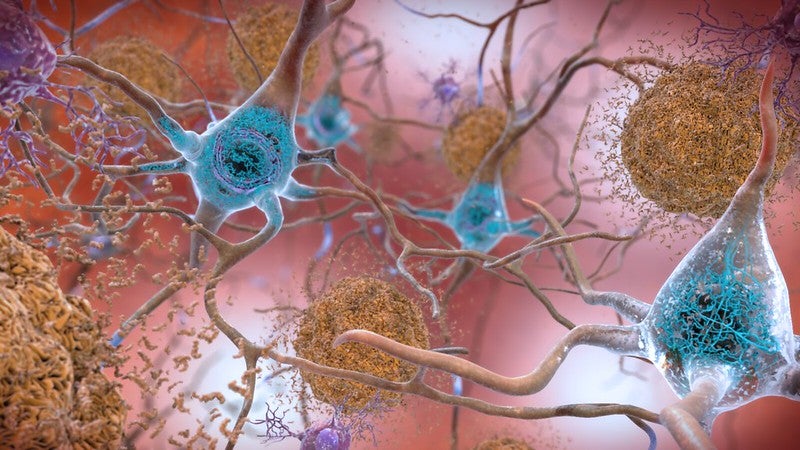
Hope Biosciences has secured US Food and Drug Administration (FDA) approval to study its autologous, adipose-derived mesenchymal stem cells (HB-adMSCs) in a Phase I/II trial for Alzheimer’s.


The company develops HB-adMSCs by extracting mesenchymal stem cells from a patient’s own fat tissue. The extracted cells are purified and cultured using the company’s HB-101 culture media.
Previously, the stem cell therapy was found to be safe and effective in studies for rheumatoid arthritis, Parkinson’s disease, spinal cord injury, thrombotic thrombocytopenic purpura, pancreatic cancer and cerebral palsy.
The latest single-arm, non-randomised Phase I/II study will assess the safety and treatment effect of HB-adMSCs in 24 patients suffering from Alzheimer’s.
Four intravenous infusions of the stem cells will be given to patients over eight weeks. Participants will undergo follow-up assessments every six weeks for one year from the last infusion.
Hope Biosciences president and CEO Donna Chang said: “We can produce, on-demand, over 1,000 highly concentrated HB-adMSC treatments from a single tablespoon of the patient’s own fat tissue. This technology eliminates potential donor rejection and donor-to-donor variability.
“We expect HB-adMSCs to safely and effectively diminish the effects of Alzheimer’s disease and provide patients more time with better cognitive function.”
The company partnered with predictive digital biomarker firm Altoida to identify mild cognitive impairment (MCI) associated with Alzheimer’s.
During the new Phase I/II trial, Altoida Neuro Motor Index (NMI) will be carried out before each infusion and at each follow-up visit for the detection of MCI.
Altoida NMI can detect MCI due to Alzheimer’s with a 94% accuracy six to ten years before the onset of symptoms. It leverages augmented reality (AR), machine learning (ML) and active digital biomarkers to classify MCI risk.


