
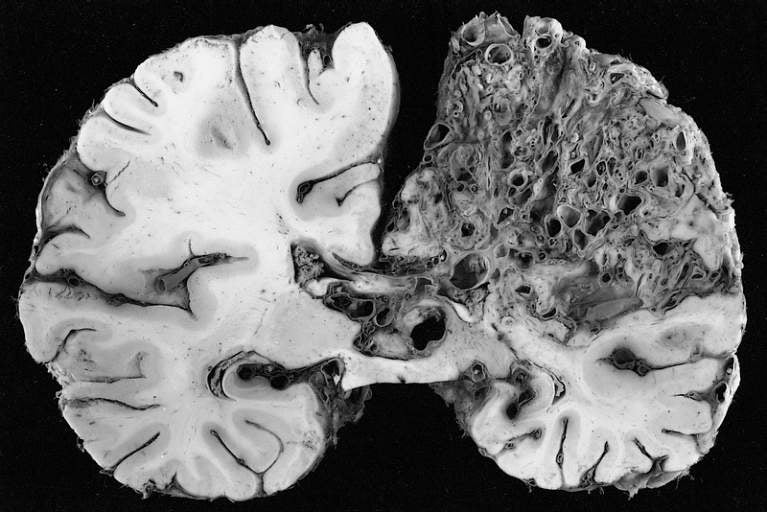
Researchers at Great Ormond Street Hospital (GOSH) are trialling the use of cancer drugs as a treatment for children born with blood vessel defects, a life-threatening condition that causes disfigurement. The study was based on findings from Medical Research Council (MRC)-funded geneticists and published in the Journal of Clinical Investigation.
In the study researchers tested the DNA of over 150 children with blood vessel defects, including arteriovenous malformation (AVM). In people with the condition, abnormalities in blood vessels cause painful disfigurements, life-threatening bleeding and increased risk of complications such as stroke. Hundreds of thousands of people worldwide are affected by AVM and treatment options are severely limited. Only embolisation or surgeries to prevent growth and swelling have proven effective, and neither can prevent the blood vessels growing back.
Go deeper with GlobalData


Discover B2B Marketing That Performs
Combine business intelligence and editorial excellence to reach engaged professionals across 36 leading media platforms.
The decision to trial cancer drugs came about after scientists discovered a number of patients had impairments in four genes, which were all on the RAS/MAPK pathway that controls cell growth. This is a group of genes known to be involved in cancer, though their connection to the correct development of blood vessels was previously unknown. Following their discovery, the researchers identified widely-used cancer drugs as potential new treatments for AVM. These drugs included MAPK pathway inhibitors normally used to counteract impairments in the RAS/MAPK genes in cancer cells.
“This is a very exciting and potentially life-saving discovery,” said study co-author Dr Veronica Kinsler.
“Understanding that these birthmarks are caused by faulty genes, and in particular that these can vary from patient to patient, is a huge leap forward in understanding the science behind AVM.”
Scientists at the MRC Institute of Genetics and Molecular Medicine (IGMM) at the University of Edinburgh conducted trials on zebrafish, which have similar mechanisms to humans for artery and vein development. Abnormal blood vessels caused by RAS/MAPK impairments were shown to improve following treatment, with the drugs reducing swelling and increasing blood flow.
“The genes that cause this disease in humans can cause a similar disease in a small zebrafish, which gives us the opportunity to model the disease and test new treatment ideas in a basic research setting,” said study co-author Dr Elizabeth Patton.
“What is exciting here is our testing in zebrafish found that a drug used to treat cancer could be repurposed to treat AVM. Because this drug is already in the clinical use, it means that it can more easily be used to treat conditions such as AVM.”
The drug will next be tested in an international clinical trial due to start in 2019. Trials are required before the drugs can be given routinely, but as they have been preapproved for other conditions they can be considered on a compassionate basis in severe cases.


