
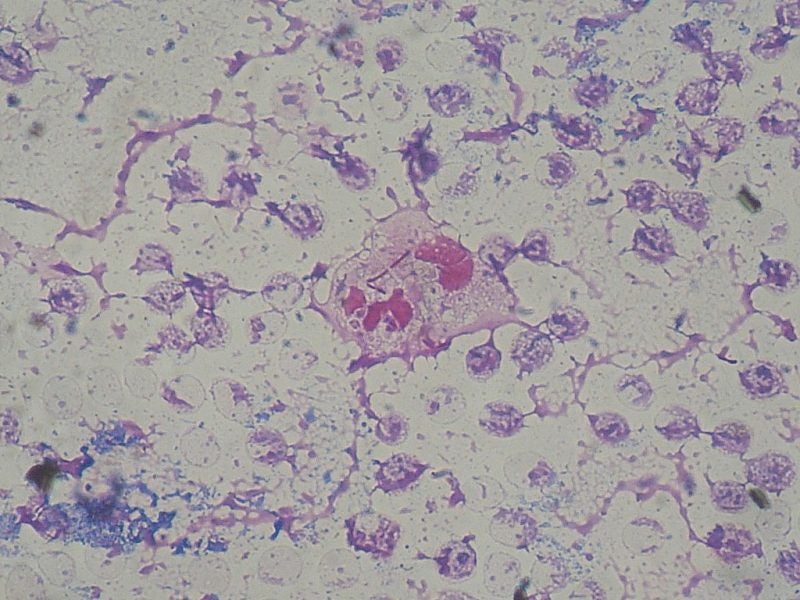
Armata Pharmaceuticals has concluded the Phase Ib/IIa clinical trial of its lead candidate, AP-PA02, in cystic fibrosis (CF) patients with chronic pulmonary Pseudomonas aeruginosa infection.
Named SWARM-P.a., the double-blind, multicentre, placebo-controlled, randomised, single ascending dose (SAD) and multiple ascending dose (MAD) trial is designed to assess the safety and tolerability of inhaled AP-PA02.
Go deeper with GlobalData


Discover B2B Marketing That Performs
Combine business intelligence and editorial excellence to reach engaged professionals across 36 leading media platforms.
It enrolled patients with CF and chronic pulmonary Pseudomonas infection.
The trial was carried out by Armata in partnership with the Cystic Fibrosis Therapeutics Development Network (TDN).
Topline findings from the trial are expected in the first quarter of next year.
Armata received $5m in funding for therapeutic development from the CF Foundation to progress AP-PA02’s development, in March 2020.
To offer additional support for the development of the candidate, the foundation made an equity investment of $3m in Armata in October last year.
Armata Pharmaceuticals CEO Dr Brian Varnum said: “The completion of SWARM-P.a. represents a critical milestone for our lead programme and for Armata.
“This trial will provide critical information regarding inhaled delivery of phage, importantly, assessment of safety and tolerability of phage therapy in the CF population.
“Additionally, this first-in-human Phase Ib/IIa study will provide critical insights for dosing paradigms required to meet microbiological endpoints.”
In August this year, the company received clearance for the Investigational New Drug (IND) application for AP-SA02 in prosthetic joint infection (PJI) from the US Food and Drug Administration (FDA).
The development enabled Armata to plan commencement of the Phase Ib/IIa trial to evaluate the safety, tolerability and pharmacokinetics of intravenous and intra-articular doses of AP-SA02 as an adjunct to standard of care antibiotics in patients with PJI.


