
Regeneron Pharmaceuticals has presented Phase II data for linvoseltamab in patients with relapsed/refractory (r/r) multiple myeloma (MM) who have received three or more lines of treatment.
The data from the LINKER-MM1 (NCT03761108) study was presented at the International Myeloma Society (IMS) Annual Meeting in Athens, Greece, from 27 to 30 September.
Go deeper with GlobalData


Discover B2B Marketing That Performs
Combine business intelligence and editorial excellence to reach engaged professionals across 36 leading media platforms.
Linvoseltamab is a B-cell maturation antigen (BCMA) and CD3-targeting bispecific antibody. It was developed using Regeneron’s VelociGene and VelocImmune platform technology.
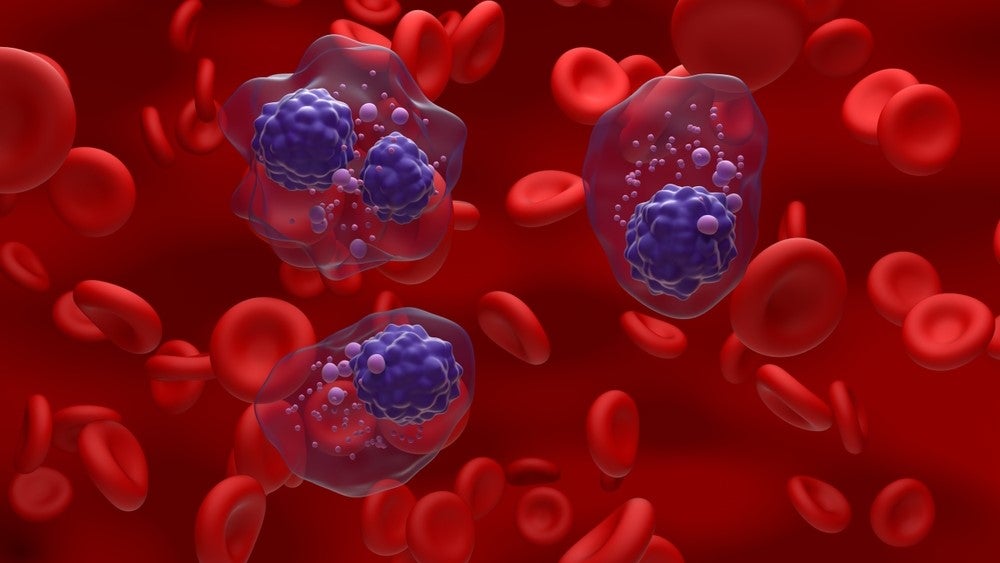
MM is the second most common type of blood cancer and is characterised by the proliferation of cancerous plasma cells (multiple myeloma cells) into the bone marrow and other tissues, thereby causing potentially life-threatening organ injury. It is more prevalent in African Americans.
Dr Joshua Richter, one of the IMS presenters and trial investigators, in a conversation with Clinical Trials Arena, highlighted that MM having an ethnic predisposition diversity within the trial was a focus for the study.
Of the 221 patients analysed, 29% of the patient population was non-White. The diversity in the trial was achieved by “opening additional sub-sites to allow inclusion of a more diverse patient population”, as per Dr Richter.
Another LINKER-MM1 trial investigator and IMS presenter, Dr Madhav V Dhodapkar, talked about the high (71%) and durable (89% and 83% probability of maintaining at least this level of response at six and 12 months, respectively) response rate of linvoseltamab.
The objective response rate (ORR) for 200mg linvoseltamab was 71%, with 59% and 30% of patients achieving very good partial response (VGPR) and complete responses (CR), respectively.
Treatment-emergent adverse effects included cytokine release syndrome, neutropenia (low white blood cell count), cough and others. However, these were mild to moderate in severity.
When comparing the different doses of linvoseltamab, Dr Richter commented on the difference between bispecific antibodies and CAR-T cell therapy. The former does not display any dose-related toxicities, explaining that the safety profile for evaluated doses of linvoseltamab (50mg and 200mg) showed similar instances of treatment emergent adverse events.
Compared to CAR-T therapies, which require T cells to be sent to an offsite manufacturing centre, bispecific mAbs are ‘off-the-shelf’ products. This ease of availability is also seen in the sales of these products. Janssen’s bispecific antibodies are expected to be market leaders, with GlobalData forecasting $1.8bn in global sales for Talvey (talquetamab-tgvs) in 2029. Talvey has been approved as a fourth-line treatment for r/r MM.
GlobalData is the parent company of Clinical Trials Arena.


