

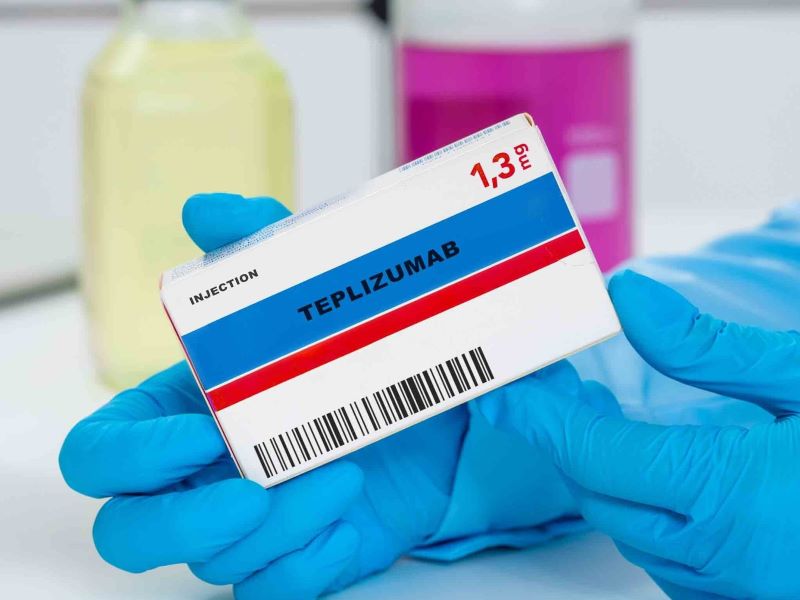


Tzield™ (teplizumab-mzwv) is the first and only therapy indicated to delay the progression to Stage 3 Type 1 diabetes (T1D) in adults and children aged eight years and above who have been diagnosed with Stage 2 T1D.
The prescription medication was initially developed by Provention Bio, which became part of Sanofi following an acquisition in April 2023.
Recommended Buyers Guides

Teplizumab-mzwv is available as a clear and colourless solution in a single-dose vial and is administered via intravenous infusion once daily over a 14-day period.
Regulatory approvals
Tzield (teplizumab-mzwv) was approved by the US Food and Drug Administration (FDA) in November 2022. Subsequently, the drug was approved in Canada in May 2025, the UK in August 2025 and in China in September 2025.
The treatment was approved in the EU in January 2026 and is sold under the name Teizeild™ (teplizumab). The drug was previously granted therapy eligibility by the European Medicines Agency for the PRIority MEdicines scheme in October 2019 for use in individuals considered at risk of developing clinical T1D.
In January 2026, the FDA granted priority review to a supplemental biologic licence application (sBLA) seeking to expand the age indication for Tzield (teplizumab-mzwv) to include patients as young as one year old for delaying the onset of Stage 3 T1D in those diagnosed with Stage 2 T1D. The FDA is expected to issue its decision by April 2026.
T1D causes and symptoms
T1D is an autoimmune condition that develops over time as the immune system mistakenly targets pancreatic beta cells, progressively reducing insulin production and impairing glucose control. The disease’s evolution is commonly described in four stages.
Stage one begins when autoimmunity is established, typically demonstrated by at least two T1D-associated autoantibodies on blood testing. Despite the immune activity, glucose remains within the normal range, so individuals have no symptoms and the condition is only identifiable through screening.
In stage two, autoantibodies are still detectable, but the continuing decline in beta-cell capacity starts to affect metabolic control. Blood glucose becomes abnormal (dysglycaemia), yet people generally remain presymptomatic.
Stage three represents the onset of overt, clinical diabetes after substantial beta-cell loss. Hyperglycaemia reaches diagnostic thresholds, and classic features may appear including excessive thirst, increased urination, unintentional weight loss, blurred vision and fatigue.
Stage four refers to established, long-duration T1D, often alongside chronic complications. Residual beta-cell mass is minimal (estimates suggest up to a 95% reduction), and autoantibodies may decline or become undetectable as functional beta cells are largely depleted.
Typical symptoms of diabetes include increased urination (polyuria), excessive thirst (polydipsia), heightened hunger (polyphagia) and unexpected weight loss.
Type 1 diabetes accounts for approximately 5–10% of all diabetes cases, making it less prevalent than Type 2 diabetes.
Teplizumab-mzwv mechanism of action
Teplizumab-mzwv is a monoclonal antibody that targets CD3, a cell surface antigen found on T lymphocytes.
The drug’s mechanism of action includes partial agonistic signalling and the deactivation of T lymphocytes that are autoreactive to pancreatic beta cells.
Treatment with teplizumab-mzwv has been shown to increase the proportion of regulatory T cells and exhausted cytotoxic T lymphocytes (CD8+ T cells) in peripheral blood.
Clinical trials on teplizumab-mzwv
The approval of teplizumab-mzwv was supported by findings from the TN-10 study (NCT01030861), a randomised, double-blind, event-driven, placebo-controlled Phase II clinical trial.
The study assessed the safety and efficacy of the drug in 76 participants aged between eight and 49 years with Stage 2 TD1. Participants were assigned to receive either teplizumab-mzwv (n=44) or placebo (n=32) via daily intravenous infusion for 14 consecutive days. The level of drug exposure in the teplizumab-mzwv group was consistent with the recommended dosage regimen.
The primary endpoint was the progression to Stage 3 TD1, which occurred in 45% of those receiving teplizumab-mzwv compared to 72% in the placebo group.
The median time to develop Stage 3 TD1 diabetes was 50 months for patients treated with teplizumab-mzwv, compared to 25 months for those in the placebo arm.
After a median follow-up of 51 months, treatment with teplizumab-mzwv demonstrated a statistically significant delay in progression to Stage 3 TD1, with a hazard ratio of 0.41.
The most frequently reported adverse reactions included decreased levels of white blood cells (lymphocytes, leucocytes and neutrophils) and rash.
Additional clinical trials
The FDA’s sBLA is supported by positive interim one-year results from the ongoing Phase IV single-arm, non-randomised, open-label, multicentre trial, PETITE-T1D (NCT05757713).
The PETITE-T1D study is designed to evaluate the safety and pharmacokinetics of teplizumab-mzwv in younger children under the age of eight who have been diagnosed with Stage 2 TD1.
A total of 23 participants under the age of eight years, with an average age of 4.8 years, have been enrolled in the study. The treatment regimen involves daily intravenous infusions of teplizumab-mzwv over a 14-day period.
The primary endpoints of the study are treatment‑emergent adverse events (TEAEs), TEAEs leading to discontinuation of therapy and serious adverse events (SAEs).
Secondary endpoints include covered immunogenicity, pharmacokinetic and pharmacodynamic profiles, and the interval between study dosing and progression to Stage 3 T1D.
The interim results of the study indicated that every child reported at least one TEAE, and these events were predominantly mild or moderate in intensity. Importantly, no severe grade 4 or fatal grade 5 TEAEs occurred.
Treatment was stopped in three children (13%) due to adverse events, specifically anaemia, increased hepatic enzyme levels and a maculopapular rash. SAEs were recorded in a small number of cases: two children (9%) experienced two SAEs each.
Over the observation period, two participants developed Stage 3 T1Ds. At the interim timepoint, the estimated likelihood of not progressing to Stage 3 was 89.6%. Overall, teplizumab appeared safe and generally well tolerated in this Stage 2 population, with a safety profile aligned with prior experience and no new concerns identified.
