

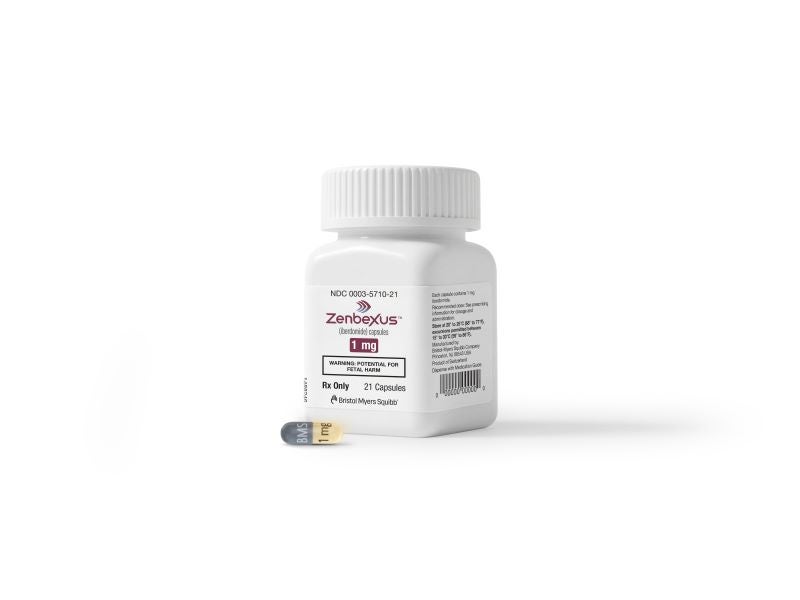
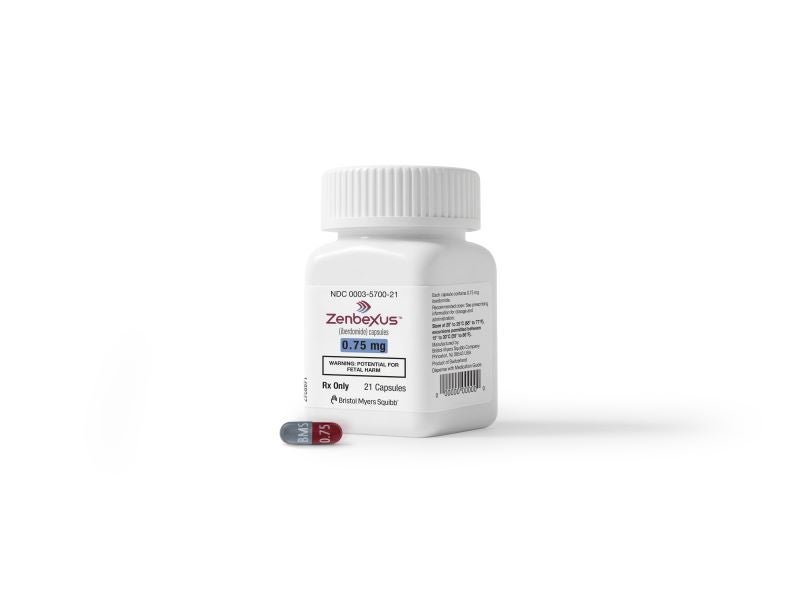
ZENBEXUS™ (iberdomide), used in combination with daratumumab and hyaluronidase-fihj plus dexamethasone (ZDd), is indicated for the treatment of adult patients with multiple myeloma.
The drug is intended for patients who have received at least one prior line of therapy that included both a proteasome inhibitor and an immunomodulatory agent.
Recommended Buyers Guides

Developed by Bristol Myers Squibb, the medicine received Breakthrough Therapy designation and accelerated approval from the US Food and Drug Administration (FDA) for treating multiple myeloma in August 2026. Full authorisation for this indication will depend on confirmatory studies that demonstrate and validate clinical benefit.
ZENBEXUS is the first cereblon E3 ligase modulator (CELMoD) approved for the indication and represents a new therapeutic class, cereblon‑modulating protein degraders.
The drug is available as capsules in two strengths: iberdomide 0.75mg in a light grey, opaque cap, paired with a dark brown, opaque body; and iberdomide 1mg in a light grey, opaque cap, paired with an ivory, opaque body.
The recommended dose of ZENBEXUS is 1mg taken orally once daily, with or without food, on days 1–21 of each 28‑day cycle, continued until disease progression or unacceptable toxicity, alongside daratumumab and hyaluronidase-fihj and dexamethasone.
Multiple myeloma causes and symptoms
Multiple myeloma, the second most common blood cancer, arises in plasma cells, which normally produce antibodies to fight infection. In myeloma, malignant plasma cells accumulate in the bone marrow, displacing healthy blood‑forming cells and producing abnormal proteins that drive complications.
The disease is caused by genetic mutations that vary between individuals. Although some mutations increase risk, multiple myeloma is not generally hereditary; causative mutations typically develop with age.
In the US, more than 168,000 people are currently living with multiple myeloma. It is second only to non‑Hodgkin lymphoma among blood cancers and accounts for around 1.8% of all cancers.
Early disease may be asymptomatic. Reported signs and symptoms include bone pain, nausea, constipation, reduced appetite and cognitive difficulties or confusion, along with fatigue, recurrent infections, weight loss, weakness and excessive thirst, as well as increased urination.
Mechanism of action
Iberdomide is a cereblon‑modulating protein degrader that targets cereblon, the substrate recognition element of an E3 ubiquitin ligase complex. By binding to cereblon, it promotes the recruitment, ubiquitination and subsequent proteasomal degradation of the transcription factors Aiolos and Ikaros, leading to antitumour and immunomodulatory effects.
The immunomodulatory actions of iberdomide include increased secretion of immunostimulatory cytokines (interleukin‑2 and interferon‑gamma); suppression of pro‑inflammatory cytokine release (interleukin‑6); enhancement of immune‑mediated killing of multiple myeloma cells; and mitigation of T‑cell exhaustion.
In vitro, combining iberdomide with daratumumab augmented daratumumab’s complement‑dependent cytotoxicity and antibody‑dependent cellular cytotoxicity against multiple myeloma cells.
In vivo, iberdomide produced greater antitumour activity when used with dexamethasone or daratumumab than when either agent was administered alone.
Clinical trials on ZENBEXUS
The US FDA’s approval was supported by results of the EXCALIBER‑RRMM (NCT04975997) study.
The Phase III, multicentre, two‑stage, randomised, open‑label trial assessed the safety and efficacy of ZDd against daratumumab, bortezomib and dexamethasone (DVd) in adults with relapsed or refractory multiple myeloma (RRMM).
The study incorporated a dose‑optimisation phase and evaluated dual primary endpoints: minimal residual disease (MRD) negativity and progression‑free survival (PFS).
Key secondary endpoints included overall survival, overall response rate, safety and sustained MRD negativity. The trial remains ongoing to assess PFS. Eligible patients had one to two prior lines of anti‑myeloma therapy and evidence of progressive disease.
In total, 939 participants were randomised in the clinical trial. The primary efficacy population for MRD negativity comprised the first 420 patients assigned to the ZDd arm (n=207) or to the DVd arm (n=213). Treatment in both arms continued until disease progression or unacceptable toxicity.
At a median follow‑up of 16 months, the ZDd arm achieved a statistically significant improvement in one of the dual primary endpoints, achieving an MRD‑negative complete response in 41% of patients (n=85) versus 21% (n=44) of patients in the DVd arm.
The most common adverse reactions in the clinical trial were upper respiratory tract infection, fatigue, musculoskeletal pain, pneumonia and diarrhoea, as well as motor dysfunction, sleep disorder and hypogammaglobulinemia. ZENBEXUS is also under evaluation in the EXCALIBER Maintenance study.
