

Astutely managed clinical operations (clin-ops) are a foundational part of consistent and successful clinical trial execution.
For the multiple stakeholders involved in a clinical trial, including pharma companies, contract research organisations (CROs), and trial sites, various governance predicates can help to ensure a trial meets its objectives and maximises workflow efficiencies.
Go deeper with GlobalData


Discover B2B Marketing That Performs
Combine business intelligence and editorial excellence to reach engaged professionals across 36 leading media platforms.
Stakeholders’ duties, including trial design, and their overall collaborative tenor, can make or break a trial.
These themes were under consideration at Arena International Events Group’s 2026 Outsourcing in Clinical Trials Southern California (OCT SoCal) conference held on 15 and 16 September in San Diego, against a backdrop of ongoing US regulatory initiatives that are intended to reinvigorate the US’s position in the clinical trial domain.
As Australia has become the de facto country in which most Phase I trials are being conducted, and with more trials than ever being conducted in China and completed at a faster rate than in the US, the US Food and Drug Administration (FDA) is in the process of launching its expedited investigational new drug (IND) pilot. The pilot, grouped under the US Department of Health and Human Services’ (HHS) broader Operation Trialblazer initiative, launched in June 2026, aims to accelerate clinical trial timelines and eliminate regulatory hurdles to maintain American leadership in global medical innovation.
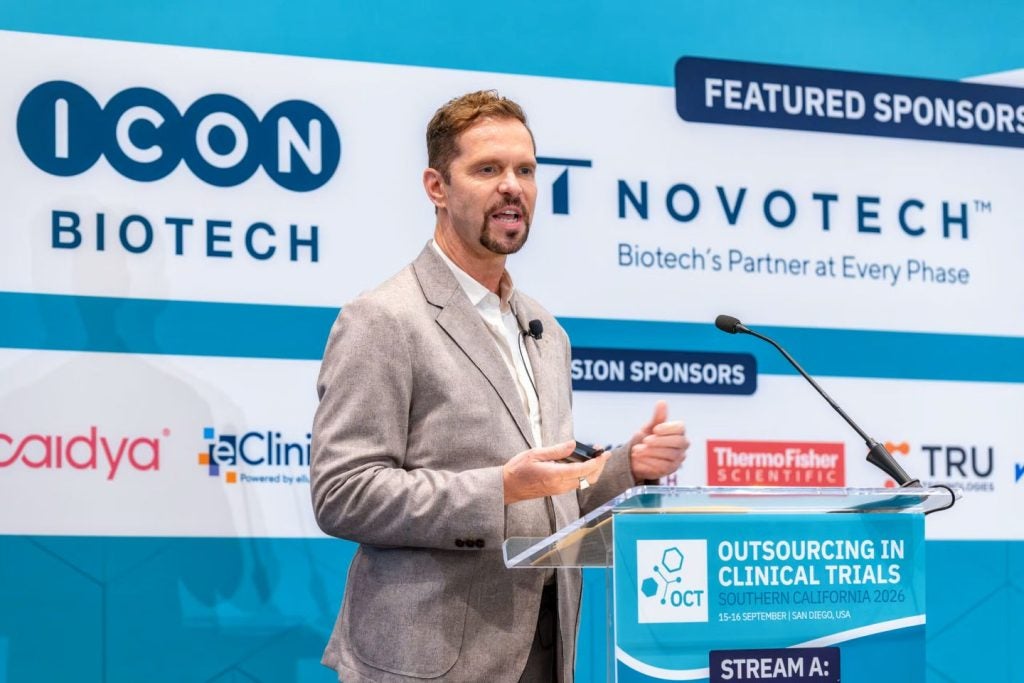
In his keynote on day two of the conference, Jeffrey Douglas, senior vice president, development operations at biotech Alumis, emphasised the importance of embedding a strong internal culture throughout the course of a trial to ensure the parties involved understand what their responsibilities and accountabilities are.
During a Phase III programme, Douglas shared that Alumis established an “elevation” rather than an “escalation” pathway with their CRO.
“You’d be surprised how this wording changes half the tone and reduces the ‘heaviness’ of raising an issue when you feel like you’re lifting it up versus feeling like you’re escalating something,” he said.
According to Douglas, this mindset engenders more trust and transparency, making it more likely that any issues in relation to a trial will be raised sooner and dealt with more effectively.
Trial governance as an ongoing process
Determining that governance represents a catch-all term for the framework of roles, responsibilities, decision-making processes, and more to ensure a sponsor and their CRO meet a trial’s objectives, speakers during a mainstage panel discussion agreed that governance should not be viewed as a “hand-off” event.
“It’s something that you should be planning and actively thinking about all the time,” said Kerry Clancy, director, outsourcing and contract management at First Tracks Biotherapeutics.
“You’ve got to pressure test governance all the time, and make sure that you’re still actively doing it, and there’s a takeaway for the vendors that you’re governing, ensuring that a partnership doesn’t cycle and ‘stay on the shelf,’” Clancy continued.
Speakers on the same panel agreed that a sponsor-CRO relationship shifted away from an ‘effective governance-first’ posture if the parties involved cease being proactive, collaborative, and well-aligned.
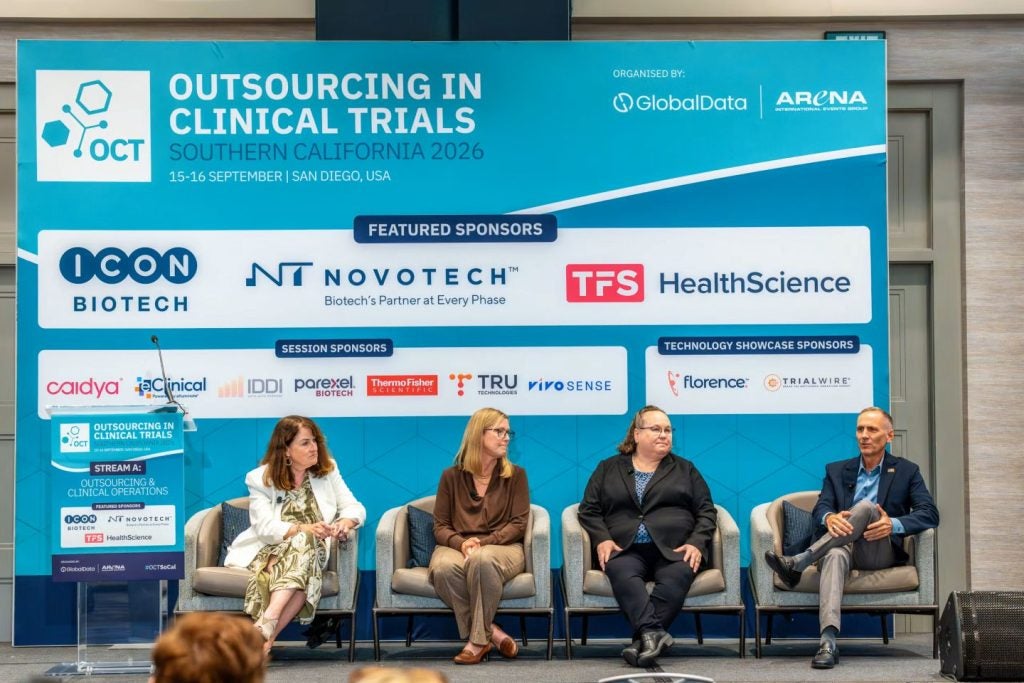
Regina Griffin, associate director, clinical operations at Autobahn Therapeutics, advised navigating discussions around governance in terms of underlying themes rather than a summary of all issues being faced throughout a given trial collaboration to ensure everything goes to plan.
“Sometimes the communication gap is on the sponsor side, and sometimes it is on the CRO side,” Griffin noted. “Having those conversations internally ahead of a governance meeting with all of the parties involved often allows for higher-level oversight into the exact area a breakdown is occurring within.”
FDA efforts to rejuvenate US position in clinical trials arena
Another key topic throughout the conference was the FDA’s ongoing effort to shift the US’s position in the global clinical trials landscape through a range of regulatory initiatives, including the agency’s expedited IND pilot.
During an interview with Clinical Trials Arena on the event sidelines, Richard Graham, co-founder and chairman of TruTechnologies, praised the direction the FDA is moving in, yet emphasised that there remain “many more gaps that aren’t being addressed”.
Noting that the FDA’s real-time clinical trial initiative is the only recent regulatory effort focused on clinical trial execution, Graham said: “That’s good. What I wonder, though, is how much of it (other FDA initiatives) is intended to help with drug development versus the political side of it, which is competing with Australia and China?”
Regarding the FDA’s IND pilot, Graham noted that Australia has no IND equivalent, yet the FDA is pledging to undertake its IND protocols faster, with all the same requirements remaining applicable.
“You’re competing against no IND, so that’s the challenge I have with it. In isolation, I think it’s good, but how much of expediting the IND process is political versus really helping?” Graham questioned.
Graham pointed out that in much of his consulting work for VC firms, a vast proportion of these entities have China assets.
“And guess what? Those trials were run very quickly in China,” Graham continued. “They don’t hit all the same standards that we would do here, but 40% of biotech deals in the last couple of years have been done through China assets – indicating there’s something we’re not paying enough attention to here in the US.”
Due to the speed at which countries like China are running trials, Graham expressed that the US finds itself in a conundrum around how it can meaningfully make the US an appealing trial destination for Phase I trials, not to mention that it is not even paying enough attention to boosting the appeal of trials beyond Phase I.
“The US is stuck in this conundrum where they’ve always been the gold standard for safety and getting to the bottom of efficacy results in these trials. However, other countries have found a way to sidestep that, and therefore I think it’s a conundrum because we probably can’t, and maybe shouldn’t, relax our standards because it’s human safety we’re talking about,” Graham said.
Wherever trials are done, Graham pointed out that, in general, when a drug company runs a study, they hand off their candidate drug to CROs, central labs, and clinical trial sites all around the world that have different cares, concerns, and incentives.
In Graham’s view, the entire nature of how clinical trials are done, both in the US and globally, has become “so big and convoluted that we don’t even know how to start to change”.
“My personal objective is wherever we do the trials, do them better and do them right,” Graham continued.
“Were someone to deconstruct the nature of clinical trial infrastructure in the US, they would see that there are at least nine different stakeholders with different incentives and goals. And this factor is likely a key sticking point in how we can actually do better and be more competitive. If you actually map that out, it’s a real mess, and no wonder the US is in this situation.”
Stressing his view that it will be challenging for the US to ever be competitive with other countries in clinical trials, Graham’s perspective is that the CRO model is a key impediment.
“What I’ve seen over the past few years has been a general recognition by drug developers, both biopharma and pharma, that the CRO model is not efficient due to the aforementioned volume of stakeholders involved and various other process-related factors,” Graham said.
Unfortunately, in resolving the CRO factor, Graham noted that it is not fiscally advantageous to bring all functions outsourced to a CRO in-house, except for the biggest players in pharma with the deepest pockets.
Adding that resistance to change is another challenge, Graham concluded: “Clinical operations are under the most time pressure and cost. They own the budgets for these studies, so they don’t want to do anything different. They’re disincentivised to try something new.”
Even if that broader model is difficult to change, Graham sees site-level execution as a place where the industry can make progress now.
“Of course regulatory changes are welcome, but we also need to improve what happens once a trial starts,” Graham said. “Clinical trial execution remains incredibly outdated. Critical information is still written down by hand and entered into electronic systems much later, creating opportunities for errors long before sponsors see what’s happening. Speeding drugs into a system that frankly isn’t built to deliver quality data is a concern of mine.”
“This is exactly what we are aiming to solve at TruTechnologies. Our platform turns protocol requirements into dynamic, guided workflows that help sites get the work right the first time. Paired with live data capture and customisable alerts, sponsors can see execution as it happens and course-correct when something goes off track. That’s critical under ICH E6(R3), which reinforces sponsor responsibility for oversight and timely escalation.”
“I’m all for promising drugs getting through IND faster, but if trial execution puts data integrity at risk, aren’t we just building a different road to the same broken bridge?” Graham concluded.
The conversations throughout this year’s conference demonstrate that careful planning and well-developed collaboration strategies are a critical part of successful clinical trial execution. But even as fresh FDA regulation develops, ongoing questions linger around how the US can gain a competitive advantage over other countries in which less red tape makes running trials an appealing proposition. Whether advancing regulation goes far enough to move the needle for the US clinical trials landscape remains to be seen.


