
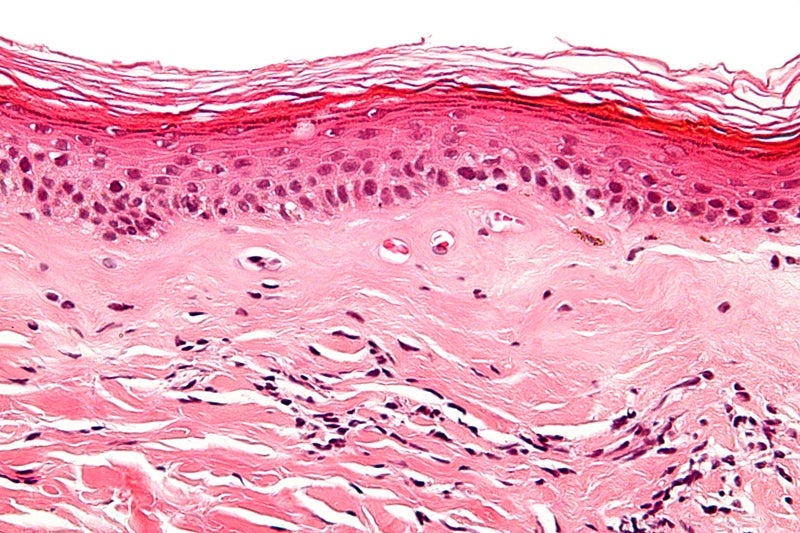
Galapagos has commenced the NOVESA Phase IIa trial to assess the efficacy, safety and pharmacokinetic / pharmacodynamic (PK/PD) of GLPG1690 for the treatment of patients with systemic sclerosis (SSc) or scleroderma.
The double-blind and placebo-controlled trial is expected to enrol 30 patients with diffuse cutaneous SSc, an autoimmune disease involving multiorgan fibrosis and has no approved drugs for its treatment.
Go deeper with GlobalData


Discover B2B Marketing That Performs
Combine business intelligence and editorial excellence to reach engaged professionals across 36 leading media platforms.
Patients with diffuse cutaneous SSc are at a higher risk of developing fibrosis of several internal organs, including the lungs.
The primary objective of the NOVESA trial is the improved Rodnan skin score (mRSS) at 24 weeks.
mRRS is designed to assess the skin thickness as a surrogate measure of disease severity and mortality.
The trial’s secondary objectives and exploratory goals comprise forced vital capacity (FVC), high-resolution computed tomography (HRCT), quality of life as assessed by quality of life questionnaire (QoL-Q), and combined response index for systemic sclerosis (CRISS).
Galapagos chief medical officer Dr Walid Abi-Saab said: “In addition to our Phase III programme in IPF, we are excited to broaden our development program with ‘1690 to a second indication.
“Moreover, SSc is particularly interesting, as this disease straddles our expertise in autoimmune diseases as well as in fibrosis.
“Thanks to the broad MoA of ‘1690, which is both anti-inflammatory and anti-fibrotic, this compound has the potential to address the important unmet medical need in SSc.”
SSc is currently estimated to affect nearly 90,000 patients in the US and Europe.


