
Congratulations on the Site Innovation award—what core R&D site problem did you target first, and how has that challenge changed over time?
Thank you. We are incredibly honored to receive this award.
We are committed to improving patient access to clinical trials. Historically, access has been constrained by geography, requiring patients to live near research centers and travel frequently to participate. Our model was built to reach patients wherever they live across the United States.

Discover B2B Marketing That Performs
Combine business intelligence and editorial excellence to reach engaged professionals across 36 leading media platforms.
Over time, that challenge has evolved. As our nationwide capabilities have expanded, access is no longer the primary limitation. Today, our focus has shifted towards scaling efficiently while maintaining consistency, quality, and regulatory rigor as study volume and complexity increase.
What were the pivotal design decisions—clinical, operational, and regulatory—that enabled a single, nationwide “site” to scale sustainably?
One of our most important decisions is our regulatory strategy. We designed the organization to operate as a direct-to-patient site, supported by investigators licensed across all 50 states. Operationally, this required early investment in standardized processes, training, and oversight to ensure consistent care delivery and data collection, regardless of location.
Another important decision is our workforce model. We built a blended approach using both full-time and part-time research nurses, allowing us to scale quickly and deploy staff nationwide based on patient demand.
What practices keep you inspection-ready across in-home procedures and complex protocols, and what have you learned from FDA inspections?
Inspection readiness is embedded into daily operations rather than treated as a periodic exercise. We maintain a robust internal Quality Assurance program that continuously evaluates processes, documentation, and data integrity.
We also conduct ongoing internal monitoring of both regulatory documents and study data using our own industry CRAs. FDA inspections have reinforced the importance of standardization, documentation discipline, and proactive issue identification. Our approach emphasizes doing things correctly from the start rather than preparing reactively for inspections.
Beyond recruitment tactics, which operational levers (e.g., records retrieval, prescreener logic, data workflows) most influence your enrollment velocity?
Medical record acquisition and review is one of the most significant drivers of enrollment speed. Traditional sites may take weeks to obtain and review records. Our participants sign medical record release forms before consent. This process enables us to do preliminary eligibility based on medical records which streamlines and accelerates our enrollment process to days instead of weeks and decreases our screen failure rates.
Because we operate as a single nationwide site, we are not constrained by local catchment areas. Once a study opens, we can immediately evaluate and enroll eligible patients across all states, significantly increasing throughput and reducing time to enrollment.
How do you balance speed with safety, caregiver burden, and data reliability in rare disease and high-burden populations?
Speed is not achieved by cutting corners. We prioritize spending more time with patients and caregivers, particularly in rare disease and high-burden populations. Conducting visits in the home reduces burden by eliminating travel and logistical strain.
Safety and data reliability are supported through rigorous protocol feasibility assessments, extensive nurse training, real-time data monitoring, and close collaborations between investigators, nurses, and patients. The home setting often allows for more focused, higher-quality engagement than traditional clinic visits.
What’s distinctive about managing a fully employed workforce of mobile research-grade nurses and multi-state investigators at scale?
Our nurses are not general home health staff. They are research-trained professionals with experience in GCP, informed consent, and protocol execution. Every nurse undergoes rigorous internal training, evaluation, and ongoing performance review before participating in studies.
Managing this workforce at scale requires standardized training, clear operational playbooks, and continuous communication. The result is a highly reliable and consistent participant experience regardless of geography.
Which outreach partnerships or community channels have been most effective for improving diversity and representativeness—and why?
Nationwide reach itself is one of the most powerful drivers of diversity. By removing geographic barriers, we naturally reach patient populations that have historically been underrepresented in clinical research.
We also collaborate with patient advocacy organizations (e.g., the National Fragile X Foundation) and referral partners that already have trusted relationships with communities. This combination of reach and trust allows studies to enroll more representative populations without relying solely on traditional site-based recruitment.
How do you forecast enrollment and course-correct when referral, eligibility, or conversion rates diverge from plan?
We monitor funnel performance in real time, tracking referral volume, eligibility rates, consent timing, and visit completion. When performance deviates from plan, we can quickly identify where bottlenecks occur.
Because our intake, medical records, and schedule teams are centralized, we can rapidly reallocate resources, adjust workflows, and increase capacity without the delays associated with site-by-site coordination.
When your team advises on prescreeners or protocol refinements, how do you structure collaboration so it lifts all study sites?
Our investigators review all protocols for feasibility and patient safety. We work closely with sponsors early to identify feasibility challenges before studies launch. When we recommend prescreener or protocol adjustments, the goal is not to optimize for a single site, but to improve overall study performance.
These insights are shared transparently so refinements can benefit all participating sites, improving enrollment.
Bringing IMP handling and IV administration into the home adds risk—what controls around temperature, chain-of-custody, and AE response are mission-critical?
Temperature control, chain-of-custody documentation, and adverse event response protocols are essential. We work collaboratively with our central pharacy to make sure IMP is handled per protocol and the pharmacy manual.
We also have robust documentation and escalation pathways. Safety planning begins during protocol feasibility assessments. If a protocol cannot be executed safely in the home, we do not proceed.
Where does a Direct-to-Patient Site deliver the greatest advantage versus traditional or hybrid site models?
The greatest advantage is in studies where travel, mobility, or caregiver burden would otherwise limit participation. This includes rare disease, pediatrics, neurology, and populations with significant functional impairment.
Beyond direct enrollment, our model also supercharges traditional site performance. When sites encounter geographic limitations, capacity constraints, or retention challenges, we can serve as an extension of the site by continuing study visits in the patient’s home. This allows sites to enroll more patients, retain them longer, and avoid drop out without disrupting study conduct.
Our goal is to stand alongside traditional brick and mortar sites, not to replace them. Our Direct-to-Patient Site model expands what sites are able to support, particularly for patients who cannot reliably travel or require long-term follow up.
Which technology choices—eCOA design, device provisioning, integrations—have had the biggest impact on compliance and data quality?
Electronic source documentation and electronic data capture systems that support real-time visibility have been critical. These tools create transparent audit trails and allow continuous monitoring of study conduct and data quality.
Technology supports our model, but it does not replace process discipline. Our focus is on integrating technology into standardized workflows rather than treating it as a standalone solution.
Faster interim reads and early closures can reshape timelines—how has this influenced database locks, analyses, and decision cadence for sponsors?
Improved retention and consistent data collection allow sponsors to reach decisions earlier. When fewer patients drop out, sponsors can lock databases sooner and proceed to analysis without replacement enrollment.
Our operational flexibility also allows us to adjust recruitment and staffing in response to interim data, supporting faster and more confident decision-making.
Which therapeutic areas or study designs are best suited to your model in the next 2–3 years, and why?
Suitability is driven less by therapeutic area and more by study design and assessment burden. Our model works well when visit schedules are reasonable and procedures can safely be conducted in the home.
That said, we continue to see strong alignment in rare disease, neurology, long-term follow up studies (e.g., event driven studies or cell therapy studies), and pediatrics, particularly where traditional site longevity or capacity may be limited.
How are you preparing for evolving regulatory expectations for decentralized models, including documentation of data provenance?
Many of the recent regulatory recommendations for decentralized and hybrid trials align closely with how we have been operating for years. As guidance around decentralized trials and data provenance has continued to mature, we have found that it largely reflects practices we already have in place.
From an operational perspective, we have long focused on clearly documenting where data originates, how it is collected, and how it moves through the system. Our model emphasizes traceability back to the original source, whether that source is an electronic medical record, a standard of case assessment performed locally, or data collected during an in-home visit. This approach directly supports emerging expectations around data provenance, including clear documentation of who collected the data, when, where, and under what conditions.
We have also maintained ongoing dialogue with regulators over time, including pre-submission interactions and FDA inspections, which has helped confirm that our operating model is consistent with regulatory expectations. When the most recent Decentralized Trial Guidance was finalized and published, it closely mirrored our standard operating procedures.
Rather than retrofitting our operations to new guidance, we view the current regulatory landscape as validation of a model designed from the outset to support modern, patient-centric clinical trials while maintaining regulatory rigor and data integrity.
Beyond enrollment totals, which performance metrics (e.g., visit completion, protocol deviations, retention) are your “north stars”?
Retention, visit completion rates, protocol adherence, and data integrity are critical metrics. Enrollment alone does not define success if patients cannot remain in the study or data quality suffers.
We also track screen failure rates, drop out rates, documentation completeness, and adverse event response times to ensure sustainable performance. In addition, patient satisfaction is a key indicator of long-term success. We routinely collect patient feedback following visits to understand their experience and assess the quality of nurse interactions in the home. This feedback helps ensure a consistently high-quality, patient-centered experience that supports retention, visit completion, and overall study quality.
Could you share a recent example of diagnosing a funnel bottleneck and the playbook you provided to improve conversion?
A common bottleneck occurs when patients experience life disruptions such as relocation or caregiving demands. In traditional models, these patients are often lost to follow-up.
Our model focuses on flexibility. When a patient can no longer attend a physical site, they can be referred to us to continue participation. We have supported patients completing visits across multiple states without protocol deviation, preserving enrollment and improving retention.
As you scale, how do you reduce variability across regions and nurse teams to ensure a consistent participant experience?
Consistency at scale starts with standardization and continuous oversight. We reduce variability by using a single operating model across regions, anchored in centralized SOPS, protocol-specific training, and clear quality expectations for every role involved in participant-facing activities.
Operationally, we standardize the “moments that matter” in the participant journey, including scheduling, visit execution, documentation, and escalation pathways. Nurses and field teams are supported by centralized functions that provide real-time guidance, ensure uniform documentation practices, and help resolve issues quickly so participants receive the same experience regardless of location.
We also monitor quality and performance continuously. That includes routine review of visit documentation and data, targeted coaching when variation is identified, and closed-loop feedback into training and process improvements. The result is a more predictable participant experience, consistent data quality, and a model that scales without relying on regional workarounds.
Dr. Debra Weinstein , Chief Medical Officer, Science 37
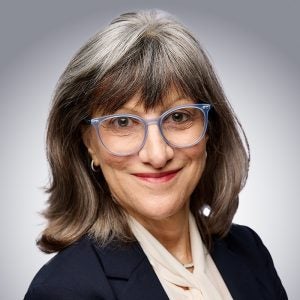
Dr. Debra Weinstein is an honors graduate of the University of Pennsylvania and NYU School of Medicine. She was board-certified in Internal Medicine in 1990. After 16 years of acclaimed private practice—where she was recognized by Town and Country as one of the nation’s top internists—she pivoted to clinical research in 2002. Since then, she has founded multiple research organizations and served as an investigator on over 200 clinical trials. A former NAPW ‘Woman of the Year’ and a Certified Principal Investigator, Dr. Weinstein now serves as Chief Medical Officer at Science 37. As a leading expert in decentralized clinical studies, she holds medical licenses in 46 states, allowing her to oversee innovative medical research and trial delivery on a national scale.


