
Phesi, a patient-centric clinical data science company serving the global biopharmaceutical industry, won the Innovation award in the 2025 Clinical Trials Arena Excellence Awards. The award recognizes a shift to data-driven trial planning and execution that connects predictive modeling to real-world decisions across protocol design, governance, and investigator site selection.
Phesi approaches development as an engineering challenge: its AI-driven Trial Accelerator™ models future scenarios, tests options, and embeds choices into operational workflows.
Go deeper with GlobalData


Discover B2B Marketing That Performs
Combine business intelligence and editorial excellence to reach engaged professionals across 36 leading media platforms.
Drawing on a global, contextualized data asset spanning over 300 million patients across 195 countries and more than 4,000 indications, Phesi brings evidence to decisions that have often relied on custom analyses and expert opinion—delivering fewer amendments, faster enrollment, and a more disciplined go/no-go process that reduces waste and patient burden.
From analytics to action: Real-world data-based simulation that drives operational change
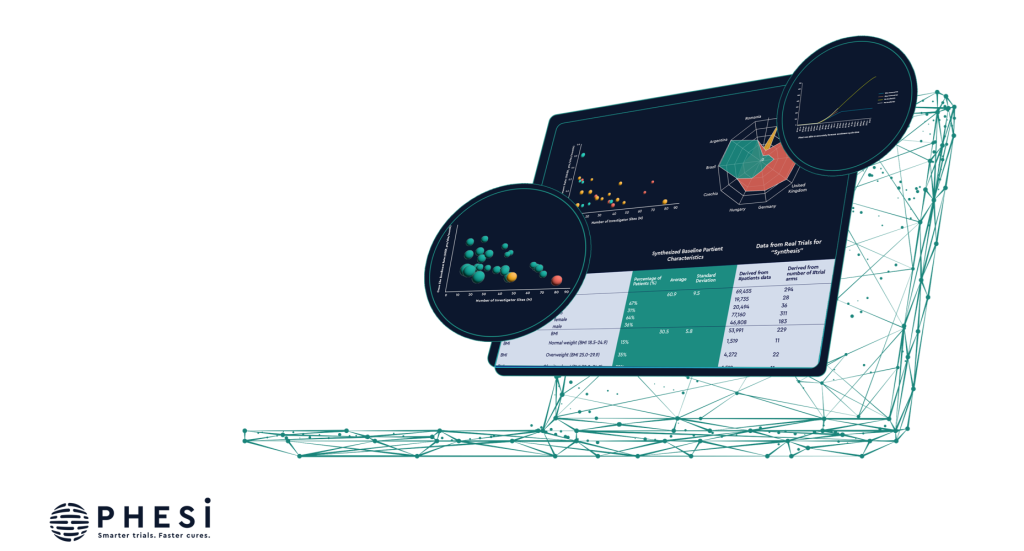
Unlike retrospective analytics, Trial Accelerator™ is designed to influence choices before a study launches. It assembles Digital Patient Profiles for a given indication—age, sex, comorbidities, biomarker, outcome measures, concomitant medications, treatment modality—and then builds Digital Twins from similar or identical trials to predict safety and efficacy under different design scenarios. These forward-looking models help sponsors forecast enrollment rates by country and site, test alternative eligibility criteria, and compare endpoint configurations. Sponsors can act on recommendations to alter country mix, reallocate investigator sites, or fine-tune assessments and visit schedules.

By simulating how each inclusion criterion or assessment may restrict the eligible pool, sponsors can see the trade-offs clearly—what tightening criteria might cost in recruitment time, or how removing a nonessential assessment could improve throughput. The same discipline applies to timelines and resourcing. Because the simulations are grounded in contextualized real-world patient data—documenting who collected each data point, how it was collected, and under what study design—teams gain confidence that the modeled outcomes reflect real-world practice rather than assumptions. This approach has been used extensively by large biopharma and mid-sized biotech to optimize protocol design, reduce amendments, and improve cycle time predictability and and secure regulatory approval of key assets.
Governance with digital twins and external controls

Phesi’s use of Digital Twins and external control methodologies strengthens development governance by creating an evidence-based model of safety and efficacy parameters, including for current standards of care, early in planning. Digital Twins, generated from extensive real-world data across thousands of indications, and from thousands of patients in each indication including rare diseases, allow teams to compare expected outcomes for target patients under different design choices. This makes go/no-go decisions more informed: programs can be advanced or halted with clearer rationale based on modeled performance using global RWD rather than opinion. For portfolio leaders, this translates into earlier visibility on commercial viability, including enrollment velocity and endpoints, which supports resource allocation across countries and studies.
The platform’s external control capabilities also help sponsors construct transparent, auditable control strategies when conventional approaches are impractical or burdensome, such as in rare diseases or where standard-of-care variability complicates control selection. Because every input is contextualized, reviewers can trace the provenance and study design behind aggregated patient data, improving comparability. This has practical implications for regulatory interactions; while not a substitute in every case, these constructs can complement sponsor submissions and clarify design justifications. The net effect is tighter governance—clearer criteria for proceeding, better-defined risk, and earlier alignment on the operational plan.
Evidence-based investigator site selection using Patient Access Score
Investigator site selection is a chronic bottleneck. Trial Accelerator™ addresses it with a Patient Access Score that evaluates investigator sites against the actual patient characteristics defined by the protocol. Instead of relying on past relationships or broad reputation, the score highlights which investigator sites have historically seen—and can access—the right patients for the specific indication and inclusion criteria. This makes the selection process auditable and repeatable, significantly reducing the incidence and associated costs of non-enrolling or low-enrolling sites.
A recent C. difficile case study illustrates this. Phesi built a Digital Patient Profile from 64,105 protocol matched patients across 335 cohorts, representing data contributed by 4,022 investigator sites in 55 countries. When those data were compared to CRO nominations, only 7 of 20 proposed sites were top tier sites. Using the Patient Access Score, Investigator Site Profiles and other proprietary performance scores, the Trial Accelerator™ platform identified alternative lead-enrolling investigator sites aligned to the protocol’s requirements. Beyond the immediate fix, this method gives sponsors clearer expectations for time to first patient in and overall enrollment, and it provides a defensible rationale for investigator site nominations during internal and CRO discussions. In practical terms, this reduces rework, minimizes delays caused by non-productive sites, and supports a more efficient country and investigator site footprint.
Scalable, transferable, and proven in the real world
What distinguishes Trial Accelerator™ is that it is a system, not a series of bespoke analyses. The underlying data fabric spans over 300 million patients across 195 countries and more than 4,000 indications—including rare diseases—and the data are fully contextualized. That breadth and structure allow the same workflows to be applied across therapeutic areas and geographies without rebuilding the analytics each time. Sponsors can move from protocol design optimization to country and investigator site selection to Digital Twin creation within one platform, using consistent methods and auditable inputs in weeks.
This transferability shows up in outcomes that matter to Clinical and Development Operations: fewer amendments due to upfront design decisions, faster enrollment supported by evidence-based investigator site selection, and clearer portfolio governance grounded in modeled counterfactuals. The platform has supported sponsors on programs including Keytruda®, Besponsa®, and others, reflecting its use by leading biopharma. As demand for AI in development grows, the ability to keep scenario modelling connected to action—triggering country mix adjustments, site reallocations, or endpoint refinements—positions Trial Accelerator™ as a practical tool that can scale with broader adoption. For the Innovation award, this combination of scale, rigor, and operational integration was decisive: it demonstrates how AI-enabled predictive modelling can reshape clinical development from study design through execution.

“Phesi is proud to receive the Innovation Award for AI-enabled Trial Simulation in the 2025 Clinical Trials Arena Excellence Awards. This achievement showcases our commitment to providing predictive patient-centric clinical data science solutions that deliver smarter trials and faster cures for unmet medical needs. We are excited to be recognized as being at the forefront of innovation in today’s increasingly complex and challenging global clinical development arena.”
– Dr Gen Li, President & Founder, Phesi Inc.
Company Profile
Phesi’s patient-centric, AI-powered clinical data science solutions deliver smarter trials and faster cures. Its award-winning Trial Accelerator™ platform draws on real-world data from over 300 million patients across 195 countries and 4,000 indications. Using Digital Patient Profiles and the unique Patient Access Score, Phesi’s insights help sponsors optimize protocol design, forecast enrollment rate and select lead enrolling countries and investigator sites to reduce patient burden and cycle times. From enabling Digital Twins and External Control Arms, Phesi is transforming the future of clinical development.
Contact Details
Email: info@phesi.com
Website: https://www.phesi.com/


