

For years, one of the biggest barriers to effectively implementing artificial intelligence (AI) into clinical trial data management has been a lack of trust in its capabilities. Although this concern is gradually fading, challenges remain – particularly those related to patient safety and maintaining data accuracy.
At Arena International’s Clinical Data Management Innovation (CDMI) Europe 2025 conference in Barcelona, held on 3-4 December, participants identified validation, regulation and risk management as key areas that must be strengthened to enable effective integration of AI into workflows.
Go deeper with GlobalData


Discover B2B Marketing That Performs
Combine business intelligence and editorial excellence to reach engaged professionals across 36 leading media platforms.
Validation remains key barrier
While AI is already being integrated into the daily workflow of data managers, there is still some hesitance by regulators while it proves validity.
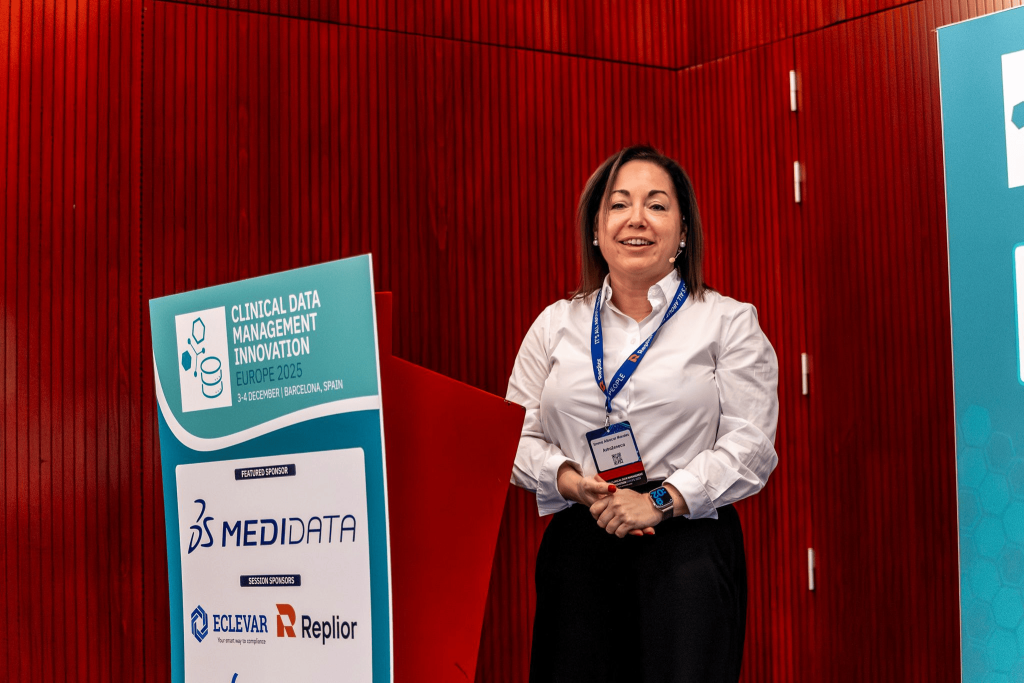
One area in which validity needs to be proven is its integration in Audit Trial Review (ATR), through the ICH E6(R3). The new ICH guidance looks for sponsors to continue working on ATR throughout the trial process, making it an “ongoing, proactive process”, explained Emma Albacar, director of clinical data management in oncology at AstraZeneca. She believes that this change will “positively impact clinical trials and strengthen data integrity”.
AI can be of assistance here, as it can monitor who, what, when, and why data has changed, but this technology must first be validated to ensure it is properly trusted by regulators, Albacar added.
“If we can properly validate this new technology, it will be much easier to gain regulatory acceptance, as agencies are open to improvements that enhance patient safety and potentially accelerate the time to bring drugs to market,” Albacar explained.
Validation is not only needed in ATR, but throughout the data management process, added Marouane Nouira, head of data management and strategy at Galapagos. AI can only work well, however, if it is supported by effective and accurate data collection, especially if the technology is being used to pull the best value insights. But this can only happen if sponsors have well-collected data.
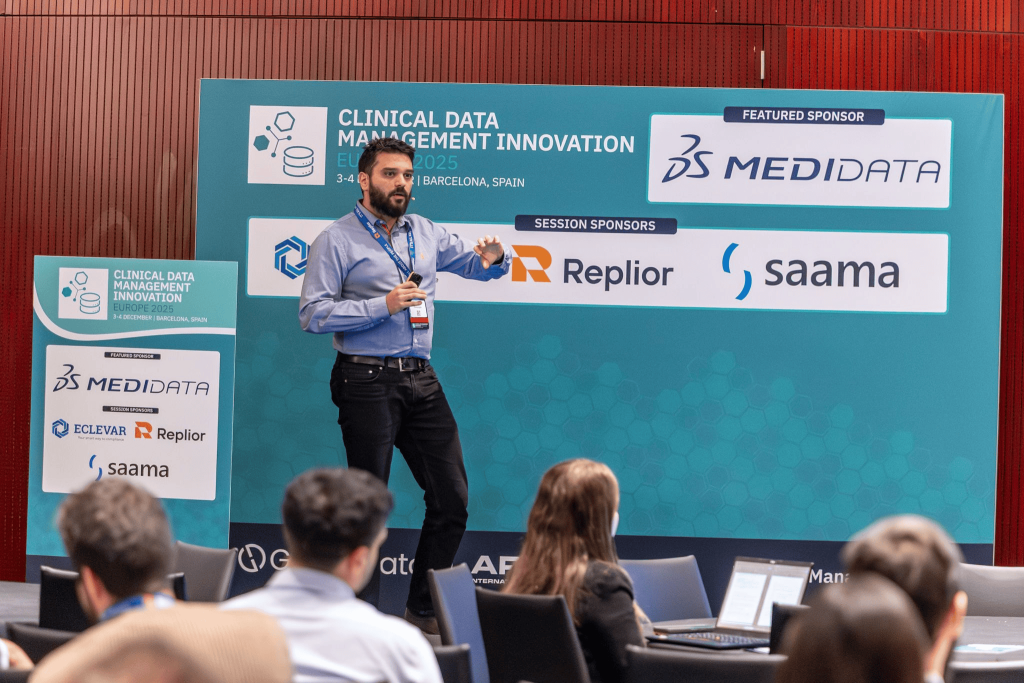
Nouria shared first-hand experience with validation challenges after an AI model he developed rapidly reached a reported 100% accuracy – prompting him to scrap the model altogether. Although such a result might initially appear impressive, it raised concerns about hidden issues and ultimately led him to question just how much trust can be placed in the technology.
“When working with AI models, sometimes you must take a step back and ask: ‘Is this too good to be true?’ Tools like ChatGPT and other generative AI give the impression that they are robust and consistent, but we have seen that they can hallucinate.” said Nouria.
“This poses a danger to data integrity and patient safety. In our industry, we must be sure that a model is deterministic – meaning it will give you the exact same answer, even if you ask it 1,000 times. Unfortunately, current large language models (LLMs) are still non-deterministic; they might give you a wrong answer just one time, but that one error can have drastic consequences for a clinical trial and the patient.”
Move fast or fall behind
AI is evolving at a remarkable pace, with innovations ranging from LLMs and generative AI to agentic AI. Given the speed of development, it’s crucial for companies to define their AI strategies now – or risk falling behind.
“There is an increased desire by multiple parts of the community to adopt AI tools. The rate of change is significant around AI, so change management around how to do that, and understanding of the technologies is a key theme that keeps recurring,” said Panikos Christofi, associate vice president of customer success at Saama.

This is not just a fear but is already happening, Christofi added. “I see clients who may have implemented new technology, but by the time they put it into practice, something new has come out. They’ve made an investment that is hard to pivot, and they’re already behind. Vendors like us, that is part of our job to stay up to date. My advice is not necessarily to go to a vendor for your tools if that is not the right solution for you – but do consult with the right experts before you make the choice of which tool to apply.”
AI as support, not replacement
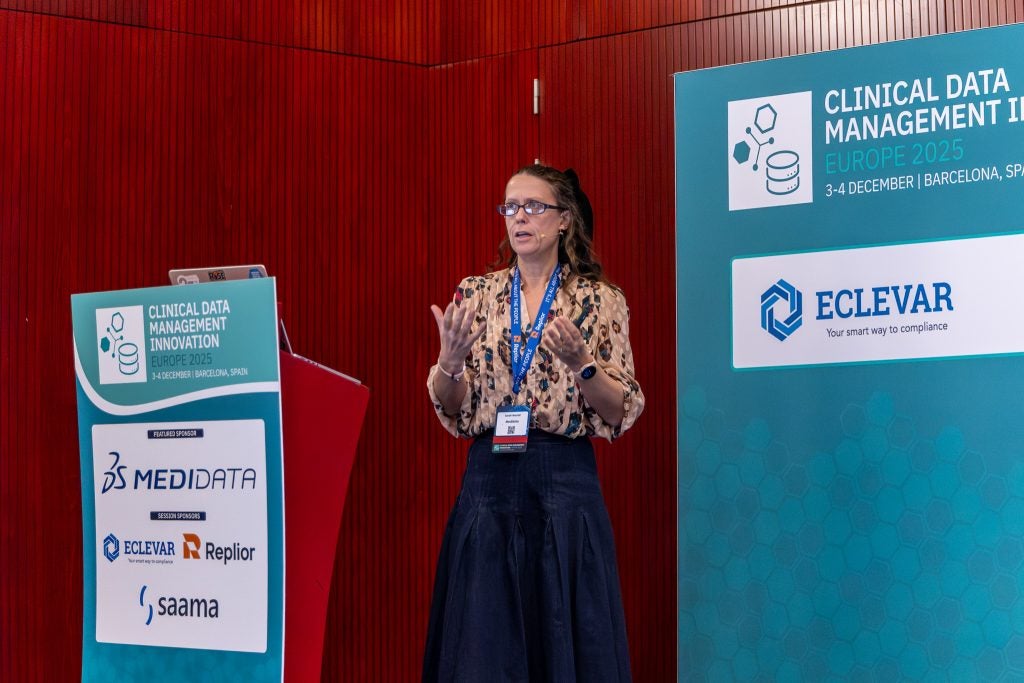
One of the big fears around AI now is whether it will replace staff. The consensus is that this is not something to be concerned about, with Sarah Westall, senior director of data experience at Medidata, affirming its ability to be an assistive tool.
“It’s going to get rid of some of that mundane administration so you can focus your time on the tasks that are really needed. Others have said that there aren’t enough data managers to fill the positions. Therefore, we need to have the ability to be more focused with our time, so if we can leverage AI to do that, that’s important,” said Westall.
A need for data managers was echoed by Christofi, who believes that AI should be treated as a “junior colleague” to reduce mundane tasks.
Beyond AI
While AI was the dominant theme across CDMI Europe, other concerns exist in the data management space.
As sponsors are being asked to provide more oversight to regulators, Tarik Hicheur, data analytics and business intelligence director, Inotrem, said sponsors should be interrogating the data throughout the trial process, and not putting all the trust in vendors and contract research organisations (CROs).
“Even when we trust our CRO’s data management capabilities, the sponsor must implement independent checks. Ultimately, the sponsor is best positioned to ensure that the collected data perfectly aligns with the protocol and all the trial’s specific requirements,” Hicheur explained.
Other sessions during the conference evaluated overcoming challenges in patient retention, with Christer Nilsson, CEO of Replior, highlighting how a gamification platform can improve patient engagement and retention by providing ‘achievements’ and ‘targets’ for patients to reach.
Effective vendor relationships was also a theme, with several sessions exploring how to assess the capabilities of vendors and navigate relationships.



