

Driven by regulatory reforms that are accelerating drug approvals and a wave of licensing deals with Western partners, Chinese life sciences companies are steadily expanding their global footprint.
As their role in international drug development grows, China’s clinical trials ecosystem is undergoing a significant transformation.
Go deeper with GlobalData


Discover B2B Marketing That Performs
Combine business intelligence and editorial excellence to reach engaged professionals across 36 leading media platforms.
Yet for many first-time sponsors, operational hurdles remain – from cross-border logistics and protocol misalignment to communication gaps with global stakeholders.
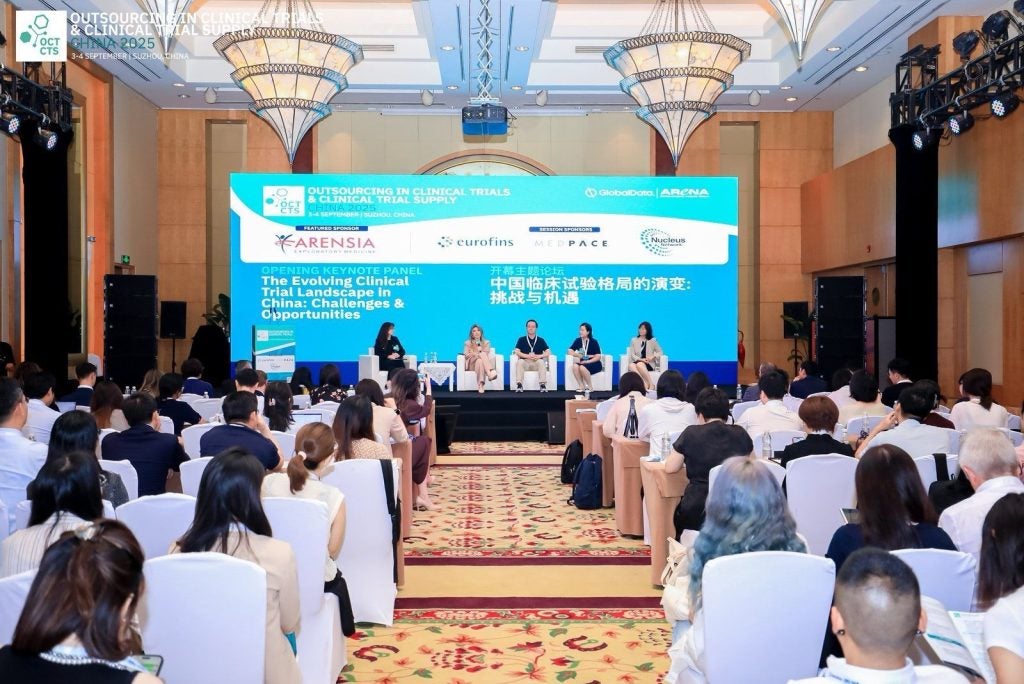
At the inaugural Outsourcing in Clinical Trials & Clinical Trial Supply China conference in Suzhou, industry leaders discussed practical strategies to navigate these challenges. Among the key recommendations: building clinical teams with global experience and ensuring early alignment across regulatory, cultural, and operational dimensions.
Ultimately, attendees agreed that trust in China’s clinical research capabilities will depend on two factors: the delivery of high-quality, reliable data and the establishment of clear, consistent regulatory expectations.
Regulatory reforms gaining traction
China has rapidly emerged as a major player in global clinical research. According to GlobalData analysis, the country now leads the world in clinical trial activity, having surpassed the United States over the past decade in the total number of trials, including both ongoing and planned studies.
This growth has been driven by a series of reforms designed to streamline drug approvals and offer greater clarity to trial sponsors. A key element of this evolution is the draft guidelines issued by China’s National Medical Products Administration (NMPA), which propose a 30-day review mechanism to accelerate the approval process for innovative drugs.
These changes are seen as pivotal in aligning China more closely with international standards and reinforcing its status as a preferred destination for global clinical trials.
However, despite positive developments, industry sentiment is cautiously optimistic. Companies are still facing significant logistical and operational challenges in China, particularly when navigating cross-border supply chains and trade regulations.
During a panel discussion at the conference, Fiona Xing, Senior Director of Global Clinical Trial Supply at biotech Brii Biosciences shared a case study highlighting the impact of tariff-related supply chain disruptions on clinical trial operations.
“We had several drugs for clinical trials that we were importing into China from overseas. However, the recent tariff increases posed significant challenges,” said Xing. “At that point, we were uncertain how to proceed, as the substantial rise in tariff and VAT expenses – on top of the already high base prices – created a considerable financial burden for our company.”
In response, Xing said the team engaged with local authorities in China. She highlighted how the experience underscored the importance of local stakeholder engagement in navigating the regulatory and logistical challenges of clinical development in China.
“If you face an expected situation, reach out to others in industry, but also seek support from the local government,” said Xing. “We received unexpected support to address the challenges, and this helped lead to a resolution.”
Trust and data quality remain key concerns
While China’s large patient population is a significant strategic advantage for clinical research, international sponsors remain cautious – especially when it comes to first-in-human (FIH) studies. Persistent concerns include data reliability, site experience, and the traceability of patient medical histories.
“There is still reluctance from pharma companies based outside China to place their first-in-patient trials here,” said Claudia Hesselmann, founder and CEO of Arensia, Exploratory Medicine.
“We’re seeing growing interest from international investors in acquiring drug candidates originating in China,” Hesselmann noted. “However, trust in the underlying data remains a major factor. Even when compounds have already completed Phase I trials in China, buyers often look to repeat the studies to validate the data.”
She pointed out that the lack of confidence stems not necessarily from poor science, but from concerns around data quality, patient profiles, and study design. “We do see good science coming out of these trials. But for global stakeholders, reproducibility and transparency are essential.”
“There’s real potential here,” she added. “Big pharma is increasingly looking to China for innovative assets, and we’re also seeing growing interest from international investors in licensing or acquiring these molecules. I’m confident this space will evolve, with more collaboration between Chinese innovation and overseas funding.”
The reality of going global
China is no longer a market of “me-too” drugs. Increasingly, the country is home to first-in-class or globally competitive therapies, particularly in areas like oncology, autoimmune disease, and cell therapy. What’s more, the price point is compelling – some Chinese-developed assets are “30% off” typical market valuations, creating significant upside for early backers.
Beijing has also made biotech a national priority. As part of its “new quality productive forces” strategy, the government is funnelling support into high-tech industries with global potential and biotech is high on that list.
This includes not only R&D subsidies and tax incentives, but also the expansion of innovation hubs like BioBAY, which bring together talent, capital, and global partnerships.
As investor Claire Chin put it: “Currently it’s a very good time to invest in biotech in China. The signals are clear.”
According to GlobalData analysis, China has sharply pulled ahead of the United States in pharmaceutical patent activity, filing over 188,000 patents in 2024 compared to the US’s 53,777. The gap, which has widened steadily since 2020, reflects China’s accelerating focus in biotech and pharmaceutical innovation.
And for China’s drug developers, the motivation is clear: if you want to go global, your trials must go global too.
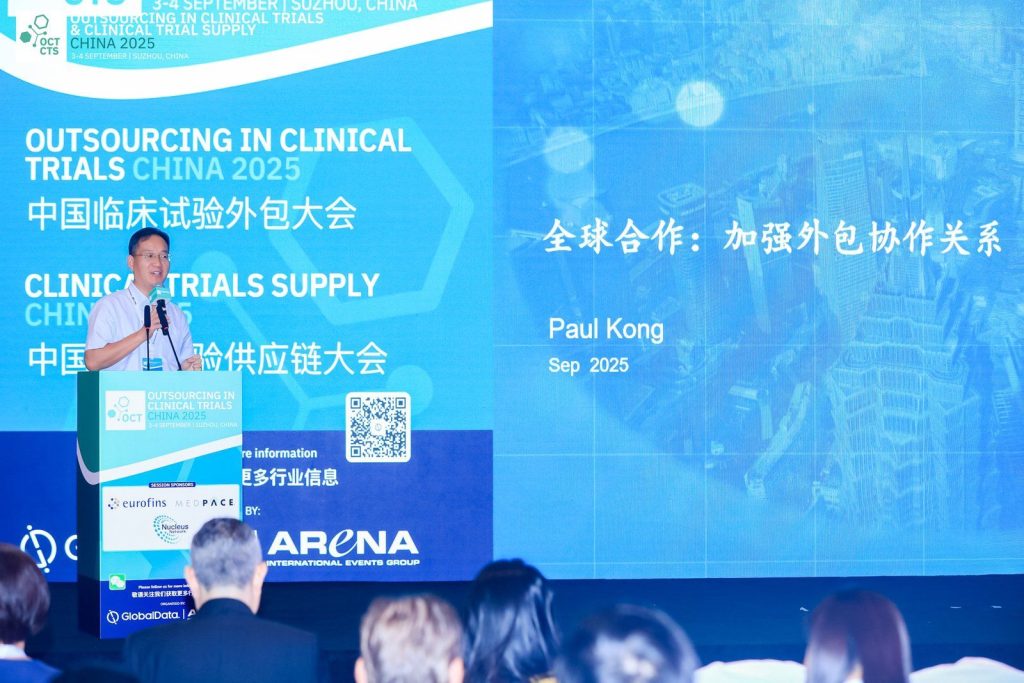
Paul Kong, VP of Clinical Operations at LaNova Medicines, offered a candid look at the growing pains and critical lessons for Chinese companies navigating international clinical trials.
“Many Chinese biotechs are doing global trials for the first time,” Kong said. “There’s a lack of experience and very few global-ready teams.”
The hurdles, as Kong laid out, are both practical and cultural. Simple assumptions – like being able to call an investigator directly – break down quickly outside China.
“Communication is a big challenge abroad,” Kong explained. “In China, we can call or contact the investigators directly via platforms like WeChat. In the US or Australia, we don’t even have their cell phone numbers.”
From time zone differences to language barriers and different working styles, coordinating with investigators and CROs becomes far more complex. Many Chinese companies, he noted, don’t yet have teams equipped to handle this new level of global engagement.
Start smart: US and Australia
To get ahead, Kong recommended starting trials in markets like Australia or the US, where regulatory systems are more streamlined, and timelines are faster. “The IND process is very simplified in Australia. We can submit earlier and get early safety or efficacy data.”
That early data, he stressed, is not just for internal planning – it is also key to engaging major regulators like the US Food & Drug Administration (FDA) or European Medicines Agency (EMA).
“Proactively engage with FDA or local regulators using preliminary data,” he said. “It helps build credibility.”
Pick the right CRO – and the right mindset
Another major decision: choosing the right CRO. And according to Kong, there’s no one-size-fits-all solution.
“Global CROs, middle-size CROs, and Chinese CROs all have different strengths,” Kong said. “Choose based on the study.”
But perhaps more important than the CRO is how the sponsor works with them. Kong urged companies to train their teams to engage vendors and sites more proactively and not get caught up in blame games.
“We need to clarify things in real time,” said Kong. “It’s not about who’s right but about resolving issues quickly.”
And that shift in mindset applies beyond operations. “Sometimes Chinese companies are quite humble,” Kong said. “But as a sponsor, we understand our product and protocol best. We need to show that confidence to investigators.”
That includes visiting sites in person, clearly explaining the science, and helping doctors and site staff understand why the drug matters and how the trial is designed.
“Show investigators our protocol clearly,” he added. “They’ll gain confidence in our drug.”
Kong’s recommendation highlighted more than a checklist – it indicates a mindset shift. Moving from domestic success to global relevance requires more than strong data; it requires strategic thinking, cultural agility, and operational maturity.
“We need to understand the differences,” he said. “And find a smart way to work with sites and CROs to make sure the trial moves forward as planned.”
It’s a transition many Chinese biotechs are now in the thick of – moving from quiet followers to confident global players. And as Kong’s talk made clear, the companies that get there first will be the ones who adapt fastest.
Navigating challenges to seize a global opportunity
China’s biotech sector stands at a pivotal crossroads. Regulatory reforms and government backing have accelerated the country’s integration into the global clinical trial ecosystem, making it an increasingly attractive destination for sponsors and investors alike. Yet, to fully realise this potential, Chinese companies must navigate operational challenges, bridge cultural and communication gaps, and build global-ready teams capable of meeting stringent international standards.
Trust in China’s clinical research will hinge on consistent delivery of high-quality data and transparent regulatory processes. As biotechs shift from local followers to confident global players, those that embrace strategic collaboration and operational discipline are best positioned to lead on the world stage. The window of opportunity is open – but seizing it demands both ambition and execution.



