

At Arena International’s Outsourcing in Clinical Trials (OCT) DACH 2025 conference, technology took centre stage, with emerging and established tools such as AI, digital twins and automation systems capturing the attention of industry members from across the clinical trials landscape.
The ninth annual event, which was held on 12-13 November in Zurich, Switzerland, brought together experts from every corner of clinical trial operations, recruitment and analysis, with a packed agenda covering everything from contract research to technology and industry-specific regulations.
Go deeper with GlobalData


Discover B2B Marketing That Performs
Combine business intelligence and editorial excellence to reach engaged professionals across 36 leading media platforms.
While the buzz around technology and its use cases at the event was undeniable, experts were sure to acknowledge concerns surrounding implementation, however this was met with optimism and solutions to these industry pain points.
Another key point of discussion was geopolitics, as unforeseen circumstances such as wars, trade clashes between influential nations, climate change and global pandemics continue to have a significant impact on the sector.
Experts were also keen to discuss the necessary steps to gain true equity in clinical trials, which is still a work in progress for many across the globe.
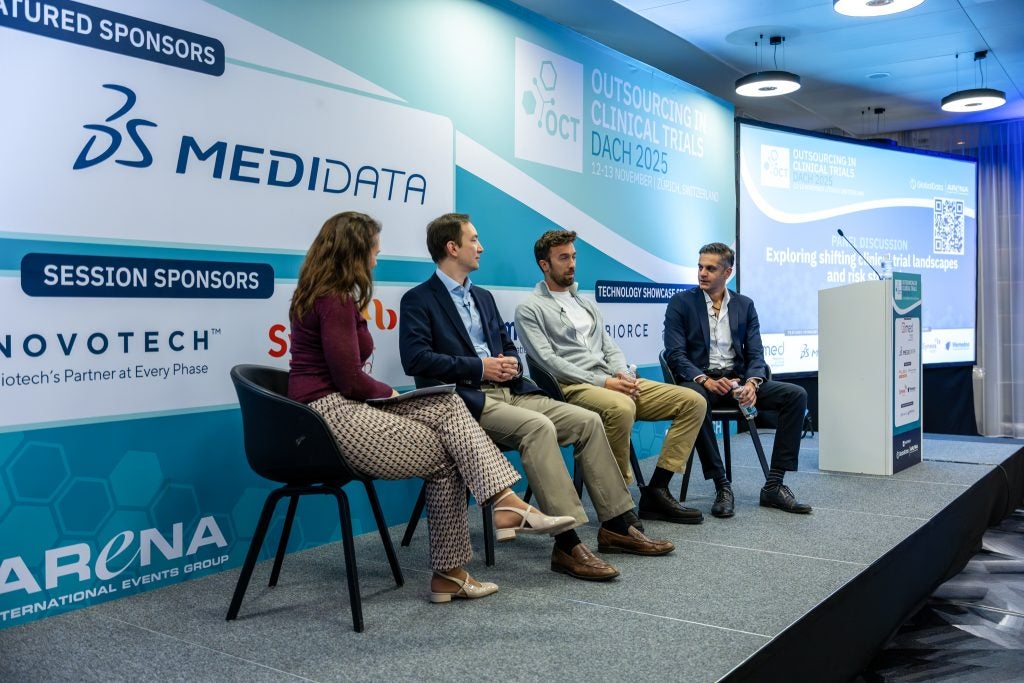
Navigating the modern geopolitical landscape
As the modern geopolitical landscape continues to throw curveballs, companies are increasingly searching for ways to mitigate the impacts of unpredictable events.
In a panel, experts noted that unforeseen circumstances can have a strong impact on everything from site selection and visitation to clinical trial contracts. As these scenarios are unavoidable, panellists stressed the importance of flexibility in dampening impacts, which can help trials run smoothly.
This is particularly relevant to clinical trial contracts, which can serve as a line of defence against unexpected changes caused by geopolitical events. To ensure they are an effective fail-safe, Amir Ahari, global head of clinical studies, neuroscience at Novartis, mentioned that companies should be drafting flexible contracts, including references to pandemics, cyberattacks and government restrictions.
Ahari also recommended the use of contingency clauses, which can bolster the flexibility and resilience of such agreements.
Alongside smart contracting, Ahari noted that global connectivity can play a key role in promoting flexibility in clinical trials.
He said: “Being globally connected is becoming increasingly important, which can be difficult for smaller companies.
“However, collaboration with contract research organisations (CROs) and knowledgeable partners can help us stay prepared for unexpected changes.”

AI takes centre stage
Alongside geopolitics, AI was a central point of discussion.
It is no secret that AI is advancing at a rapid pace, driving efficiency and reducing manual workload. Across the clinical trials landscape, AI has already developed significant roots, with applications spanning from first protocol design to patient recruitment.
João Gonçalo Nascimento, performance analyst at Pfizer, noted that the industry is particularly well equipped to harness the technology due to its strong resource backing, which allows companies to develop catered technologies in-house.
However, in conversation with Clinical Trials Arena, he noted that the pharma sector is “still trying to figure out the best use cases for generative AI”.
While its full usability is yet to be established, Gonçalo Nascimento sees particular potential for the technology in the move away from feasibility surveys, which will “reduce the burden on trial sites and expedite timelines on the sponsor side”.
He also touted the potential of persona or role-based agentic AI, which he notes will be able to perform similar tasks to a human. Though this technology is designed to work autonomously, he believes manual intervention will still be required for some time.
Though AI’s overall impact is undeniable, Piotr Maslak, senior director and head of emerging technologies at AstraZeneca, surmises that its widespread implementation will depend on trust.
“Instead of looking at the data, we’re typing in a prompt into AI and getting an output, which some people do not trust,” Malask said.
“When it comes to AI technology, it’s not a lift and shift; it’s a change of paradigm. As an industry, we need to change the way we work, our habits and how we interact.”
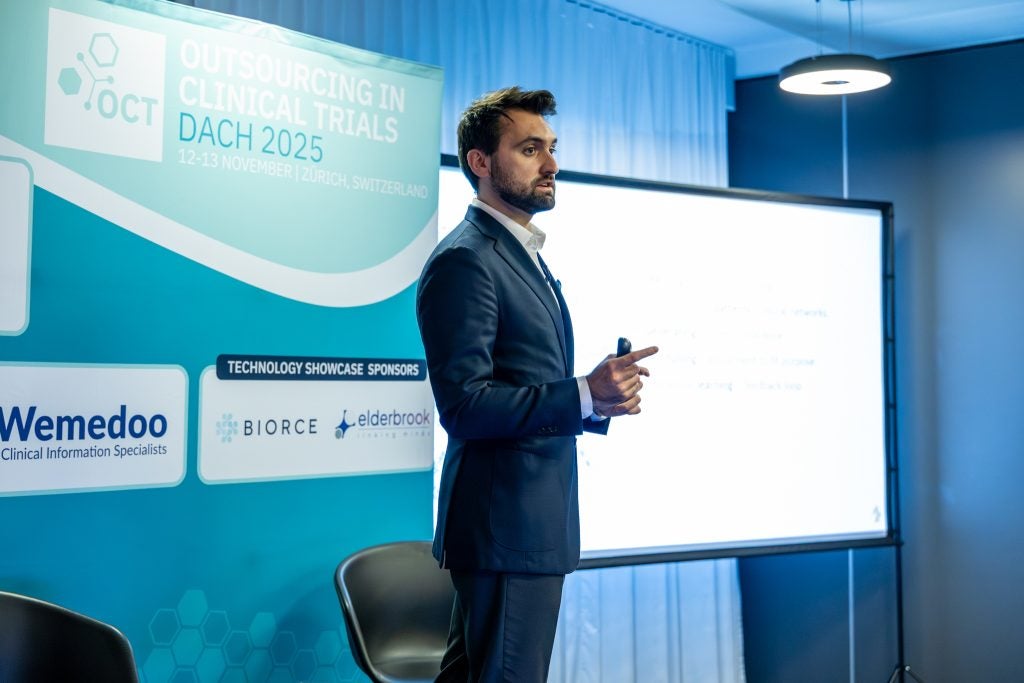
Tackling inequity in clinical trials
Equity was also a key talking point, as companies look to create drugs suitable for all.
In a panel session from the first day of the conference, Maria Rigoroso-Brandt, global patient engagement lead at Pfizer, noted that while progress has been made, there is still a way to go to achieve true clinical trial equity.
During the session, Rigoroso-Brandt and other panellists stressed the importance of sex-related considerations for clinical trial operators.
“Gender data analysis is a must; it should not be an afterthought anymore, as we need to contribute to the strengthening of available data,” she stated.
Gonçalo Nascimento agreed with this sentiment, caveating that the pharma industry will have to be “careful about the sources” included in the growing data pool.
He stated: “Even though real-world data looks like it might capture a wide proportion of the population, it might be biased towards some ethnic or racial groups.
“We can account for this through data stewardship, meaning someone is actively accountable for reviewing that data. It could also help to have someone reviewing the models that come out of that data, as this can help us identify and take steps to mitigate such biases.”
Rigoroso-Brandt also touted the importance of including patient organisations in discussions, as they can help companies better understand the patient population they are trying to cater to.



