

AbbVie and Bristol-Myers Squibb (BMS) have entered a clinical trial collaboration to assess ABBV-399 in combination with Opdivo (nivolumab) to treat patients with non-small-cell lung cancer (NSCLC).
Go deeper with GlobalData


Discover B2B Marketing That Performs
Combine business intelligence and editorial excellence to reach engaged professionals across 36 leading media platforms.
AbbVie’s ABBV-399 (telisotuzumab vedotin) is an investigational, anti-c-Met antibody-drug conjugate currently being developed to target both c-Met-amplified and c-Met over-expressing tumours.
Opdivo is BMS’ programmed death-1 (PD-1) immune checkpoint inhibitor that leverages the body’s immune system to restore anti-tumour response.
Under the collaboration, the firms are currently conducting a Phase Ib trial for advanced c-Met over-expressing NSCLC patients who failed one previous line of chemotherapy.
The trial will investigate the tolerability and potential efficacy of the ABBV-399 and Opdivo combination.
US Tariffs are shifting - will you react or anticipate?
Don’t let policy changes catch you off guard. Stay proactive with real-time data and expert analysis.
By GlobalDataAbbVie oncology early discovery and development vice-president Tom Hudson said: “Therapeutic advances continue to be achieved every day and we are committed to exploring the potential of our investigational compounds with other approved treatments with the goal to deliver a significant impact to patients.”
AbbVie is sponsoring the Phase Ib trial, which could be expanded for treatment of other solid tumours in the future.
Bristol-Myers Squibb oncology development head Fouad Namouni said: “We continue to explore the potential of novel combinations of medicines with Opdivo, and AbbVie’s investigational treatments will help evaluate the role of new targets in combination with immunotherapy.
“We look forward to continuing to partner our PD1 with AbbVie’s early and late-stage assets as a possible treatment option for patients with lung cancer.”
BMS has been evaluating Opdivo in a wide range of clinical trials across all phases, and the drug’s clinical development programme involved more than 25,000 subjects to date.
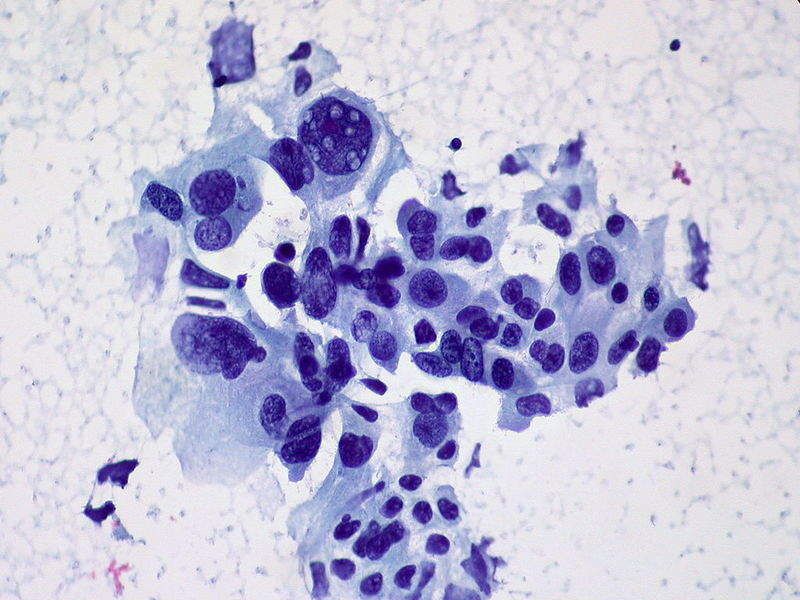
Image: Non-small-cell lung cancer. Photo: courtesy of Yale Rosen via Wikipedia.



