
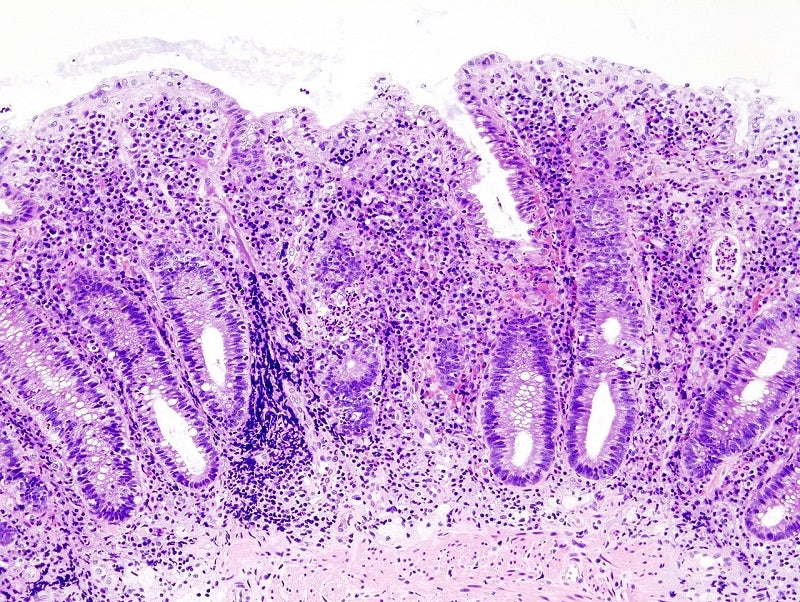
AltruBio has dosed the first subject in a Phase I clinical trial of its next-generation PSGL-1 antibody agonist, ALTB-268, in healthy volunteers to treat ulcerative colitis.
The double-blind, randomised, single- and multiple- ascending dose Phase I trial will assess the tolerability, safety, pharmacokinetics/pharmacodynamics, and immunogenicity of ALTB-268, which acts as an immune checkpoint enhancer (ICE).

Discover B2B Marketing That Performs
Combine business intelligence and editorial excellence to reach engaged professionals across 36 leading media platforms.
AltruBio president and CEO Judy Chou said: “We are thrilled to bring ALTB-268 into the clinic to evaluate its safety and tolerability as a first step towards providing not only a more conveniently administered but potentially more durable and effective treatment option for patients suffering from immunological diseases including ulcerative colitis.
“The Phase I study was built on the clinically validated mechanism of action and strong preclinical data, which showcased the improved potency in eliminating pathogenic chronic T cells.
“We believe ALTB-268 can realise the ‘pipeline-in-a-product’ potential for multiple autoimmune and inflammatory diseases in a patient population with high unmet medical needs.”
Interim data from the Phase I trial is expected in the first half of this year, with plans to follow with a Phase II study commencement in ulcerative colitis.

US Tariffs are shifting - will you react or anticipate?
Don’t let policy changes catch you off guard. Stay proactive with real-time data and expert analysis.
By GlobalDataWithout interfering with cell migration, ALTB-268 helps to restore the immune system to a state of balance.
ALTB-268 is a tetravalent version of ALTB-168 and is currently being evaluated in a Phase I study, prior to advancing towards clinical studies in several inflammatory and autoimmune disorders.
The unique mechanism of action of the antibody agonist is the same as first-generation ICE, ALTB-168.
Earlier, ALTB-168 obtained positive Phase IIa results in ulcerative colitis, psoriasis, psoriatic arthritis, and SR/TR-aGVHD.


