
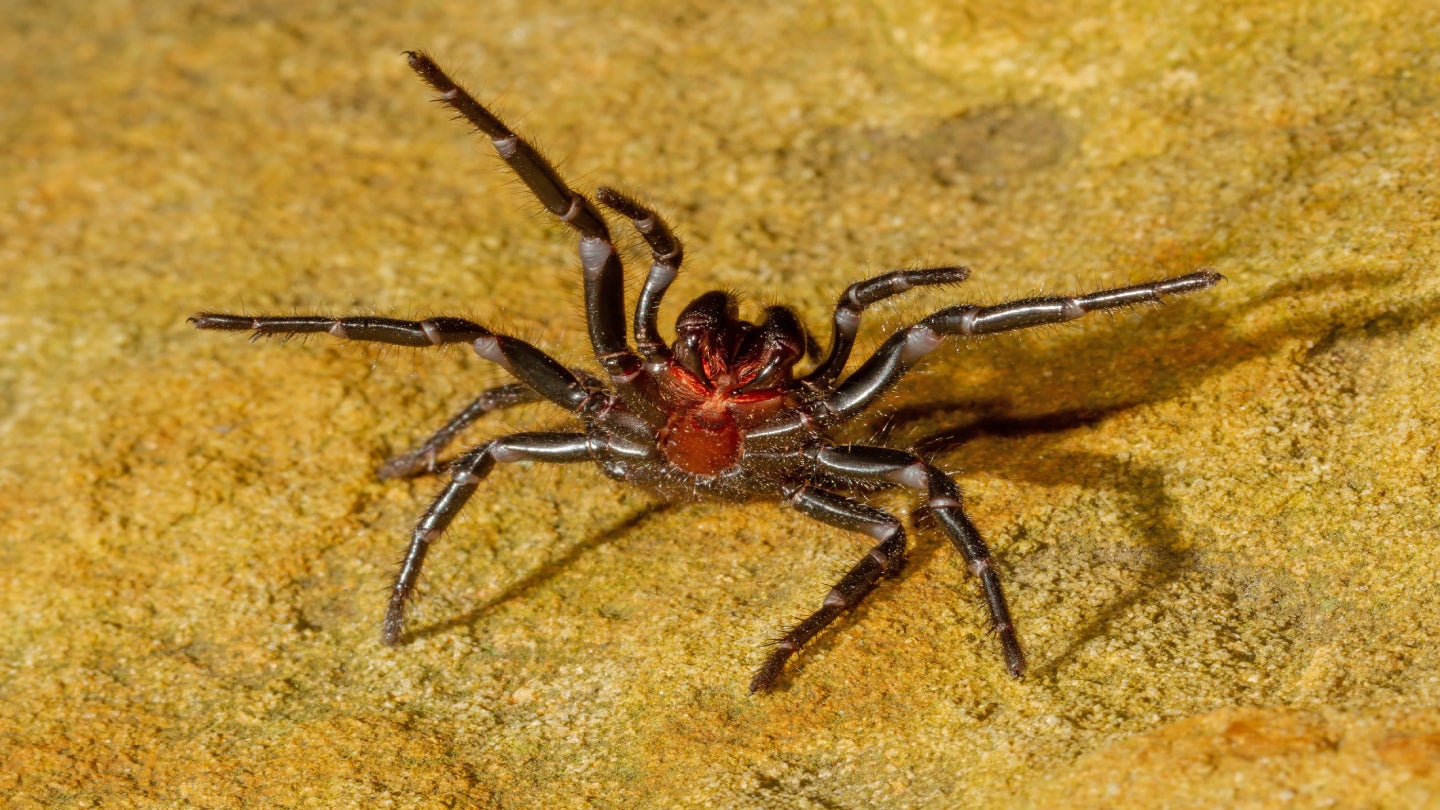
The University of Queensland has announced that a heart attack and stroke treatment developed from the venom of the K’gari funnel-web spider has met critical benchmarks.
The University of Queensland’s Institute for Molecular Bioscience has published research that details how the drug candidate, known as Hi1a and derived from the venom of the long-tooth funnel web spider, was able to protect cells from damage caused by heart attack and stroke.
Go deeper with GlobalData


Discover B2B Marketing That Performs
Combine business intelligence and editorial excellence to reach engaged professionals across 36 leading media platforms.
The molecule in question, IB001, was discovered following research by the university in which the same venom was used to produce ecologically sustainable forms of pesticides.
The study, published in the journal of the European Society of Cardiology, detailed how Hi1a met its benchmark in being as effective in mice as a previous cardioprotective drug, Dexrazoxane – the only cardioprotective drug to make it to Phase III trials.
Study author and research fellow at the university, Glenn King, said: “These tests are a major step towards helping us understand how Hi1a would work as a therapeutic – at what stage of a heart attack it could be used and what the doses should be.
“Importantly, we found that Hi1a only interacts with cells in the injured zone of the heart during an attack and doesn’t bind to healthy regions of the heart – reducing the chance of side effects.”
US Tariffs are shifting - will you react or anticipate?
Don’t let policy changes catch you off guard. Stay proactive with real-time data and expert analysis.
By GlobalDataPreviously in 2022 Australian pharmaceutical firm, Infensa Bioscience, raised $23m to develop Hi1a for commercial purposes. GlobalData’s Pharmaceutical Intelligence Centre details how in 2023, the overall sales value for cardiovascular treatments was estimated at around $51.4bn, with that figure expected to rise to $54.6bn by 2025.
Glenn King is credited with discovering the potential drug and was awarded the Australian Prime Minister’s Prize for Innovation in October in 2023, along with a $250,000 ($163,301 USD) payout for his work. The University of Queensland said it hopes that the drug could eventually be put in the hands of paramedic staff to respond to cardiovascular events in the home.
King added: “Hi1a could reduce damage to the heart and brain during heart attacks and strokes by preventing cell death caused by lack of oxygen.
“Our testing and safety studies from independent contract research organisations have provided evidence that Hi1a could be an effective and safe therapeutic.”
Elsewhere in the cardiovascular indication, US clinical-stage biotech firm, Mineralys Therapeutics, said it has dosed the first patient in a trial investigating the treatment of lorundrostat for the treatment of uncontrolled hypertension.



