
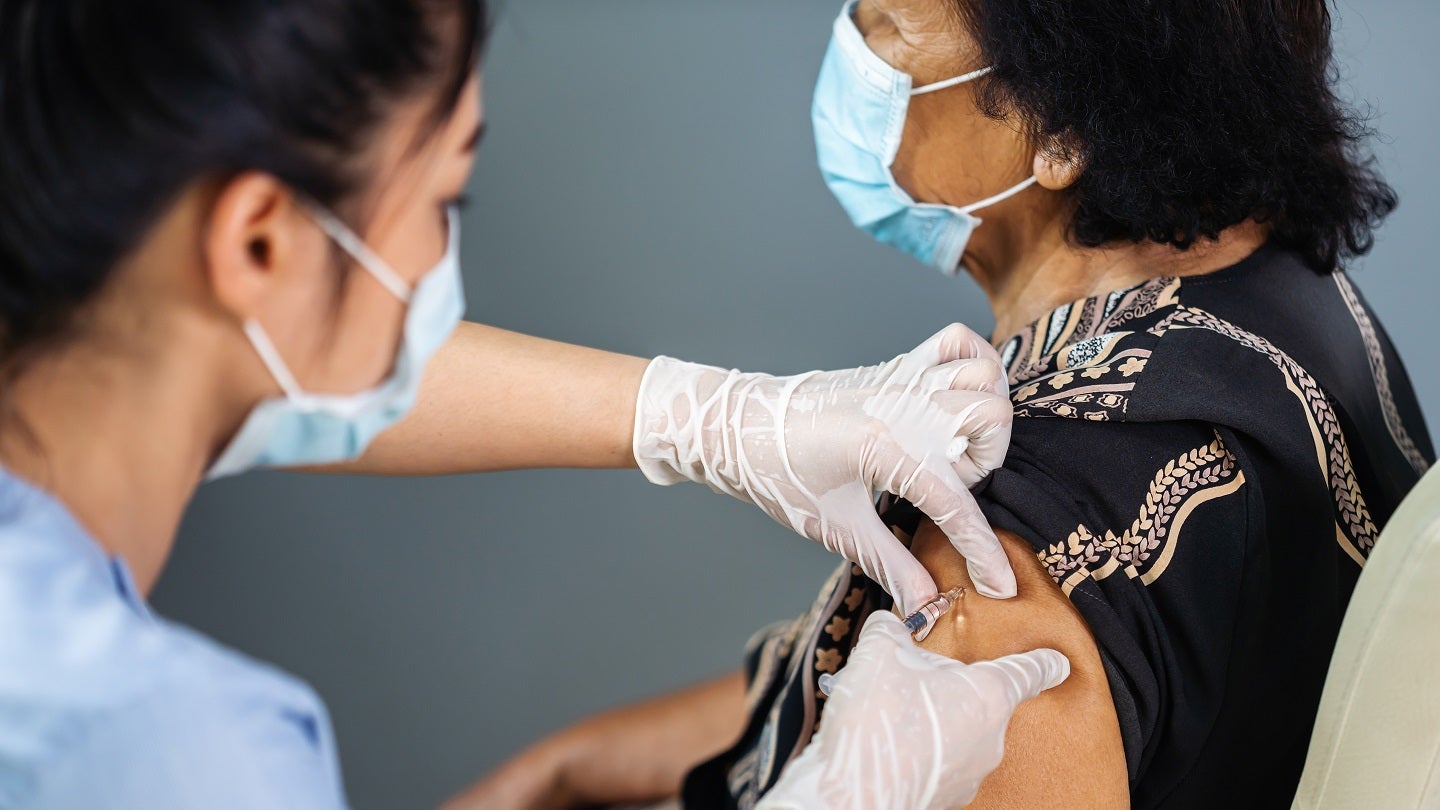
GeoVax Labs has initiated a Phase II clinical trial to compare its Covid-19 vaccine GEO-CM04S1 against Pfizer-BioNTech’s Bivalent vaccine in patients with chronic lymphocytic leukemia.
The randomised, observer-blinded, investigator-initiated study will be carried out at City of Hope National Medical Center, and Alexey Danilov will act as principal investigator.
Go deeper with GlobalData


Discover B2B Marketing That Performs
Combine business intelligence and editorial excellence to reach engaged professionals across 36 leading media platforms.
A total of 40 severely immunocompromised patients will be randomised to receive two boosters with either the Covid-19 vaccine GEO-CM04S1 or Pfizer-BioNTech’s bivalent vaccine as the control arm.
Patients will initially receive the first booster dose. Three months apart, a second booster dose will be given to assess immune responses in these vulnerable patients.
Immune responses will be assessed at the interim and final analyses in each arm.
GeoVax chief medical officer Kelly McKee said: “Unpublished clinical data recently presented at several medical conferences confirmed our earlier findings in healthy adults that GEO-CM04S1 stimulated a robust, durable, and broad-based humoral and cellular immune response against multiple SARS-CoV-2 variants, and by extension, to immunocompromised patients.
US Tariffs are shifting - will you react or anticipate?
Don’t let policy changes catch you off guard. Stay proactive with real-time data and expert analysis.
By GlobalData“Validation of these findings in additional patients with hematologic malignancies, who have received CAR-T and stem cell transplants, is underway as we seek to provide a vaccine solution to those individuals unable to mount adequate protective responses with currently available Covid-19 vaccines.
“We expect the CLL trial will further confirm the potential benefit of CM04S1 in another population of immunocompromised individuals.”
Built on MVA viral vector platform, the new Covid-19 vaccine induces both antibody and T cell responses to non-variable parts of the virus. It targets the spike (S) and nucleocapsid (N) proteins of SARS-CoV-2.
The vaccine will be used as a universal heterologous booster in healthy adults.



