
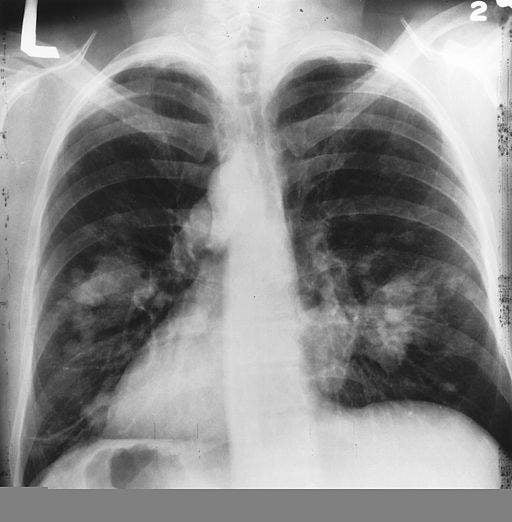
Integrated Diagnostics (IndiDx) has announced the publication of results from a second clinical trial of its liquid biopsy Xpresys Lung 2 (XL2), shown to accurately identify benign nodules in lung cancer patients. The results were published in the medical journal CHEST.
IndiDx conducted an initial study that showed certain protein changes could be discerned in early-stage lung cancer and used to exclude cancer in patients with benign nodules. Findings were published in Science Translational Medicine and Journal of Thoracic Oncology. The second study focused only on Stage 1A lung nodules, which are the most difficult to assess.
Go deeper with GlobalData


Discover B2B Marketing That Performs
Combine business intelligence and editorial excellence to reach engaged professionals across 36 leading media platforms.
“To establish a high level of evidence, we conducted two prospective studies, one for discovery and the other for validation,” study co-authors Dr Paul Kearney and Dr Steven Springmeyer said.
The validation study demonstrated the high accuracy of XL2 in identifying benign nodules in patients with a 50% or less pretest probability of malignancy. Using multiple reaction monitoring mass spectrometry, researchers measured the levels of plasma proteins LG3BP and C163A in 685 patients with 8-30mm lung nodules.
The study integrated five Standard Of Care clinical risk factors, such as patient age and nodule size, in combination with a measurement of two proteins into a single risk assessment. Sensitivity, specificity and negative predictive value were also calculated. The findings showed that the proteomic (protein) signal was additive to the clinical risk factors, providing new molecular insight to physicians.
“Integrated Diagnostics pioneered the liquid biopsy approach to lung nodules based on proteomic analyses of blood plasma samples from hundreds of patients with nodules,” Integrated Diagnostics CEO Dr. Albert Luderer said.

US Tariffs are shifting - will you react or anticipate?
Don’t let policy changes catch you off guard. Stay proactive with real-time data and expert analysis.
By GlobalData“This research resulted in the discovery of several lung cancer-associated changes in a patient’s plasma proteome.”
XL2 was shown to be more efficient than positron emission tomography (PET) in distinguishing different types of nodules, and researchers estimated that if used to direct treatment it could reduce procedures on benign nodules by 40%, while only 3% of malignant nodules would be misclassified. Such a process would be instrumental in discerning early-stage lung cancer and helping decide on the best treatment path for patients.
Currently, lung nodules prove a diagnostic challenge as determining whether they’re benign or malignant often requires invasive biopsies which carry significant costs, as well as risks for the patient.



