

Boston Biomedical has reported positive data from its Phase Ib/II study of napabucasin to treat metastatic colorectal cancer (mCRC).
Go deeper with GlobalData


Discover B2B Marketing That Performs
Combine business intelligence and editorial excellence to reach engaged professionals across 36 leading media platforms.
Napabucasin is an orally administered agent developed to inhibit cancer stemness pathways by targeting STAT3 in colorectal cancer (CRC) patients who are FOLFIRI-naïve.
The patients previously treated with FOLFIRI demonstrated anti-cancer activity when administered with napabucasin and FOLFIRI combination, with and without bevacizumab.
The data indicated that napabucasin may re-sensitise chemorefractory CRC patients for treatment with FOLFIRI with and without bevacizumab.
Boston Biomedical president and chief executive officer Chiang Li said: “Results from these studies for napabucasin in advanced colorectal cancer support the advancement of our clinical development programme for this first-in-class cancer stemness inhibitor into a global, Phase III trial in combination with standard-of-care chemotherapy.

US Tariffs are shifting - will you react or anticipate?
Don’t let policy changes catch you off guard. Stay proactive with real-time data and expert analysis.
By GlobalData“We are committed to ongoing research and clinical development of napabucasin, with the goal of ultimately achieving better therapeutic outcomes for patients with colorectal cancer.”
The combination of napabucasin with panitumumab in a Phase II study showed improved anti-cancer activity in patients with K-ras wild-type metastatic colorectal cancer (mCRC).
The results of the study indicated that napabucasin could sensitise patients to retreatment with anti-EGFR antibody therapy.
Napabucasin is currently being investigated in four Phase III studies to treat advanced gastric and gastroesophageal junction cancer, along with colorectal, lung and pancreatic cancer.
It has been granted orphan drug designation by the US Food and Drug Administration to treat gastric / GEJ and pancreatic cancer.
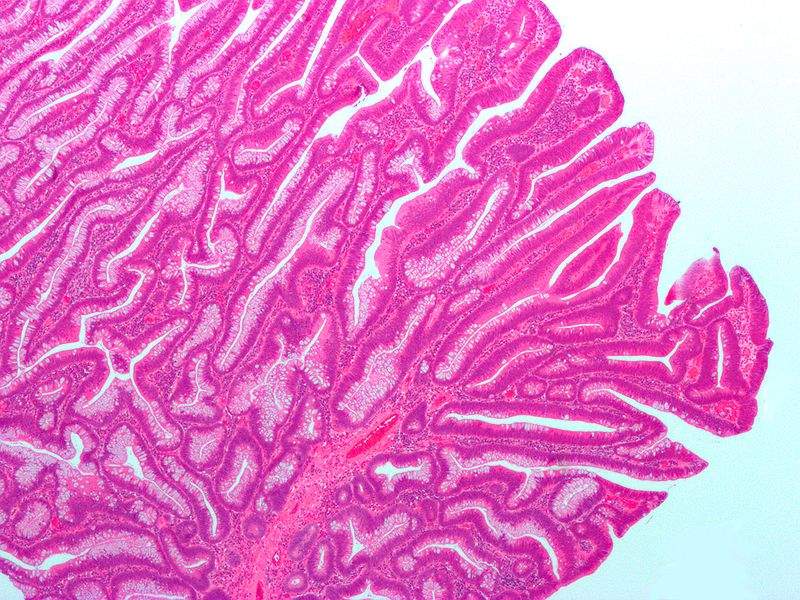
Image: Micrograph of a colorectal villous adenoma. Photo: courtesy of Nephron/Wikipedia.



