

A Cancer Research UK-funded trial (BILCAP) showed that the chemotherapy drug capecitabine increased the survival period of bile duct cancer patients by up to one and a half years after undergoing surgery for the disease.
Go deeper with GlobalData


Discover B2B Marketing That Performs
Combine business intelligence and editorial excellence to reach engaged professionals across 36 leading media platforms.
Available under the brand name Xeloda, capecitabine is an anti-metabolite drug developed to inhibit the DNA repair and production of tumour cells.
It is indicated for the treatment of various cancers such as oesophagal cancer, bowel cancer, pancreatic cancer, breast cancer and stomach cancer.
BILCAP is a randomised trial designed to evaluate the ability of the drug to prevent cancer recurrence after surgical removal of bile duct cancer or gallbladder cancer.
The trial compared effects of surgery and capecitabine with surgery alone in approximately 450 patients.

US Tariffs are shifting - will you react or anticipate?
Don’t let policy changes catch you off guard. Stay proactive with real-time data and expert analysis.
By GlobalDataLead researcher Professor John Primrose said: “While rare, bile duct cancer is difficult to treat and until recently there has been very little progress in treating the disease.
“Our results clearly show that patients who have surgery should be given capecitabine, as a result of which more will survive and with few side effects.”
The results indicated that the three-year survival period increased by 23% and the average survival increased from 36 to 53 months in patients who received capecitabine after their surgery of bile duct cancer.
Cancer Research UK chief clinician Professor Peter Johnson said: “Rare cancers like this have previously been a difficult problem, but by organising large trials, in many cases with international collaboration, we can find better ways to look after people with these illnesses.
“Speeding up progress is going to depend on better laboratory science to understand the processes that drive cancer cells and smart trials to use this knowledge to the best effect.”
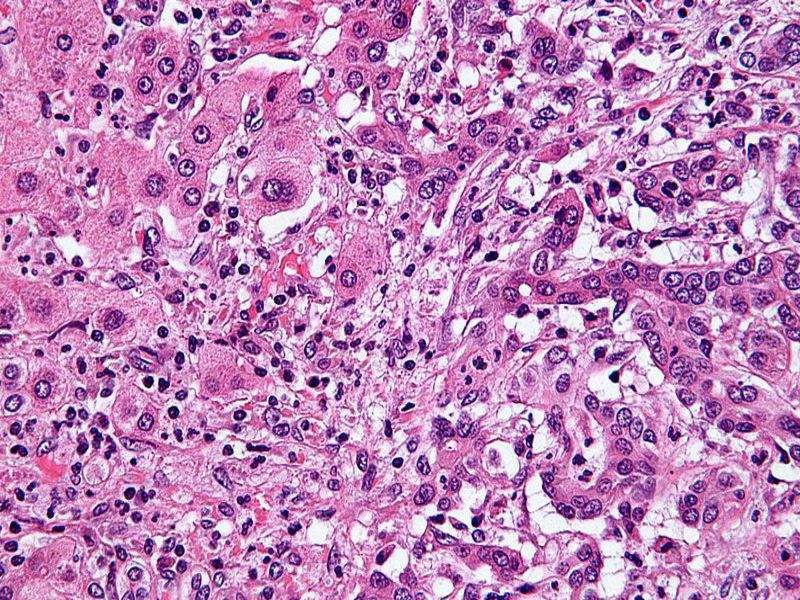
Image: Micrograph of bile duct cancer. Photo: courtesy of Nephron.



