
US-based oncology firm MEI Pharma has completed enrolment in a Phase II clinical trial of its lead investigational drug candidate, Pracinostat, in combination with azacitidine, to treat patients with previously untreated intermediate-2 or high-risk myelodysplastic syndrome (MDS).
The trial is designed to evaluate the safety and efficacy of Pracinostat, an oral histone deacetylase (HDAC) inhibitor, compared to placebo when combined with azacitidine, a drug approved by the US Food and Drug Administration (FDA) for the treatment of MDS.
Go deeper with GlobalData


Discover B2B Marketing That Performs
Combine business intelligence and editorial excellence to reach engaged professionals across 36 leading media platforms.
The randomised, multi-centre, placebo-controlled, double-blind trial enrolled a total of 108 patients with a one-to-one randomisation.
The company intends to unblind the trial about six months after the last patient was enrolled and report topline data in the first quarter of 2015.
MEI Pharma president and chief executive officer Daniel Gold said: "The achievement of this important milestone is the culmination of months of diligence and collaboration.
"Following the very high response rate reported in our MDS pilot study, we set out to execute a comprehensive development programme in order to better elucidate the clinical benefit of Pracinostat plus azacitidine in this patient population.

US Tariffs are shifting - will you react or anticipate?
Don’t let policy changes catch you off guard. Stay proactive with real-time data and expert analysis.
By GlobalData"Now we look forward to unblinding this study early next year and determining the most efficient registration path forward for Pracinostat."
Primary endpoint of the trial is rate of complete remission (CR), while secondary endpoints include overall response rate, hematologic improvement, duration of response, progression-free survival, rate of leukemic transformation, overall survival and safety.
A previous pilot study of Pracinostat in combination with azacitidine in patients with intermediate-2 or high-risk MDS showed an overall response rate of 89% (eight out of nine), including seven patients who achieved either a CR or complete remission with incomplete blood count recovery (CRi).
Pracinostat has been tested in multiple Phase I and Phase II clinical trials in advanced hematologic disorders and solid tumour indications in adult and paediatric patients.
To date, Pracinostat has been generally well tolerated in over 250 patients, with readily manageable side effects that are often associated with drugs of this class, including fatigue, myelosuppresion and gastrointestinal toxicity.
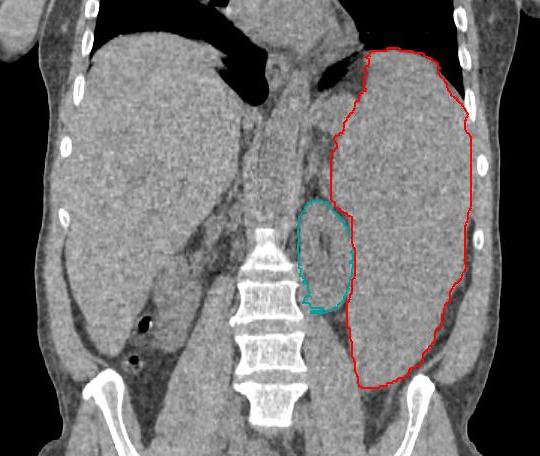
Image: Enlarged spleen due to myelodysplastic syndrome; CT scan coronal section. Photo: courtesy of Tdvorak.



