
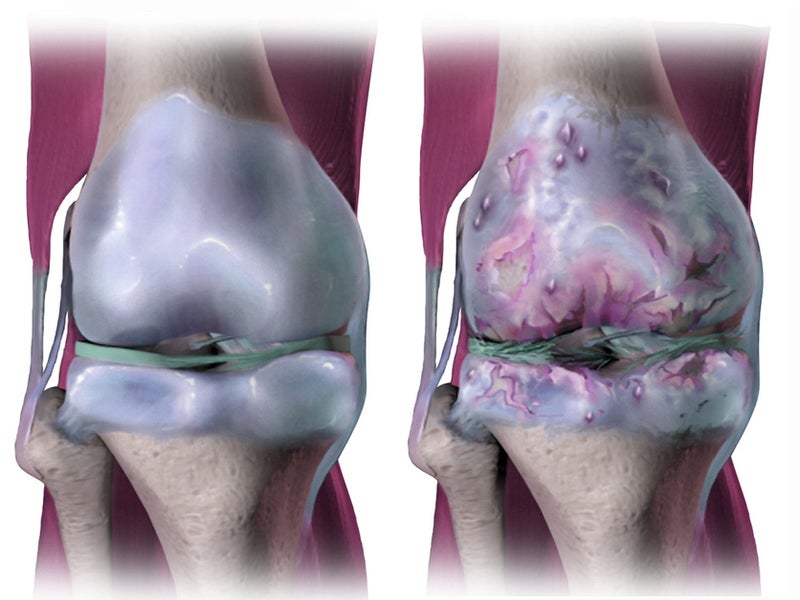
Pfizer and Eli Lilly have reported mixed results from a Phase III clinical trial that assessed the long-term joint safety and 16-week efficacy of 2.5mg and 5mg tanezumab in moderate-to-severe osteoarthritis (OA) of the hip or knee.
Top-line data indicated that the 5mg tanezumab met two of the three co-primary efficacy endpoints, while the 2.5mg dose didn’t meet all of them.
Go deeper with GlobalData


Discover B2B Marketing That Performs
Combine business intelligence and editorial excellence to reach engaged professionals across 36 leading media platforms.
Tanezumab is a monoclonal antibody designed to target nerve growth factor (NGF) and prevent pain signals generated by muscles, skin, and organs from reaching the spinal cord and brain.
The randomised, double-blind, active-controlled, multi-centre, parallel-group Phase III trial compared subcutaneous tanezumab given every eight weeks to nonsteroidal anti-inflammatory drugs (NSAIDs) over 56 weeks.
At 16-week analysis, patients who received 5mg tanezumab experienced a statistically significant improvement in pain and physical function, but their overall assessment of OA did not show a statistical difference from NSAIDs.
However, 2.5mg dose of the drug did not lead to a statistically significant improvement in pain, physical function or patients’ overall assessment of their disease at 16 weeks, compared to the NSAID arm.
US Tariffs are shifting - will you react or anticipate?
Don’t let policy changes catch you off guard. Stay proactive with real-time data and expert analysis.
By GlobalDataSafety analysis of the trial revealed a higher, statistically significant rate of joint safety events in the investigational drug arms than NSAIDs at 80 weeks.
Joint safety was measured as composite adjudicated outcomes of rapidly progressive osteoarthritis (RPOA) type 1 or type 2, subchondral insufficiency fracture, osteonecrosis or pathological fracture.
The companies noted a 7.1% incidence of the primary composite joint safety endpoint with 5mg tanezumab, 3.8% in the 2.5mg group and 1.5% in the NSAIDs arm.
Preliminary safety data demonstrated that the overall adverse event profile of the drug candidate was generally consistent with that of prior OA studies, but discontinuations due to adverse events were higher in this trial.
Pfizer Global Product Development tanezumab development team leader Ken Verburg said: “We are analysing these findings in the context of the recent Phase III results as we assess potential next steps for tanezumab.
“We plan to review the totality of data from our clinical development programme for tanezumab with regulatory authorities.”
The trial was conducted in a total of 3,021 patients at sites across the US, Europe, Asia and Latin America. It involved a safety follow-up of 24 months.



