
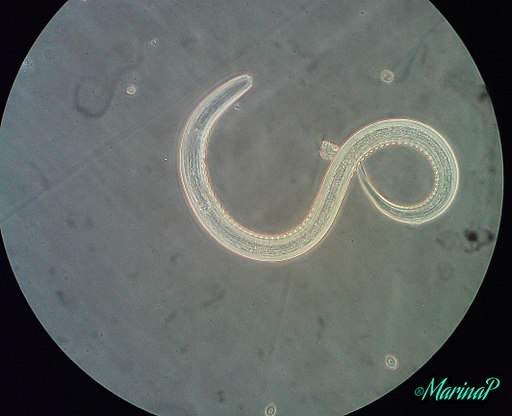
Researchers from New Zealand’s Malaghan Institute of Medical Research have identified a potential drug target in hookworm blood digestion, offering a possible means of hindering the parasite’s development and survival.
The researchers found that disrupting the blood detoxification process hookworms use during feeding can halt their development.
Go deeper with GlobalData


Discover B2B Marketing That Performs
Combine business intelligence and editorial excellence to reach engaged professionals across 36 leading media platforms.
The treatment strategy under investigation involves altering worms’ feeding activity, specifically targeting their adoption of the molecule heme from the host’s blood. Heme is a molecular component of haemoglobin, which transports oxygen in the blood, and is toxic on its own. However, many blood-feeding parasites have developed a detoxification process for heme and the Malaghan researchers hypothesised hookworms employ a similar mechanism.
A series of experiments were performed on a mouse-infecting hookworm species, which causes similar adverse effects in mice as in humans. The researchers found that feeding haemoglobin or red blood cells to the worms stimulated growth and caused the production of a dark brown pigment similar to haemozoin, a detoxified form of heme produced by many other blood-feeding parasites.
Chemical compounds called quinolones, which disrupt haemozoin formation in malaria and schistosoma parasites, were then tested on the hookworms. These were found to disrupt the production of the haemozoin-like pigment in the mouse-infecting hookworms and hinder their ability to reproduce and grow. As a result, mice treated with quinolones had markedly lower levels of hookworms, hookworm eggs, and anaemia.
Despite the positive findings, researchers have said quinolones are not a realistic treatment option for human-infecting hookworms due to high levels of drug resistance. However, the research has shown that targeting the heme-detoxification process is a viable route for developing treatment for hookworm infection. The study authors said they hope the findings lead “to new opportunities to treat this most devastating of tropical diseases”.

US Tariffs are shifting - will you react or anticipate?
Don’t let policy changes catch you off guard. Stay proactive with real-time data and expert analysis.
By GlobalDataMillions of people worldwide are infected by hookworms, primarily in developing countries. The parasitic worms are transmitted through contaminated soil and settle in the intestines where they feed on the blood and cause anaemia, stunted growth during childhood and complications during pregnancy.
The study was led by Dr Tiffany Bouchery, with findings published in PLOS Pathogens.



