
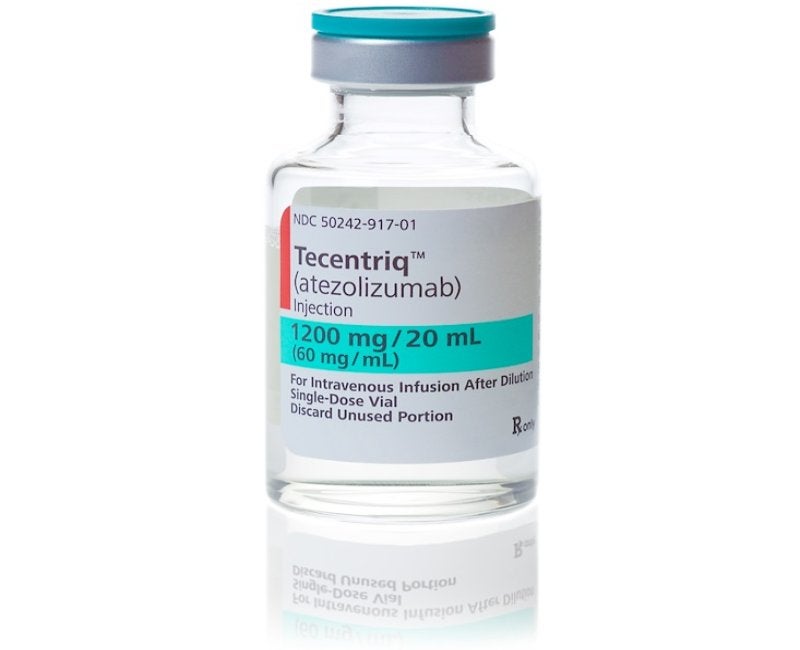
Roche has reported positive interim data from Phase III IMpower010 clinical trial where Tecentriq (atezolizumab) improved disease-free survival (DFS) in patients with early-stage non-small cell lung cancer (NSCLC).
When given after surgery and chemotherapy, the drug lowered the disease recurrence or death risk by 34%, compared to best supportive care (BSC), in Stage II-IIIA NSCLC patients with programmed death-ligand 1 (PD-L1) ≥1%.
Go deeper with GlobalData


Discover B2B Marketing That Performs
Combine business intelligence and editorial excellence to reach engaged professionals across 36 leading media platforms.
Tecentriq did not yet reach median DFS versus 35.3 months with BSC in this patient population.
Data from all 1,005 randomised Stage II-IIIA NSCLC patients showed a 21% decrease in the disease recurrence or death risk following a median follow-up of 32.2 months.
Median DFS in this population was 42.3 months with Tecentriq and 35.3 months with BSC, indicating an increase of seven months with Roche’s drug.
Tecentriq’s safety profile in this trial was consistent with its known profile, with no new safety signals. In the overall randomised population, the drug led to adverse events in 92.7% of participants versus 70.7% of those on BSC.
Roche chief medical officer and Global Product Development head Levi Garraway said: “These landmark Phase III data demonstrate for the first time that cancer immunotherapy can bring a clinically meaningful improvement to certain people with early lung cancer in the adjuvant setting.
“These results lay the groundwork for a new approach to the treatment of early-stage lung cancer and bring us closer to our goal of providing an effective and tailored treatment option for every person diagnosed with this disease.”
The company noted that follow-up of IMpower010 will continue, along with analyses of DFS data in the overall intent-to-treat (ITT) population and overall survival data.
Tecentriq previously demonstrated clinically meaningful benefit in different lung cancer types and is currently approved for a total of five small cell lung cancer and NSCLC indications globally.
The drug is also being developed to treat various other cancers, including genitourinary, breast, gastrointestinal, gynaecological, and head and neck cancers.
In February this year, Roche’s arthritis drug, tocilizumab, was reported to lower the risk of death among patients hospitalised with severe Covid-19.



