
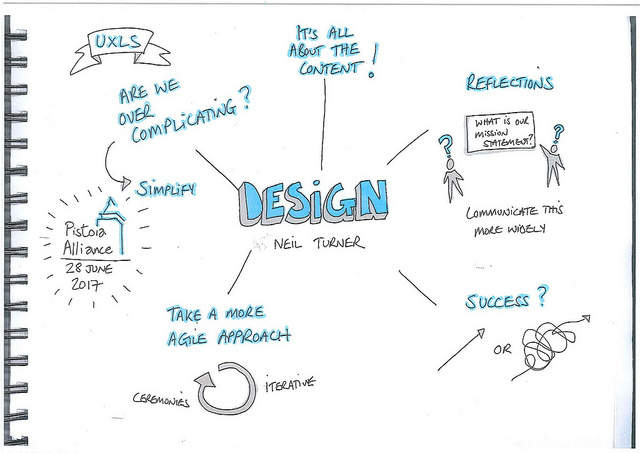
The Pistoia Alliance has announced the launch of its User Experience for Life Sciences Toolkit (UXLS), designed to help life science companies develop more intuitive software in line with user experience (UX) principles.
Developed as a ‘how-to’ for businesses wanting to adopt UX principles, the toolkit was designed as a response to life science companies lagging behind other industries which have seen the successful employment of UX principles. It is intended to benefit UX practitioners, bioinformaticians, software developers, and technical and IT managers.
Go deeper with GlobalData


Discover B2B Marketing That Performs
Combine business intelligence and editorial excellence to reach engaged professionals across 36 leading media platforms.
The Pistoia Alliance is a not-for-profit organisation comprising life sciences companies, publishers, vendors and academic groups, with the aim of lowering the barriers to R&D innovation through pre-competitive collaboration.
The toolkit marks the culmination of a collaborative project aimed at improving research and development in the healthcare and life science sector. The project involved over 50 UX specialists from 20 pharmaceutical, healthcare, and software companies across the world.
“Life science companies have typically been slower to integrate new technologies for a number of reasons,” Pistoia Alliance UXLS project manager Paula deMatos told Drug Development Technology.
“With their focus on scientific discovery and drug research and development, computer systems have been regarded by leadership as just a tool. Now with a new generation of life science leaders emerging, computer-based technologies are being seen as much more as enabling, indeed empowering the science. That understanding allows the realisation that the current design of many life science computer systems was inadequate and the scientist, rather than being empowered, was encumbered.”
US Tariffs are shifting - will you react or anticipate?
Don’t let policy changes catch you off guard. Stay proactive with real-time data and expert analysis.
By GlobalDataThe toolkit contains UX case studies, methods and business metrics designed to assist life science companies create better, more usable and more intuitive digital products for R&D. The Alliance hopes that through employing UX design, life science professionals will see their projects reach a wider audience including stakeholders in senior management roles.
“In today’s world, software is the gateway to unlocking the many zettabytes of data that humans produce,” said Pistoia Alliance president Dr Steve Arlington.
“When scientific software is poorly designed, it is frustrating and time-consuming to use, and adds yet another barrier to the acceptance and adoption of new digital technologies…the potential for good UX design to impact life science R&D is significant…[it] should not be considered a remote or niche area, and we hope that our UXLS toolkit enables more companies to realise this potential.”
The toolkit currently contains six case studies from organisations such as Novartis, AstraZeneca and the European Bioinformatics Institute, as well as ten published methods including interactive prototyping and usability testing.
The benefits and issues of the toolkit in improving productivity will be discussed further at the UXLS conference in Boston, US between 14 and 15 May. The conference will be hosted by Novartis at the Novartis Institutes for BioMedical Research (NIBR). NIBR global head of user experience Pat Keller will deliver a keynote speech at the event, which will also feature several workshops teaching attendees UX principles such as usability and prototyping.
“We hope that this will help to raise awareness of the value of UX to the industry and that those who aren’t UX professionals can experience the benefits of making systems more user-friendly,” deMatos told Drug Development Technology.



