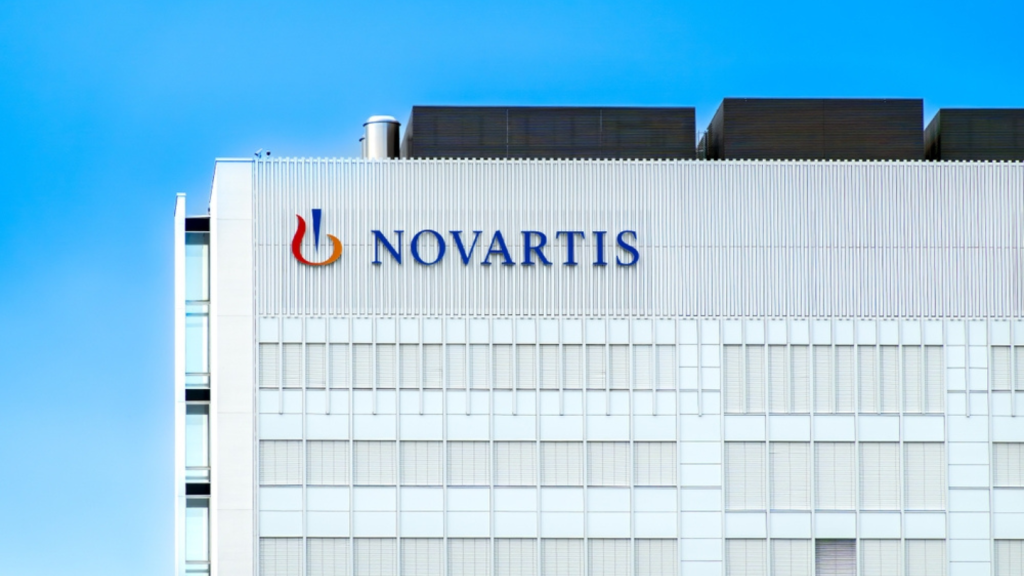
Novartis is hoping to gain approval for its Sjögren’s disease drug after it met the endpoints in two Phase III trials.
The NEPTUNUS-1 (NCT05350072) and NEPTUNUS-2 (NCT05349214) studies evaluating ianalumab met the primary endpoint of improving disease activity. This is measured by a reduction in EULAR Sjögren’s syndrome disease activity index (ESSDAI), a multi-dimensional disease activity measurement compared to placebo.
The trials enrolled 749 patients with Sjögren’s disease, with NEPTUNE-1 investigating monthly intravenous ianalumab while NEPTUNE-2 investigated the efficacy and safety of subcutaneous ianalumab dosed either monthly or every three months.
Top-line data also showed the drug was well-tolerated and demonstrated a favourable safety profile in Sjögren's disease.
This success will be welcome news for Novartis after it culled its anti-CD40 antibody iscalimab, which was also being investigated in Sjögren's disease in January 2025. Novartis also stopped the development of ianalumab in hidradenitis suppurativa (HS) after a Phase IIb proof-of-concept trial failed to meet its primary endpoint in July 2025.
Novartis will submit applications for the approval of ianalumab to health authorities globally based on the Phase III trials. If approved, the therapy would become the first targeted treatment for patients with Sjögren’s disease.
Novartis CMO Dr Shreeram Aradhye said: "Sjögren’s disease is a serious, progressive, systemic autoimmune disease, often unrecognised or misdiagnosed with a significant detrimental impact to quality of life, with very limited treatment options and an established unmet need.”
The Swiss biotech will present data from the NEPTUNUS-1 and NEPTUNUS-2 data at an upcoming medical meeting.
Ianalumab is a novel fully human monoclonal antibody (mAb) that targets B cells in two ways: by combining B cell depletion via antibody-dependent cellular toxicity (ADCC) and by interrupting BAFF-R-mediated signals of B cell function and survival.
Novartis acquired the therapy as part of a collaboration with MorphoSys AG, a company which Novartis later acquired in 2024.
On the market, Novartis could face stiff competition from Johnson & Johnson’s (J&J’s) Imaavy (nipocalimab), which was granted fast track designation for Sjögren's disease by the US Food and Drug Administration (FDA) in March 2025. Novartis will, however, hold a first-to-market advantage, as Imaavy’s approval will be contingent on the Phase III DAFFODIL trial (NCT06741969), which is yet to be completed. Imaavy gained approval in myasthenia gravis (MG) on 30 April 2025.
Sjögren’s disease is a systemic, chronic autoimmune disorder that causes inflammation and tissue damage, impacting the entire body. Around 30%-40% of patients will show extraglandular organ involvement, which can affect skin, musculoskeletal system, kidneys, lungs and other organs.
GlobalData predicts the Sjögren’s disease market to be worth $293.9m in 2029 across the seven major markets (7MM: US, France, Germany, Italy, Spain, UK, and Japan).
GlobalData is the parent company of Clinical Trials Arena.