

In oncology trials, overall survival (OS) has always been the gold standard endpoint, with all biotech and pharma companies developing drugs in the space looking to improve patient outcomes and extend life.
However, the US Food and Drug Administration (FDA) has made a bid to set OS’s key role in oncology in stone – debuting industry draft guidance recommending it as a key pre-specified endpoint in all cancer clinical trials.
In a statement to Clinical Trials Arena, the US regulator noted that it is taking this course to ensure that “the pursuit of efficacy endpoints does not overshadow critical safety concerns,” which are rife in the oncology sector due to the aggressive nature of its associated therapies. This is particularly true for hard-to-treat malignancies such as pancreatic cancer, which the FDA specifically mentions in its guidance.
The agency likely calls out pancreatic cancer due to its strong reliance on toxic treatment regimens like chemotherapy in the first line, which can cause patient deaths before the disease takes hold.
Meanwhile, the new guidance also states that trials must now “plan for survival assessment upfront, with specific attention to interim analyses for potential harm”. By solidifying these measures in an official guidance document, the FDA hopes to encourage drug developers to “identify patient subgroups prospectively”, allowing enrolment strategies to be effectively catered to the appropriate populations.
Despite acknowledging that the collection of OS data as a key efficacy and safety endpoint may complicate the trial design process, the agency notes that it “ultimately serves patients by providing more comprehensive benefit-risk assessments” for cancer drugs.
While experts across the rare cancer sector value the new guidance, they hold certain reservations about its implementation.
Regaining focus on survival benefit
Though surrogate endpoints have previously been used to facilitate the approval of cancer therapies in exceptional circumstances, Benjamin Zeskind, CEO of Immuneering, a Massachusetts-based clinical-stage oncology biotech, believes that the FDA’s draft guidance will be crucial in re-aligning the industry’s focus to the “ultimate goal”.
“While this guidance isn’t anything groundbreaking or new, it will remind the industry of the importance of OS as a key primary endpoint, both in the pancreatic cancer space and beyond,” Zeskind states.
Jared Kelly, CEO of Oncolytics, a Canada-based oncology biotech, echoes this sentiment, noting that the agency’s guidance will offer “clarity” around how oncology studies should be designed for full approvals. “The FDA’s focus on OS was a well-known secret, but I think they wanted to hammer the point home to ensure trials are correctly designed,” he says.
Despite acknowledging the benefit of collecting surrogate endpoint data such as progression-free survival (PFS) or objective response rates (ORR), Zeskind warns that it can cloud the focus on survival benefit.
He comments: “PFS and ORR may be helpful along the way – allowing developers to predict how a drug might impact OS – but the pursuit of surrogate endpoints can cause us to lose sight of the most important goal, which should always be OS”.
Role of surrogate endpoints remains contentious
Though Zeskind believes that surrogate endpoints should take a backseat in trials, Kelly has a different take on these measures in the rare disease setting. This is especially true, he says, in indications with little-to-no approved therapies.
“In pancreatic cancer, where first and second-line treatment options centre around chemotherapy regimens, we really need some new drugs on the market,” he states.
In this context, Kelly notes that surrogate endpoints such as ORR and PFS are incredibly useful, as they can get drugs to market quicker by supporting accelerated approvals. “As long as the safety is there, we can push certain therapies through to patients quicker based on surrogate endpoints and interim analyses,” Kelly adds.
The FDA appears to share this sentiment to some degree, as Jazz Pharmaceuticals’ Modeyso (dordaviprone) recently bagged an FDA accelerated approval based on ORR in recurrent lysine 27 to methionine (H3 K27M)-mutant diffuse midline glioma. This suggests that the agency is still open to approving drugs based on surrogate endpoints.
However, the FDA still recommends collecting OS data during trials pre- and post-approval of a drug, as this will help companies obtain the full go-ahead.

Pancreatic cancer’s reliance on OS “for now”
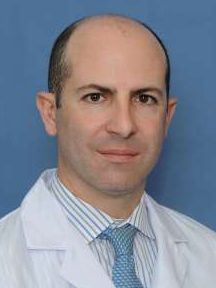
Unlike many common indications, pancreatic malignancies have always had to rely on OS, notes Dr Zev Wainberg, professor of medicine at the Davin Geffen School of Medicine at UCLA.
“OS has always been the main endpoint for drug approvals in pancreatic cancer, as we do not have a history like that of breast or lung cancer, where PFS has been considered a suitable surrogate,” Wainberg states.
This is mainly due to poor outcomes associated with the indication, which has limited treatment options.
However, Wainberg has high hopes for the future implementation of surrogate endpoints outside of the accelerated approval process moving forward. “While OS is necessary to collect in most oncological indications at the moment, the FDA should have an open mind about changing that in the next few years,” he states.
Wainberg believes this will become a reality in hard-to-treat indications such as pancreatic cancer when new therapies get the green light.
“When additional effective drugs become approved in hard-to-treat indications, it reduces the necessity of waiting for OS, meaning that centrally confirmed surrogate endpoints like PFS could well become the gold standard in future trials,” he theorises.
Wainberg believes this could be the case for pancreatic cancer as non-chemotherapy drugs begin to enter the treatment paradigm: “I am optimistic that – in years to come – the industry will not need to rely on OS as an endpoint due to improvements in patient outcomes,” he says.
Guidance impact on accelerated approvals
Despite predicting that the FDA’s guidance will have a negligible impact on clinical trials moving forward, Kelly theorises that his change could result in a tougher regulatory path for companies seeking accelerated approvals.
In his opinion, this would primarily impact more understood indications such as breast and lung cancer, as there are a variety of good, commercially available treatment options that already lead to long-term survival.
However, Zeskind counters Kelly’s take, noting that it is “too early to tell” what impact the guidance may have on accelerated approvals. “The effect of these guidelines will be very specific to certain cancer types, as each indication has a different relationship between PFS and OS,” he states.
While the impacts of the OS framework remain largely unknown, Kelly has called for the FDA to provide clearer guidance on surrogate endpoints and their place within the accelerated approval process.
“One thing that’s hurting development in rare tumour types like pancreatic cancer is the cost of progressing drugs through the pipeline,” Kelly says. “If your market size is under 20,000 cases a year, the cost-benefit ratio does not often add up for biotechs looking to explore development in uncommon disease areas,” he added.
For those who do choose to pursue the rare disease route, Kelly notes that clear guidance on surrogate endpoints within the accelerated approval process could be key in avoiding unnecessary hurdles while getting a drug to market.