Sponsors should ensure dose optimisation is a part of early trial planning for oncology trials as the US Food and Drug Administration (FDA) continues to modernise dosing via Project Optimus.
“My advice is to align your dose optimisation strategy early on in your project,” said Karin Nordbladh, director of clinical operations at Alligator Bioscience, a company developing tumor-directed immuno-oncology antibody drugs.
In 2021, the FDA launched Project Optimus, a framework aimed at reshaping how oncology drugs are dosed. The initiative sought to change the historical reliance on the maximum tolerated dose, instead pushing towards to therapeutic flexibility and safety prioritisation.
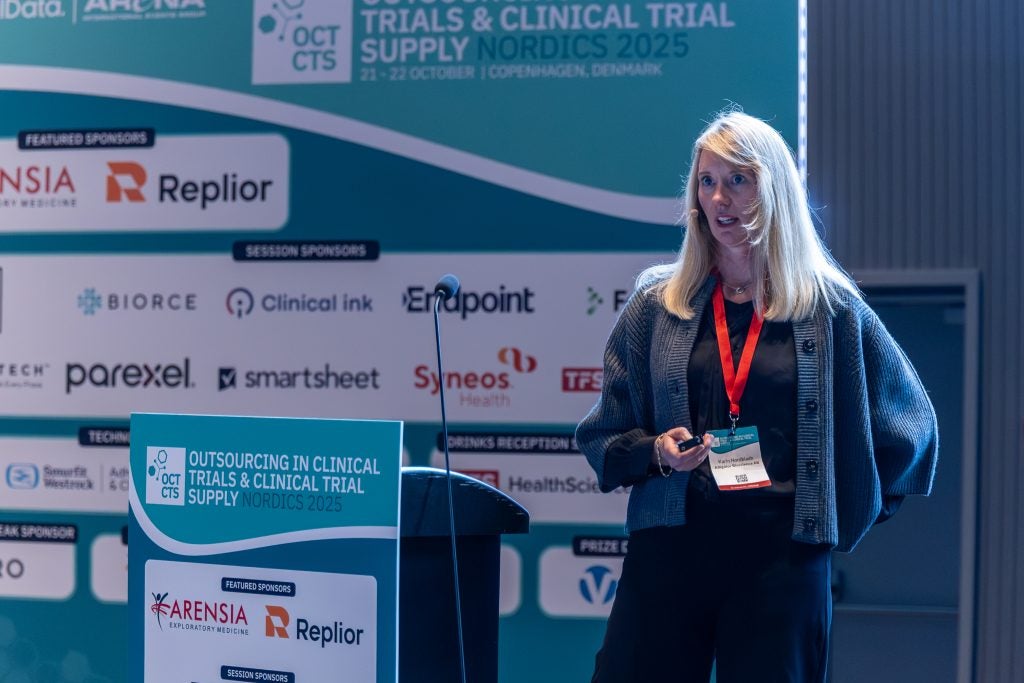
Speaking during Arena International’s Outsourcing in Clinical Trials and Clinical Trial Supply Nordics in Copenhagen, Denmark, on 21-22 October, Nordbladh drew on Sweden-based Alligator’s experience of implementing the policy.
“The FDA did not agree with our dose selection. We quickly regrouped and got additional data on a lower dose,” Nordbladh said while recounting the Phase I/IIa OPTIMIZE-1 trial (NCT04888312) evaluating mitazalimab as a treatment for pancreatic cancer.
Amid implementing the FDA guidance, she remarked that “it was almost like starting a new trial again”.
The FDA published final guidance in August 2024, assisting sponsors in identifying an optimised dosage for drugs and biological products in development for oncological indications.
Research has indicated that Project Optimus has substantially influenced the design of early-phase oncology trials. The framework has been particularly important amid the rise of targeted cancer therapies and the R&D shift away from chemotherapies, upon which the maximum tolerated dose model was built.
Experts generally agree that fine-tuning dose selection in cancer trials was needed, though admitted that smaller companies could struggle with smooth implementation the most amid tight resources.
Nordbladh added: “Make a plan from beginning on when to interact with the regulatory authorities to check your strategy and also plan for this dose characterisation work up front because it can be costly and adds to timelines.
“Furthermore, think about the patient centricity when deciding on your dosing regimen and ensure to also include patient reported outcomes to assess quality of life, treatment tolerability and capture real world data directly from patients.”
Despite the slight Phase I/IIa detour, Alligator has since received positive FDA feedback on selecting the higher dose of 900µg/kg for mitazalimab, with the biotech now eyeing a Phase III trial. The biotech presented positive results from OPTIMIZE-1 at last year’s American Society of Clinical Oncology (ASCO) Annual Meeting.