

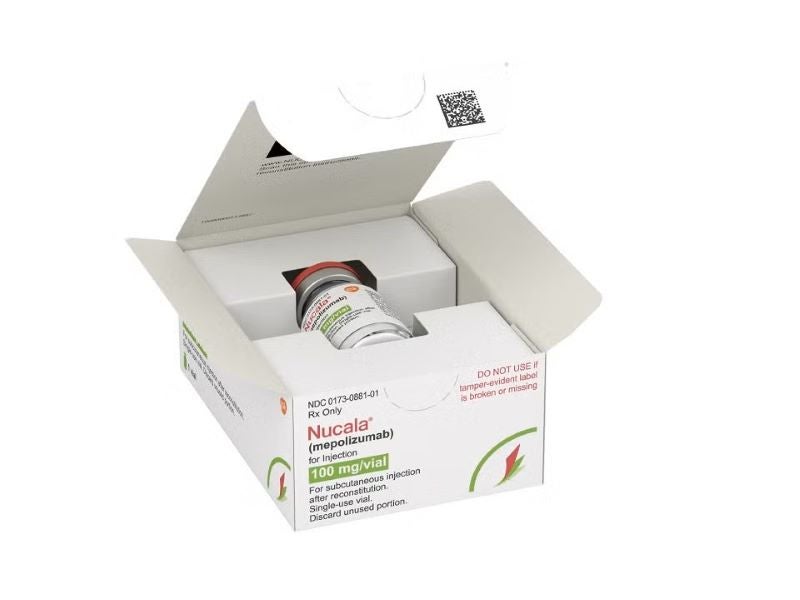
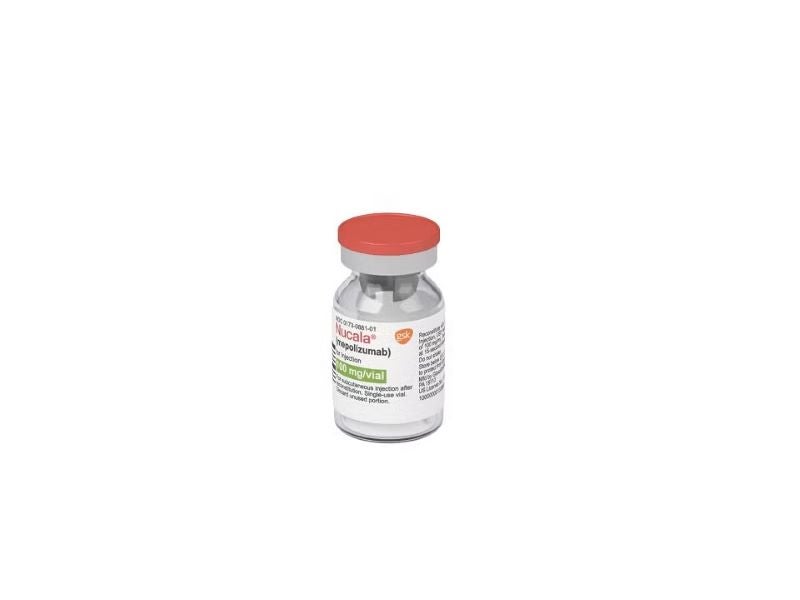
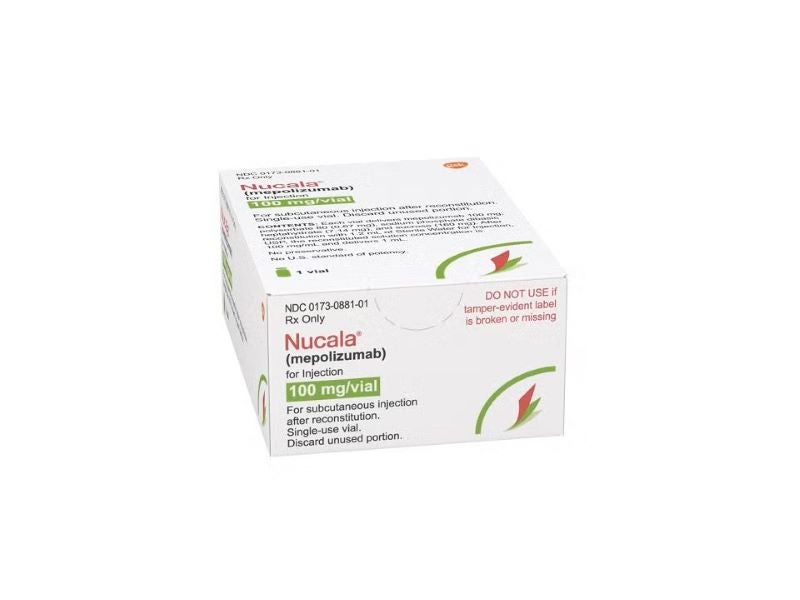
Nucala® (mepolizumab) is the first biologic therapy indicated for the treatment of hypereosinophilic syndrome (HES) in adult and paediatric patients aged 12 years and older.
Developed by GlaxoSmithKline (GSK), the drug is eligible for patients suffering from HES for more than six months without an identifiable non-hematologic secondary cause.
Recommended Buyers Guides

The drug is also indicated as an add-on maintenance treatment for patients with severe asthma with an eosinophilic phenotype aged six years and older and for the treatment of eosinophilic granulomatosis with polyangiitis (EGPA) in adult patients. It is also being studied in many other eosinophilic diseases.
Nucala is available in 100mg strength as a white to off-white lyophilised powder in a single-dose vial for reconstitution, for subcutaneous administration.
Regulatory approvals
Nucala was initially approved by the US Food and Drug Administration (FDA) in November 2015 as an add-on maintenance therapy for severe eosinophilic asthma, while the EU approved the drug for the condition in December 2015.
The company submitted a supplemental biologics licence application for the drug to the FDA for the treatment of EGPA in June 2017, and the approval was granted in December 2017.
In June 2019, Nucala received FDA approval for two new self-administration methods, an autoinjector and a pre-filled safety syringe. Nucala is the first respiratory biological drug authorised as an autoinjector for administration.
Nucala was approved for severe eosinophilic asthma in children aged six to 11 years in September 2019.
The FDA accepted Nucala for priority review for the treatment of patients with HES in May 2020, while the drug received approval for the condition in September 2020.
Nucala holds orphan drug designation from both the European Medicines Agency (EMA) and the FDA for the HES treatment.
In August 2024, the drug was approved by Japan’s Ministry of Health, Labour and Welfare (MHLW) for the treatment of adults with chronic rhinosinusitis with nasal polyps (CRSwNP).
The US FDA approved Nucala for the add-on maintenance treatment of adult patients with inadequately controlled eosinophilic chronic obstructive pulmonary disease (COPD) in May 2025.
It also received a positive opinion from the Committee for Medicinal Products for Human Use of the EMA for the treatment of COPD in December 2025.
China’s National Medical Products Administration approved the drug for the treatment of COPD in adults in January 2026.
HES causes and symptoms
HES is a group of blood disorders characterised by constantly elevated levels of eosinophils in the blood for around six months without any recognisable cause.
Eosinophils may infiltrate certain tissues due to overproduction, causing inflammation and organ damage. The disease can worsen if left untreated and can become life-threatening.
Symptoms of HES include anaemia, arthritis, asthma, congestive heart failure, deep venous thrombosis (blood clots in the veins), diarrhoea, difficulty in breathing, itching, muscle inflammation, skin rashes and vomiting.
Mepolizumab mechanism of action
Mepolizumab is an interleukin-5 (IL-5) antagonist monoclonal antibody. IL-5 is the primary cytokine that is responsible for eosinophils’ growth and survival.
Mepolizumab binds to IL-5 and suppresses bioactivity by blocking its binding to the alpha chain of the IL-5 receptor complex expressed on the cell surface of eosinophils. This controls the IL-5 signalling, reducing the production and endurance of eosinophils.
Clinical trials on Nucala
FDA approval of Nucala for HES was based on the results of a pivotal Phase III, multi-centre, randomised, placebo-controlled, double-blind, 32-week clinical trial.
The trial evaluated the safety and efficacy of Nucala in 108 adult and adolescent patients aged 12 years and older with uncontrolled HES.
Recruited patients were randomised to receive 300mg of Nucala or a placebo once every four weeks.
The primary endpoint of the study was the percentage of patients experiencing a HES flare during the 32-week treatment period. A HES flare was defined as the deterioration of clinical signs and symptoms of HES or increasing eosinophils at least twice.
Approximately 28% of the patients receiving Nucala experienced a HES flare compared to 56% of patients in the placebo group, over the 32-week treatment period.
The most common side effects observed in patients during the trial were injection site reactions such as pain and swelling.
Additional clinical trials
The FDA’s approval of Nucala for the treatment of COPD in adults was supported by positive results from the Phase III MATINEE and METREX randomised, double-blind, parallel-group trials.
The MATINEE trial evaluated the efficacy and safety of mepolizumab over 52–104 weeks in 804 patients with COPD and evidence of type 2 inflammation, defined by a blood eosinophil count of ≥300 cells/µL.
In the METREX trial, the efficacy and safety of mepolizumab were assessed over 52 weeks in 836 patients who were randomised to receive either mepolizumab or placebo.
In these studies, mepolizumab demonstrated a clinically meaningful and statistically significant reduction in the annualised rate of moderate-to-severe exacerbations compared to placebo in a broad population of COPD patients with an eosinophilic phenotype.
Japan’s MHLW approval of Nucala for the treatment of chronic rhinosinusitis with CRSwNP in adult patients was based on results of the Phase III MERIT trial.
The co-primary endpoints of the MERIT trial were the change from baseline in nasal obstruction visual analogue scale (VAS) score during weeks 49–52 compared to placebo, and the change in endoscopic nasal polyp score at week 52 versus placebo.
Treatment with mepolizumab led to a significant improvement in the nasal obstruction VAS score with a mean treatment difference of -1.43. It also showed a numerical reduction in nasal polyp score at week 52 with a mean treatment difference of -0.43.
Mepolizumab also demonstrated improvements in patient quality of life, as measured by the 22-item Sino-Nasal Outcome Test, compared to placebo.
