
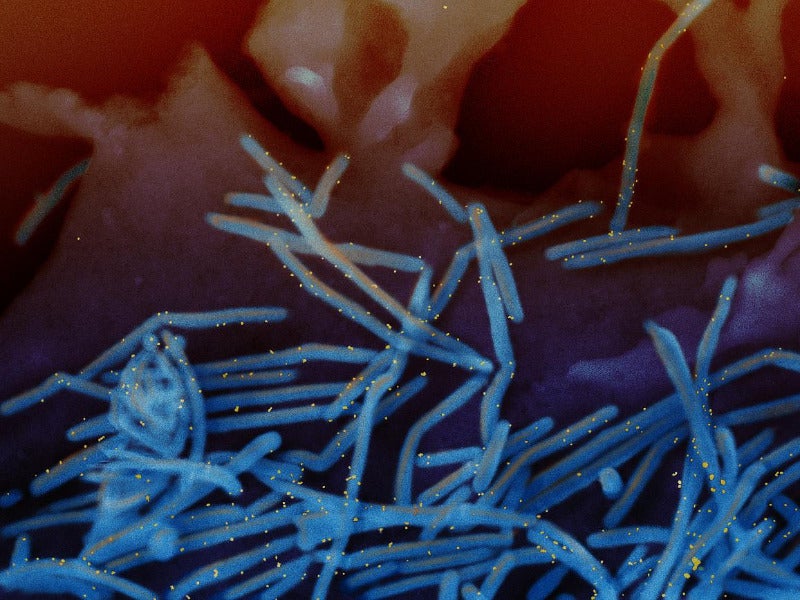
An experimental vaccine developed by the National Institute of Allergy and Infectious Diseases (NIAID) to protect against respiratory syncytial virus (RSV) has yielded positive data in a Phase I clinical trial.
The DS-Cav1 vaccine demonstrated the ability to stimulate an increase in RSV-neutralising antibodies after the administration of one dose. These antibodies were found to sustain for many months.
Go deeper with GlobalData


Discover B2B Marketing That Performs
Combine business intelligence and editorial excellence to reach engaged professionals across 36 leading media platforms.
The development of the vaccine candidate, which was led by NIAID Vaccine Research Center (VRC) researchers, is based on atomic-level structural information about an RSV protein called fusion (F) glycoprotein.
Using structural engineering methods, the team stabilised F protein in its prefusion shape, which has epitopes that trigger neutralising antibodies.
In 2013, different versions were evaluated as a vaccine in mice and non-human primates. Researchers noted that DS-Cav1 was observed to be the most promising.
A Phase I study was launched at the NIH Clinical Center in 2017 to assess a 50µg and 150µg dose of the DS-Cav1 vaccine in healthy adult volunteers.
During the trial, 50% of participants were administered with an alum adjuvant added to the vaccine, while the remaining members received the unadjuvanted vaccine.
Interim data showed that volunteers who received 50µg of the vaccine, irrespective of alum adjuvant, experienced a seven-fold increase in RSV-neutralising antibody levels at week four compared to pre-vaccination.
A single 150µg dose without alum also elevated neutralising antibody levels 12-fold and the alum-adjuvanted vaccine of the same dose led to a 15-fold increase.
At 12 weeks following vaccination, neutralising antibody levels were observed to remain five to ten times above baseline levels in all dosage groups.
NIAID VRC scientist Barney Graham said: “Compared to previous RSV subunit vaccines, the DS-Cav1 vaccine candidate elicits neutralising antibodies with a superior functional profile, providing the basis for the next steps in developing an effective vaccine against RSV.
“The clinical data from this trial demonstrate the feasibility of using information about viral protein structure to rationally design vaccines and represents an important step toward a future of precision vaccines.”
The trial is expected to be completed in January.


