World Kidney Day, observed each year in March, draws attention to the global burden of kidney disease and the importance of prevention and early detection. Chronic kidney disease (CKD) is one of the most common kidney conditions. CKD is a chronic condition in which the kidneys gradually lose their ability to filter waste from the blood. According to GlobalData’s estimates, there were approximately 21 million diagnosed prevalent cases of CKD in the seven major markets in 2025 (7MM: US, France, Germany, Italy, Spain, UK, and Japan).
CKD tends to be more prevalent in women than in men. Although the reasons for these sex differences are not clearly understood, it is likely because women are more susceptible to urinary tract infections (UTI) and kidney infections. UTIs and pregnancy complications, such as high blood pressure or eclampsia, increase the risk of kidney damage. On the other hand, men are more likely to progress to kidney failure sooner than women. This is thought to be driven by differences in hormone levels, where higher levels of testosterone cause loss of kidney function and estrogen has a protective effect in women, until menopause. Lifestyle factors that tend to be more prevalent in men, such as smoking, poor diet, and delays in seeking medical care, contribute to the faster progression to kidney failure.
Go deeper with GlobalData


Access deeper industry intelligence
Experience unmatched clarity with a single platform that combines unique data, AI, and human expertise.
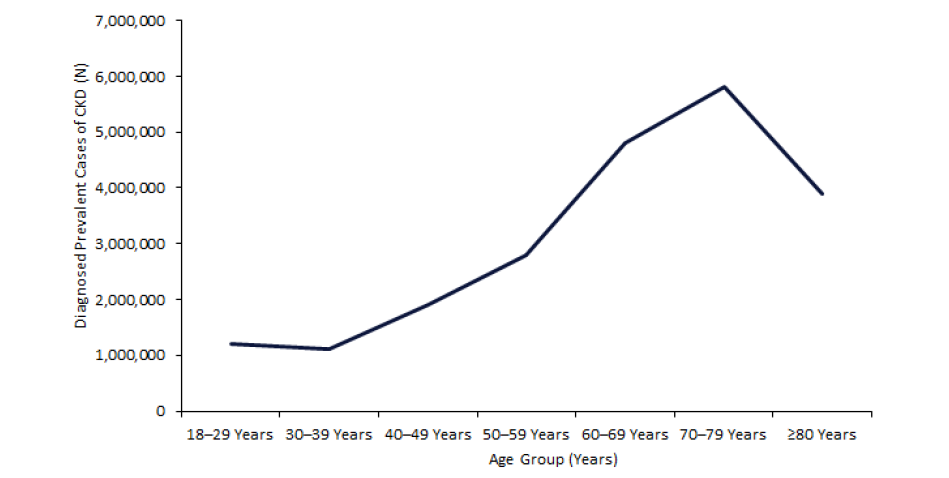
The prevalence of CKD increases with age, with more than 65% of diagnosed prevalent cases in the 7MM among individuals aged 60 years and older (Figure 1). Although kidney function, estimated glomerular filtration rate (eGFR), has sometimes been described as a normal part of ageing, this decline contributes to the established pattern that the diagnosed prevalence of CKD increases as people get older. Notably, when kidney function falls to the levels used to diagnose CKD, it is linked to harmful outcomes, including a higher risk of death. Recognising the distinction between normal outcomes due to ageing and harmful physiological changes is important for several reasons. Monitoring kidney health as people age can provide opportunities to identify problems early and manage risk factors. Viewing CKD as a preventable condition reinforces the importance of prevention.
Treating CKD as a preventable and manageable condition is increasingly critical as populations age, because greater awareness, earlier detection, and better control of risk factors can help reduce the growing health burden in older adults. Recognising these age- and sex-specific trends can help guide awareness, screening, and prevention efforts to populations at greater risk. Additionally, awareness campaigns play a critical role in informing the general population of risk factors and symptoms. They also motivate behaviour change leading to lifestyle changes that can reduce the risk and progression of CKD.
Figure 1: 7MM, diagnosed prevalent cases of CKD, both sexes, by age, 2025 (N)