

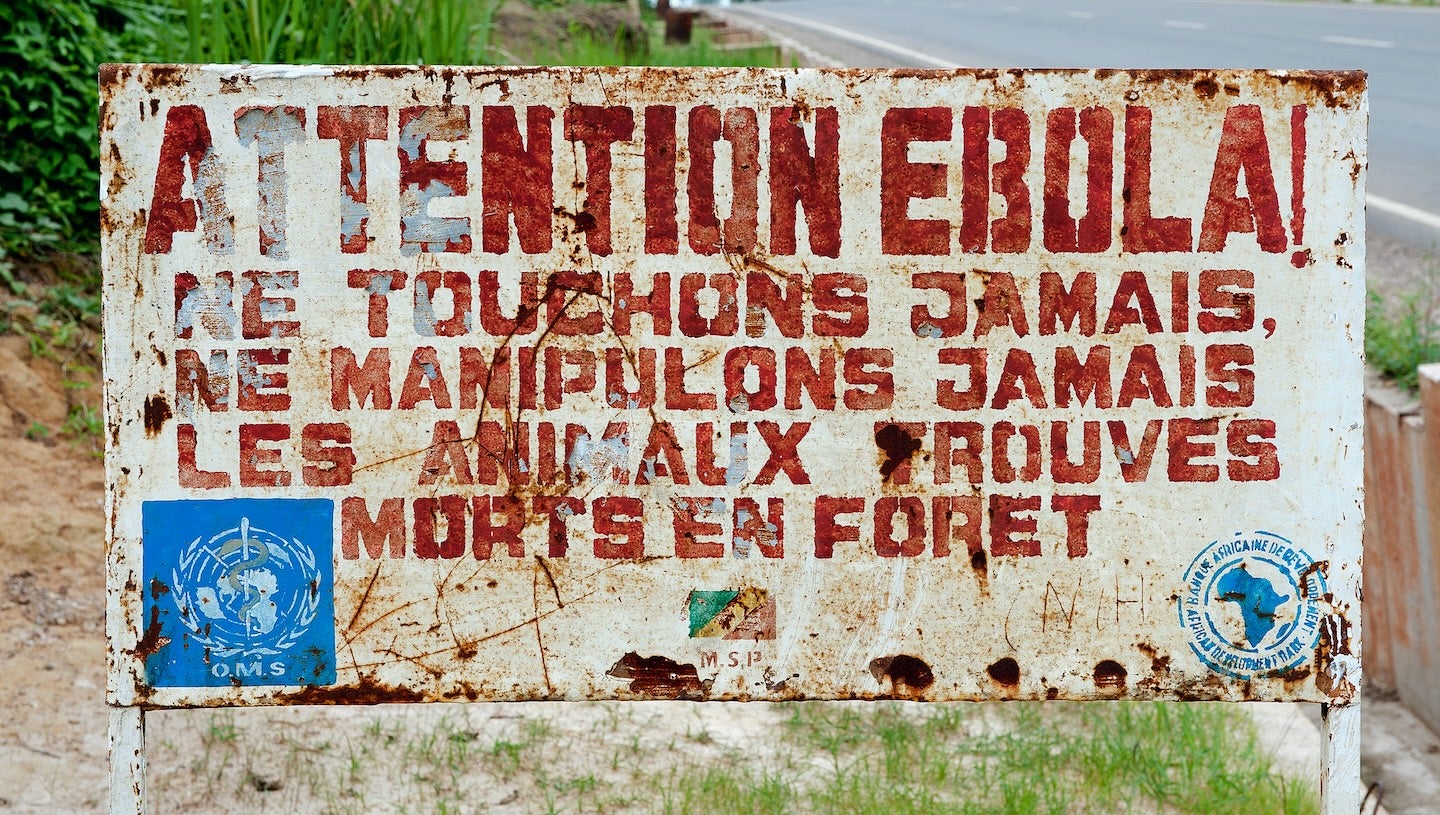
An Ebola outbreak affecting the Democratic Republic of Congo (DRC) and Uganda has been declared a Public Health Emergency of International Concern (PHEIC) by the World Health Organization (WHO). As of 21 May 2026, the DRC and Uganda Ministries of Health have reported a total of 575 suspected cases, 51 confirmed cases, and 148 suspected deaths. While the WHO does not anticipate this outbreak will escalate into a global pandemic, the surge in the number of infectious disease outbreaks globally in recent years is increasingly worrying and warrants the implementation of stronger pandemic prevention measures for the future.
Ebola is a highly infectious viral disease associated with severe illness and a high mortality rate. Ebola viruses normally infect animals, but can spread to humans through handling or consumption. Human-human transmission occurs through direct contact, with early symptoms often including fever, weakness, headache, vomiting, and bleeding. Ebola outbreaks are most frequently reported in Central and West Africa. More than 28,600 people were infected by Ebola during the 2014–2016 outbreak in West Africa, the largest outbreak of the virus since its discovery in 1976. The disease spread to several countries within and outside of West Africa, including Guinea, Sierra Leone, the US, the UK, and Italy, killing 11,325 people. The current outbreak is caused by the Bundibugyo strain of Ebola, which has been absent for over a decade and has an estimated fatality rate of around 30%. Control efforts are complicated by the lack of strain-specific vaccines or antivirals, as well as the outbreak’s occurrence in a conflict-affected region, where population displacement and cross-border movement hinder surveillance, contact tracing, and healthcare delivery. These factors increase the risk of continued transmission and regional spread.

Access deeper industry intelligence
Experience unmatched clarity with a single platform that combines unique data, AI, and human expertise.
The rise in infectious disease outbreaks globally is being driven by several factors, including increased global travel, urbanisation, climate change, and population growth. Deforestation, land-use changes, and wildlife trade increase contact between humans and animals, and therefore the chances of pathogens spilling over from animals to people. In addition, weak health systems, poor sanitation, conflict, displacement, and rising antimicrobial resistance make outbreaks harder to detect and contain. Together, these pressures create more opportunities for diseases to emerge, spread, and re-emerge in new places. Addressing this outbreak requires coordinated international efforts to enhance surveillance, implement effective containment strategies, and support healthcare systems on the ground.
