

One of the biggest challenges to the cell and gene therapy (CGT) landscape over the last couple of years has been the reduction in venture financing from $35.9bn in 2021 to $23.3bn in 2024 (GlobalData Webinar – Cell & Gene Therapies: Current & Future Landscape, 2025). This reduction is primarily down to two factors – the low probability of success in clinical trials and the manufacturing bottlenecks once these assets are approved. These challenges lead to CGTs being very expensive once they reach the market, typically costing between $462,000, for the one-time CAR-T therapy Tecartus, and $4.25m in the case of the one-time treatment Lenmeldy for metachromatic leukodystrophy, according to GlobalData’s Drug Pricing (POLI) database. This trend has led to the development of CGTs shifting from the US and EU to APAC, where the number of clinical trials in this region (982) overtook North America (904) in 2025 (GenScript Biotech Forum, 2025).
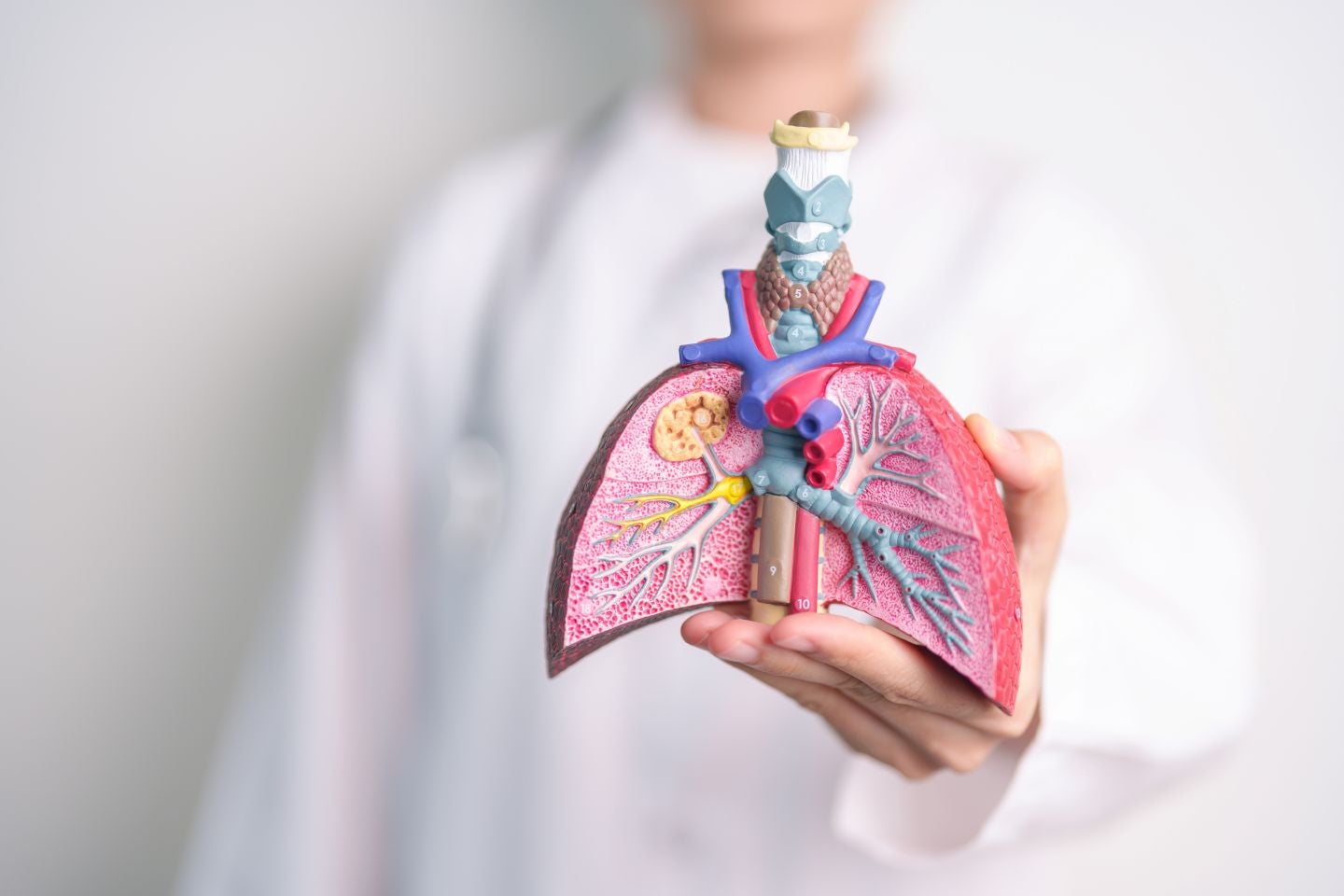
Looking at the respiratory space, there has been very little development of CGT assets, with no approved therapy currently and only one product that has an ongoing Phase III trial, according to GlobalData’s Pharmaceutical Intelligence Center. This asset is TasDes-02 by Taskin Bioregeneration Co, which is being developed to treat acute respiratory distress syndrome. There are many potential reasons for the slow development, including a lack of understanding of the underlying mechanisms that are driving different disease conditions, such as idiopathic pulmonary fibrosis, and patient heterogeneity making it difficult to devise a CGT that works across multiple patients in the case of chronic obstructive pulmonary disease (COPD). One promising pipeline asset is 4D-710 by 4D Molecular Therapeutics Inc (4DMT) to treat patients with cystic fibrosis (CF). 4D-710 is an aerosol gene therapy that works by using a customised adeno-associated virus (AAV) vector to deliver a healthy copy of the cystic fibrosis transmembrane conductance regulator (CFTR) gene to lung cells. This process enables the lung cells to produce functional CFTR protein, correcting the underlying defect caused by the disease, and normalizing mucus production to ease CF symptoms. The vector is specifically designed to penetrate the sticky mucus in the lungs and efficiently deliver the gene, which is an artificial version called CFTRΔR. In October 2025, 4DMT announced that they received up to $11m from the Cystic Fibrosis Foundation to help with the advancement of Phase II and readiness for Phase III, with the latter expected to begin in H1 2026 (4DMT, 2025).
Go deeper with GlobalData


Access deeper industry intelligence
Experience unmatched clarity with a single platform that combines unique data, AI, and human expertise.
Despite the challenges of previous years, there are still reasons to believe in CGTs. One such reason is the research and development efforts into automation and AI from companies such as Made Scientific and Streamline Bio. In October 2025, Made Scientific and Streamline Bio announced a collaboration to accelerate AI-driven robotic manufacturing after recent validation work. What is particularly interesting is that this technology is designed to be flexible and work across equipment and methods (Made Scientific, 2025). These developments will help to overcome the manufacturing challenges CGTs currently face whilst also ensuring the quality of the product is maintained, ultimately driving down the cost of these therapies for patients and payers. Furthermore, the current US administration has signalled that they believe CGTs are aligned with their ‘Make America Healthy Again’ initiative, in a shared goal of targeting the underlying causes of diseases. As a result, the FDA recently outlined the ‘plausible mechanism pathway’ (PMP) which could offer a new way to market for CGTs. The PMP looks to build on the success of the treatment of baby KJ, where CRISPR-based gene editing was used to treat CPS1 deficiency, into a wider regulatory approach, but the details of this are still to be disclosed. Finally, China has introduced various initiatives to incentivise CGT research. For example, China embraces investigator-initiated trials, which allows researchers to quickly obtain safety and efficacy data to ascertain the potential utility of CGT candidates (Gao, et al., 2025). This initiative helps to accelerate the development and, coupled with a high density of patients eligible for clinical trials and vast clinical resources, explains why China is becoming the epicentre of CGT development.

