Infection with HIV has become a significantly more manageable health condition due to the widespread availability of antiretroviral therapy. However, as individuals living with HIV become older, their risk increases for age-related comorbidities that are both related and unrelated to their HIV diagnosis.
Due to comorbidities that are exacerbated by HIV infection, the prevalence of pain management medications is expected to be higher in older HIV patients. Accordingly, they are at greater jeopardy of developing opioid use disorder (OUD) if opioids are improperly prescribed or abused. In a recent study published in The Lancet Primary Care, Shiau and colleagues explored the intersection of HIV, age and OUD. Findings indicate that the prevalence and risk of developing OUD are significantly higher among HIV patients aged 65 years and above when compared to individuals of the same age living without HIV.
Go deeper with GlobalData


Access deeper industry intelligence
Experience unmatched clarity with a single platform that combines unique data, AI, and human expertise.
GlobalData epidemiologists project that between 2025 and 2033 in the US, the diagnosed prevalent cases of HIV infection among men and women aged 65 years and older will increase from above 378,000 to almost 464,000. Due to their unique clinical profile and increased risk of developing OUD, the role of scholarship on the relationship between age, opioid addiction, and HIV would therefore play a critical role in effective, humane treatment of this cohort.
Shiau and colleagues performed their analysis through a retrospective cross-sectional study of the claims data among fee-for-service Medicare beneficiaries from 2008 to 2021. All participants, consisting of 163,429 with HIV and 490,287 without HIV, were aged 65 years or older. To measure opioid use, the authors flagged the prescription of one or more opioids coupled with select indicators of OUD, defined as the International Classification of Diseases (ICD)-9 or ICD-10 diagnostic codes for OUD, OUD-related prescription claims or OUD-related hospitalisations or emergency department visits.
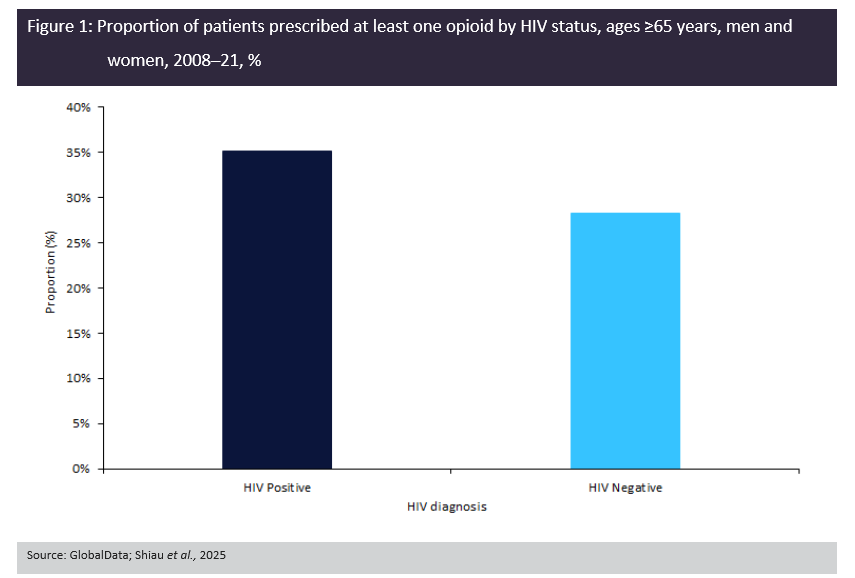
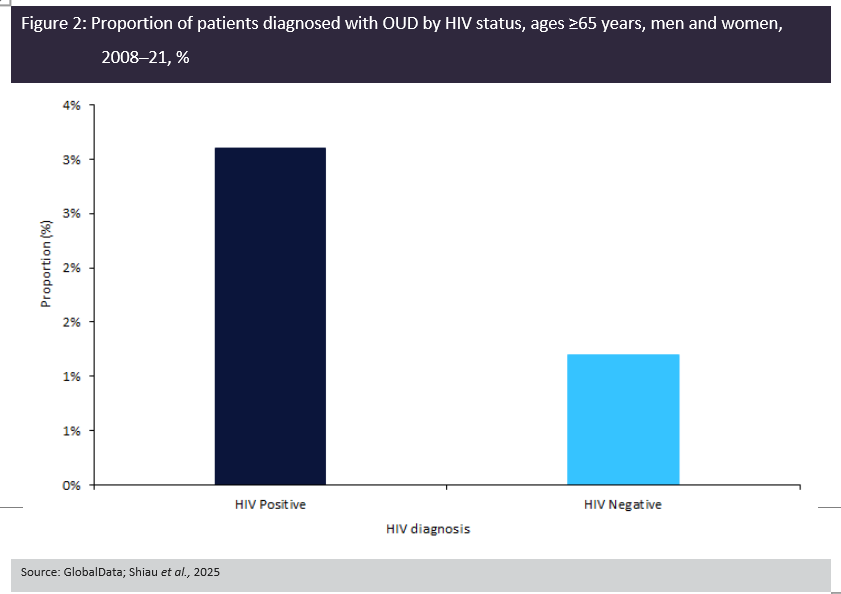
Over the study period, analysis indicated that opioids were prescribed in a higher proportion of HIV patients than individuals without HIV, at 35.10% compared to 28.30% (Figure 1). This pattern was also observed for OUD diagnoses, with 3.10% of people with HIV presenting with OUD compared to 1.2% among matched participants without HIV (Figure 2). When adjusting for demographic, clinical and geographic variables, the authors found that patients with HIV faced a higher overall risk of experiencing OUD, but this risk also decreased over time between 2008 and 2021.
The work carried out by Shiau and colleagues provides valuable insight into the complicated dynamic between opioid addiction and HIV over time. Their data and analysis are particularly important when formulating interventions for public health authorities and clinical practitioners, particularly due to the high opioid prescription rate among those living with HIV. An added value of their study is the focus on OUD in individuals with HIV over the age of 65 years. While scholarship exists on younger HIV patients, this work is of limited generalisability to older generations due to distinct comorbidities between younger and older individuals. The scholarship of Shiau represents an important milestone in understanding the impact of advanced age on the epidemiology and clinical profiles of people experiencing both OUD and HIV, ideally sparking interest in further academic inquiry into the subject.