
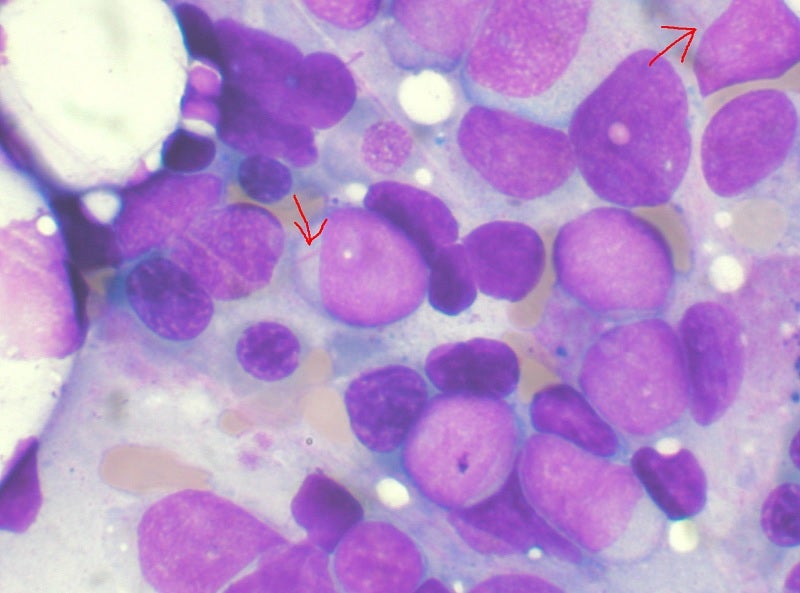
Molecular Partners has initiated the Phase I first-in-human clinical study of MP0533 for the treatment of acute myeloid leukemia (AML).
The Phase I, open-label, dose escalation study has been designed for assessing the efficacy, safety, and tolerability of MP0533 to treat AML.
Go deeper with GlobalData


Discover B2B Marketing That Performs
Combine business intelligence and editorial excellence to reach engaged professionals across 36 leading media platforms.
Nearly 20 to 45 patients with relapsed/refractory AML and higher-risk myelodysplastic syndromes (MDS) are planned to be enrolled in the trial across five sites in Switzerland and the Netherlands, along with the selected sites in the HOVON cooperative group.
The company has also planned additional clinical sites for the trial.
MP0533’s pharmacokinetics, cytokine release, the effect on LSCs, and T-cell activation will also be assessed as some of the secondary endpoints of the trial.
MP0533 has been designed for targeting three surface proteins, CD33, CD123, and CD70, simultaneously.
These proteins are more likely to be expressed together on AML blast cells and leukemic stem cells over healthy cells.
The candidate also targets CD3 on cytotoxic T cells that preferentially activate when a minimum of two of the surface proteins are bound.
Molecular Partners chief medical officer Nicolas Leupin said: “AML is a notoriously difficult cancer to treat, largely due to the overlapping targets expressed on both healthy and leukemic cells.
“Our team has worked relentlessly over the past three years to develop a molecule intended to target these cancerous cells while avoiding healthy cells.
“MP0533’s mechanism represents a new level of precision targeting in complex cancers that may permit greater use of the cytotoxic power of engaging CD3.”
Preclinical data showed that MP0533 can directly target and kill both leukemic blast cells and stem cells, while avoiding various healthy cells.
It also demonstrated the ability to induce the preferential T cell mediated killing of cells expressing two or three of the tumour associated antigens (TAAs).


