
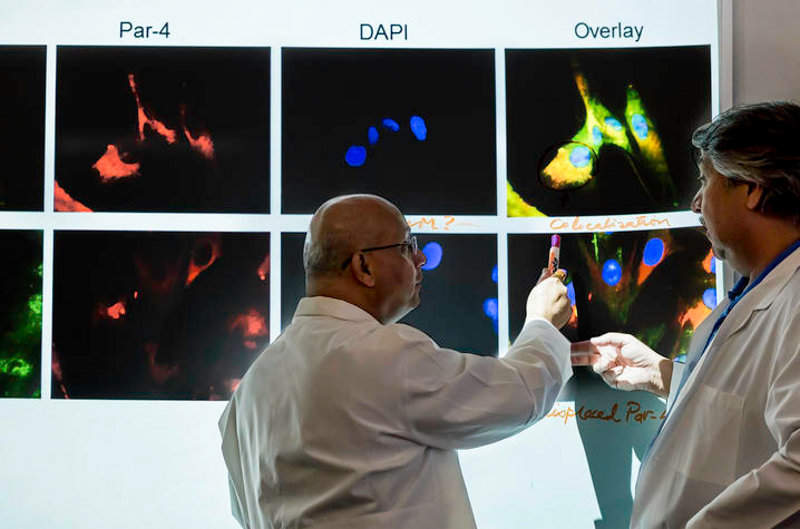

The researchers of University of Kentucky Markey Cancer Center have conducted the clinical trial of chloroquine, which has demonstrated its feasibility as treatment for patients with metastatic cancers.
Go deeper with GlobalData


Discover B2B Marketing That Performs
Combine business intelligence and editorial excellence to reach engaged professionals across 36 leading media platforms.
Malaria-treating drug Chloroquine causes Par-4 secretion through the classical secretory pathway by activating p53 by mutating the p53 protein, or affecting the pathways that signal to p53.
Mechanistically, p53 directly induces Rab8b, a GTPase considered important for vesicle transport of Par-4 to the plasma membrane prior to secretion.
Findings of the study indicated that chloroquine causes p53-dependent and Rab8b-dependent Par-4 secretion from normal cells to result in Par-4-dependent inhibition of metastatic tumour growth.
Study leader, co-leader of cancer cell biology and signalling research programme and University of Kentucky Markey Cancer Center associate director Vivek Rangnekar said: “Because p53 is often mutated in tumours, it makes the tumours resistant to treatment.
“However, this study shows that the relatively safe, FDA-approved drug chloroquine empowered normal cells that express wild-type p53 to secrete Par-4 and stop metastasis in p53-deficient tumours.”
The research received grants from the National Institutes of Health and the UK Markey Cancer Center / Center for Clinical and Translational Science and was assisted by researchers from the University of Pittsburgh, Kansas University Cancer Center, and Osaka University in Japan, which collaborated with the UK scientists.
With an ongoing clinical trial testing chloroquine for Par-4 induction to treat cancer, the researchers are planning to conduct another clinical trial to determine a maintenance dose of chloroquine to be administered to patients recovering from cancer and prevent cancer relapse.
Image: Vivek Rangnekar with another researcher discusses the clinical trial. Photo: © University of Kentucky.


