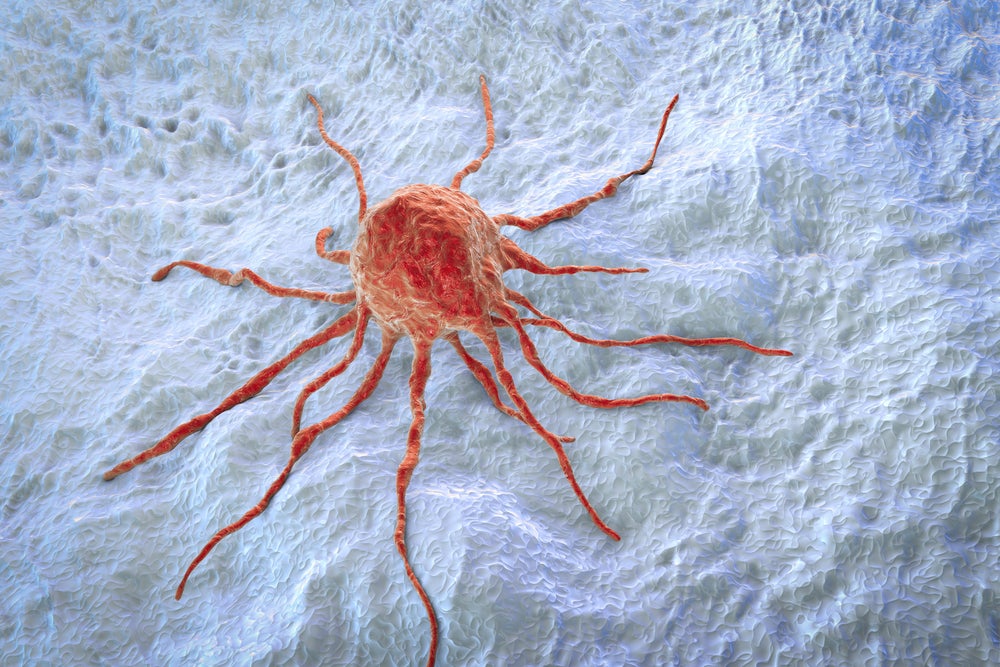
HighField Bio has dosed the first patient in its Chinese trial investigating its immune-oncology candidate for the treatment of recurrent and refractory glioma.
The China-based company has developed a drug encapsulated immune modulating liposome containing all-trans retinoic acid (ATRA). HF1K16, the candidate, is administered by infusion and infiltrates the tumour microenvironment. ATRA is released in the tumour microenvironment, where it catalyses the maturation of myeloid-derived suppressor cells (MDSCs). Matured MDSCs into functional cells can help summon T cells to attack the cancer.
According to HighField Bio, its technology is less toxic and cheaper than other immune-oncology treatments. In addition, poor solubility and fast metabolism of ATRA have previously limited some of its use in cancer immunotherapy.
The open-label, dose-escalation study (NCT05388487) is expected to involve 54 patients with glioma. The trial will involve five dosing groups. After a sentinel subject safety evaluation, the first group will receive seven doses every other day at 45mg/m² per cycle of 21 days. The second will receive oral ATRA at 45mg/m² and HF1K16 every other day three days later at 90mg/m² for seven times per cycle of 21 days. The other three groups will receive seven doses of the drug every other day per cycle of 21 days at 120mg/m², 160mg/m², and 180mg/m², respectively. Outcome measures will assess tolerability, dose-limiting toxicities, pharmacokinetics, and preliminary efficacy of the candidate.
According to the ClinicalTrials.gov entry, in preclinical studies, HF1K16 was shown “to be able to remodel the host systemic immune homeostasis, as well as modify tumour microenvironment (TME)”.
HighField Bio CEO Yuhong Xu said: “This clinical trial follows our analysis of interim data from a Phase Ia study in which three out of five glioma patients responded to the single agent treatment. One achieved complete response (CR) and two more had stable disease (SD) diagnosis.
“That Phase Ia study is ongoing, and based on this promising clinical data, we are conducting a Phase Ib/II trial that will enrol patients with recurrent and refractory glioma intended to establish the statistical significance of HF1K16’s efficacy.”