
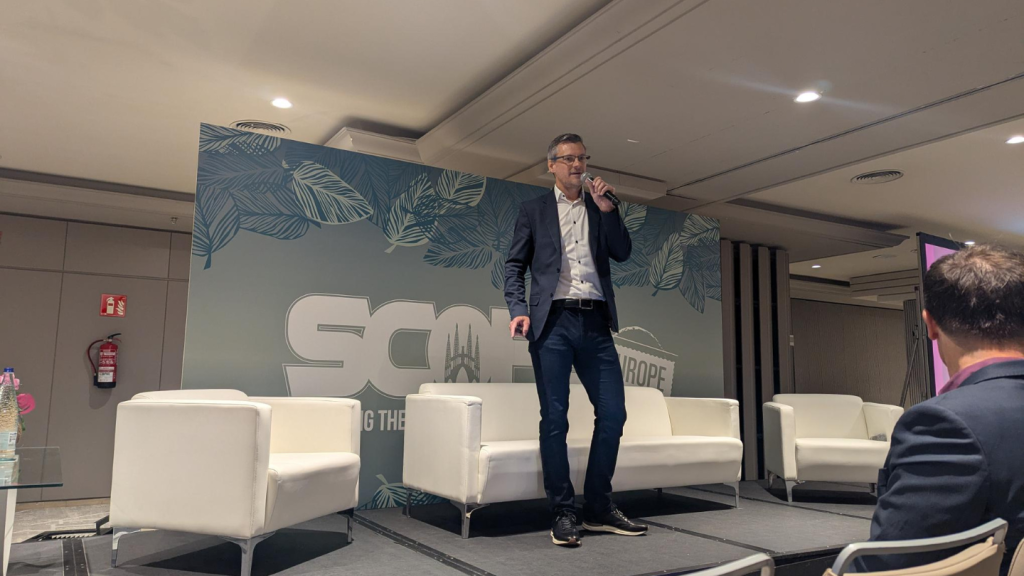
From the importance of collaboration to the acceleration driven by technological advances, and the growing need for more patient-centric approaches, experts gathered in Barcelona to discuss the major changes needed to transform the clinical trial sector.
Over two days at the 2025 Summit for Clinical Ops Executives (SCOPE) Europe conference in Barcelona, clinical trial experts discussed the future of research.
With an ageing population, climate change, global health challenges, and digital transformation, it will take collaboration to solve the growing challenges set to face the clinical trial sector, said Dr Bernhard Glombitza, head of clinical operations at Bayer.
Clinical trials are continuing to accelerate, with Glombitza sharing that in 2005, there were 20,000 registered clinical trials, whereas in 2025, it is around 450,000.
This raises the question of how many clinical trials may be active and what challenges could arise in 2050.
One thing that is likely is that artificial intelligence (AI) will have a prominent role in clinical trials, said Glombitza
“AI is about transforming clinical operations, and it is yet to transform them all. In the future, AI will be present in all aspects of clinical trials – the planning, the startup, and in the submission process. It starts from AI-assisted trial design and simulation, digital trial protocol up to Gen AI-assisted regulatory insights and health authority filings,” he said.
Not only this, but advancements that are in their early stages now, as well as those which are being redefined due to better access to technology, including decentralised clinical trials, will impact how clinical trials will be run.
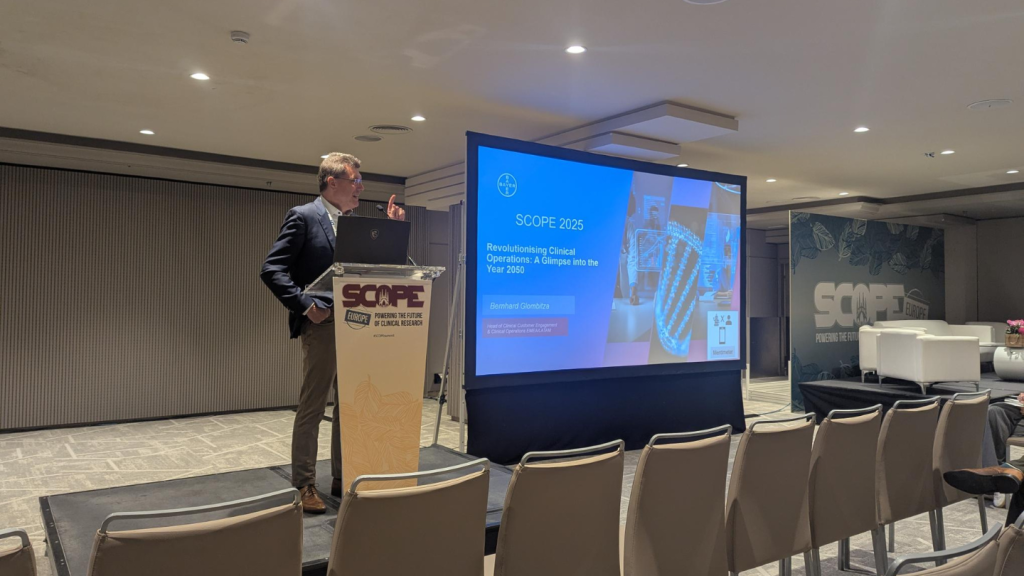
“You will have a much higher focus on patients and advanced technology. We will see full decentralised clinical trials (DCTs), AI-driven recruitment, electronic data capture (EDC) to electronic health record (EHR), and blockchain technology for secure and transparent data management,” Glombitza said.
These advancements, however, are not without challenges, including data privacy and security concerns, trial delays due to labour and recruitment and adherence issues, issues that are already plaguing research efforts.
“The time of the Einsteins is over. The world is so complex, you will not find one Einstein who knows what all the players in clinical trials need. This will need a more collaborative, human-centric approach. Without this, we will not be prepared for the year 2050,” Glombitza added.
Co-creation in trials
Another conversation discussed the importance of the patient’s voice being at the centre throughout the trial process. While sponsors are pushing how they are designing patient centricity into their studies, patient advocacy organisations are asking for more. Many sponsors do include patients in protocol planning, but after that, the discussion ends. Instead, patient advocates called on sponsors to keep that communication throughout the study.
Toni Mathieson, CEO of Niemann-Pick UK, a patient support charity, shared how the charity had been involved in a study where the patient and carer were engaged throughout the trial process, given entry and exit interviews and asked about quality of life (QoL).
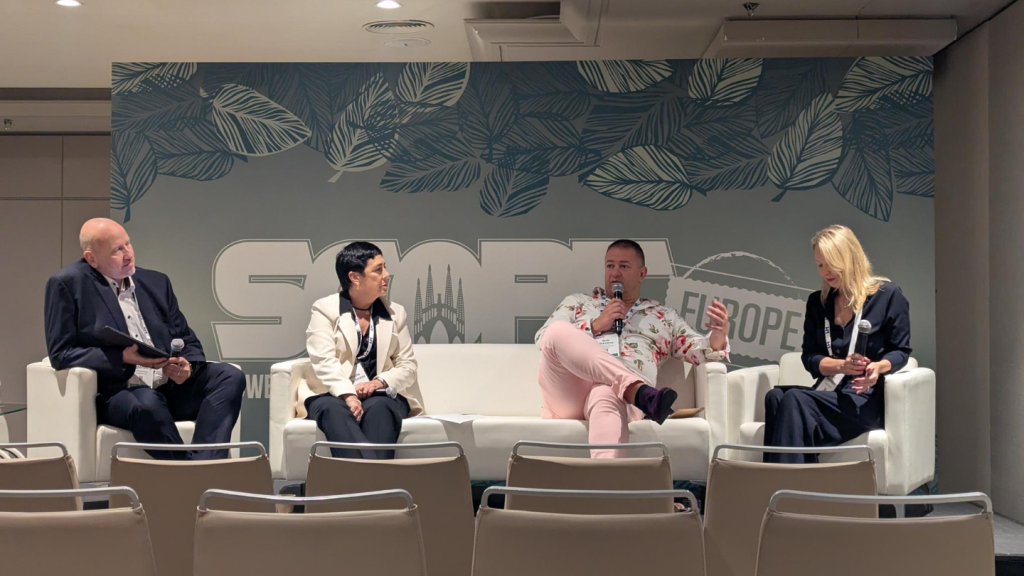
“We were capturing the experiences of all the family that were involved in what the impact of that treatment was, not just on the patient, but on the carers as well, and their quality of life and health-related QoL. I really do believe it's because of this equal partnership that empowered patients and empowered the company to get this drug approved,” Mathieson explained.
Another important consideration in the planning stages is understanding patient geography, said Bob Stevens, CEO of the MPS Society.
“We ask a sponsor, which clinical sites are you going to use? Which PIs? Are you going to have multiple sites opening locally, or will it be better to have fewer sites? Understanding the patient population as part of the clinical trial is not just about the measurable outcomes. It's about understanding the demographics of the community and adapting the trial to suit that. That is a really important role that the patient organisation can play, because none of the other partners in that design have that information,” Stevens said.
AI as a colleague
Many sessions over the two days focused on the use of AI in clinical trials. In the keynote presentation, James Weatherall, chief data scientist at AstraZeneca, highlighted how AI will become like a co-worker in the workspace.
“We're on a journey from a world where we view AI as a tool, a gadget, an assistant, to a world where we can increasingly regard AI as a coworker, an intelligent colleague, a partner,” he explained.
At a time when trial costs are increasing, AI will assist in reducing the price of drug development, Weatherall continued, as well as accelerating time from discovery to approval by helping to make quicker and more accurate decisions than human workers. This will be especially notable as we continue to see an ageing population where patients have diseases and multiple comorbidities, which complicate treatment and drug development.
Weatherall explained that while a lot of AI power will be felt in the future, it is making drastic changes already, noting a project conducted between AstraZeneca in the NHS using an AI device that was able to reduce diagnosis time for heart failure from over one year to just six weeks.
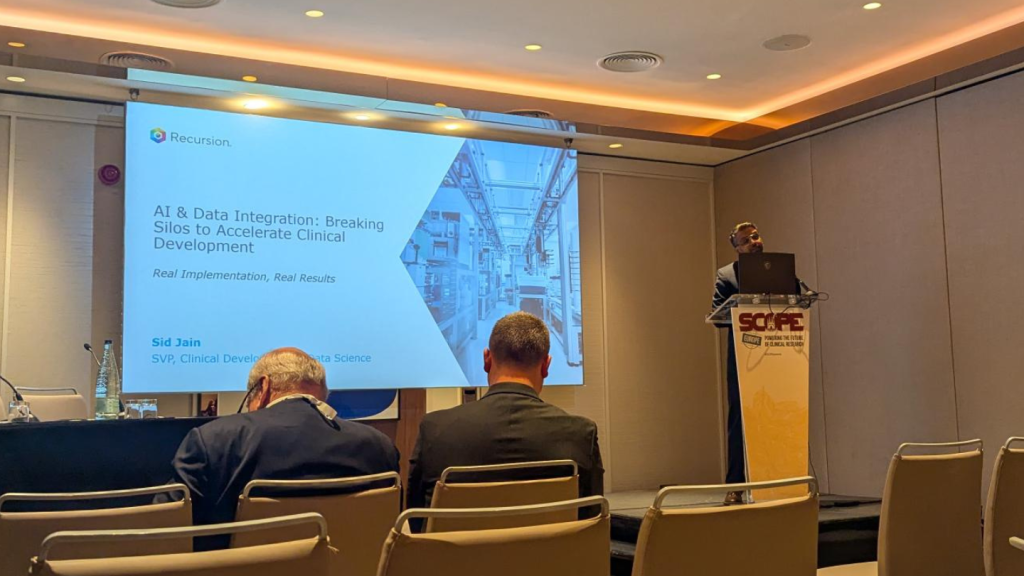
In another session, Sidharth Jain, SVP Clinical Development & Data Science at Recursion, noted how the company is using AI to improve drug development across the entire lifecycle, including patient selection, protocol optimisation and clinical trial design and execution, to try and increase the chances of a drug being successful in trials and making it to patients.
On this, Jain provided an example of how Recursion is using AI in the earliest stages, having redirected what was originally discovered as a breast cancer treatment to be investigated in ovarian cancer. The pivot happened due to real-world genomics data that showed an expression profile that suggested the therapy may have more success in ovarian cancer.