

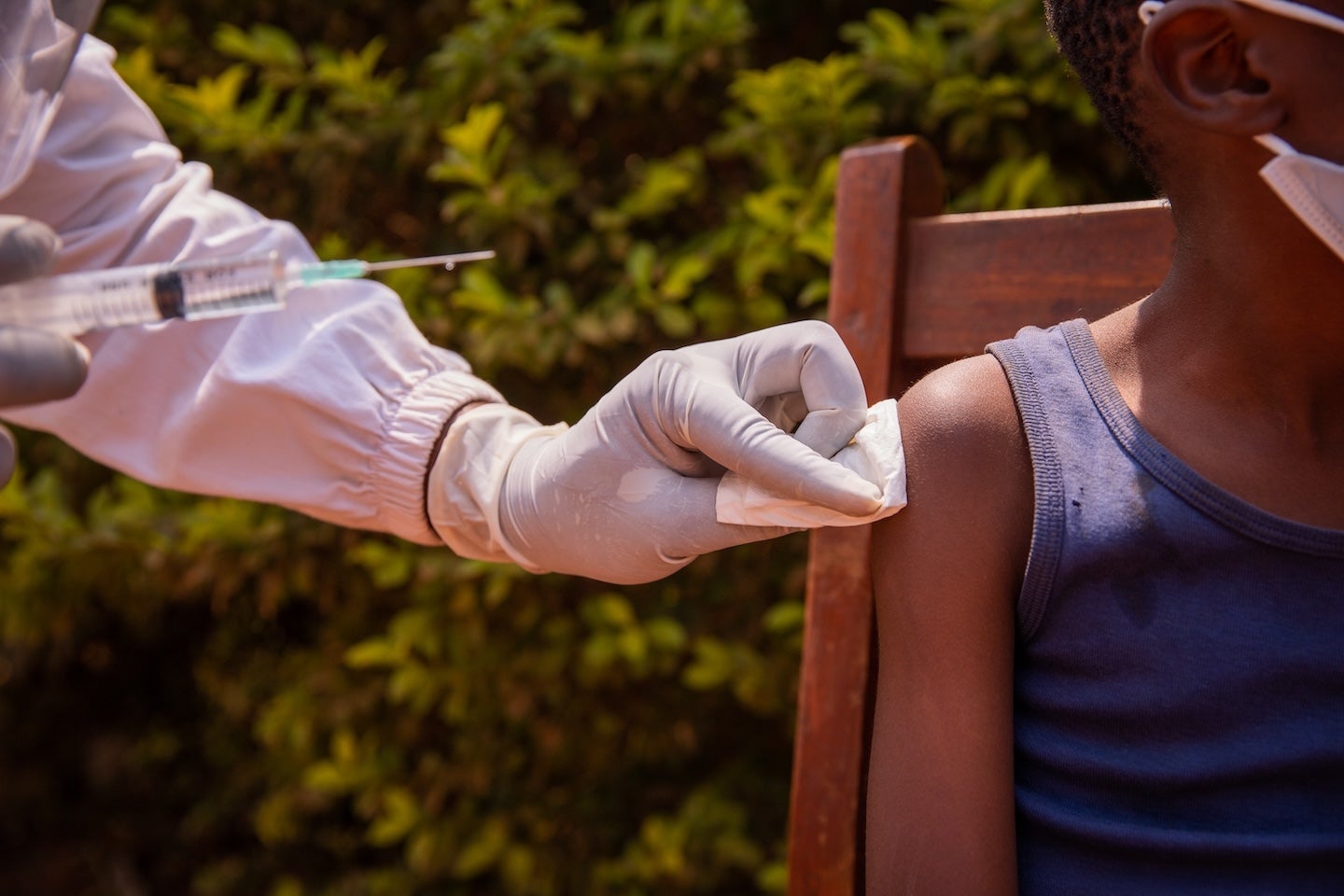
The World Health Organization (WHO) published new data this month showing the impact of novel malaria vaccines in children. This vaccine, called the RTS,S malaria vaccine, is the first WHO-recommended malaria vaccine and began pilot implementation in some malaria-endemic countries in 2019. Malaria, an infection of the Plasmodium parasite spread by mosquitoes, causes fever, muscle aches, diarrhoea, and in some cases, especially in young children, death. Now, new data has shown that the RTS,S vaccine prevented approximately one in eight child deaths over the four-year study period. This evidence serves to bolster support for the use of the RTS,S vaccine and broaden access to this life-saving tool.
This evaluation was conducted in Ghana, Kenya, and Malawi. Over the four years of study follow-up, the mortality rate ratio was 0.87 (95% confidence interval 0.77–0.97), indicating that the introduction of this vaccine into routine childhood immunisation was associated with a significant decrease in the mortality of young children.
Go deeper with GlobalData


Access deeper industry intelligence
Experience unmatched clarity with a single platform that combines unique data, AI, and human expertise.
GlobalData monitors data for malaria in 18 major markets, including Ghana and Kenya, where this evaluation study was conducted. In Ghana and Kenya, the vaccine coverage is forecast to increase from 4% in 2025 to 47% in 2027. This data, when interpreted with the estimated increase of incident cases from seven million to 7.4 million in Ghana and from 3.7 million to 3.8 million in Kenya over the same period, shows the dire need for this vaccine.
The RTS,S malaria vaccine has the potential to dramatically shift the global picture of malaria, a disease that disproportionately affects children under the age of five. Young children, who are eligible for this highly effective vaccine, account for approximately three-quarters of malaria deaths worldwide, many of which can be avoided through vaccination and other malaria control tactics that are known to be effective. This four-dose vaccine schedule fits well with childhood immunisation; it also provides an opportunity to simultaneously deliver other health interventions, such as vitamin A supplementation or insecticide-treated nets, which serve to prevent infection and decrease mortality following malaria infection, respectively. Increasing access to this vaccine has barriers to overcome, including supply chain and financing constraints, but through a coordinated response including vaccination, other environmental prevention measures, malnutrition prevention, and broad access to healthcare, a world free of malaria deaths is possible.

