

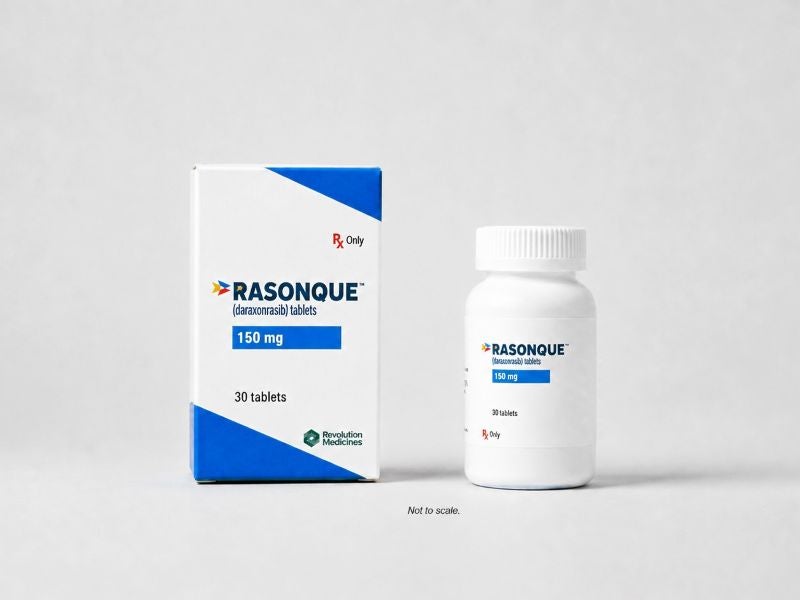

Rasonque™ (daraxonrasib) is indicated for the treatment of adult patients with metastatic pancreatic ductal adenocarcinoma (PDAC) who have undergone at least one prior line of systemic therapy or are ineligible for multi-agent systemic treatment.
Developed by Revolution Medicines, the therapy is indicated for use regardless of whether an identified RAS tumour mutation is present, removing the requirement for a companion diagnostic test.
Recommended Buyers Guides
The US Food and Drug Administration (FDA) approved the drug in August 2026, making it the first targeted cancer medicine approved in the class of RAS(ON) multi-selective and mutant-selective inhibitors.Top of Form
The company also secured breakthrough therapy designation from the FDA for Rasonque in combination with gemcitabine and nab-paclitaxel (GnP), a multiagent chemotherapy regimen used for the treatment of patients with PDAC.
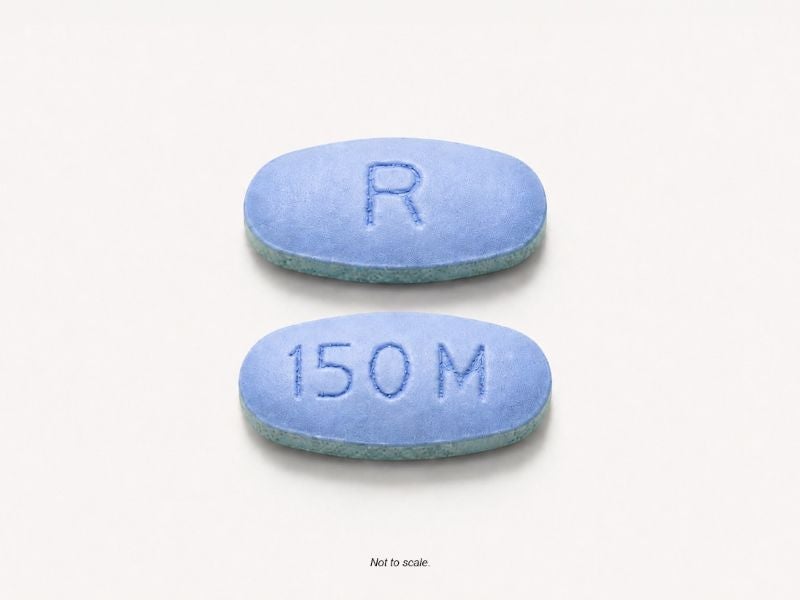
Rasonque is available as a blue, oval, biconvex, film-coated tablet in two strengths, 100mg and 150mg, taken orally once daily.
Pancreatic adenocarcinoma disease details
PDAC is the most common form of pancreatic cancer and is often diagnosed at an advanced stage. The disease is associated with aggressive biology, excessive RAS signalling and limited responsiveness to conventional treatments.
In the US, around 55,000 people are diagnosed with PDAC each year, and more than 50,000 deaths are reported annually despite current standards of care. As early stage pancreatic cancer typically presents with few or no symptoms, approximately 80% of patients are diagnosed only after the disease has metastasised, when available treatment options are more limited.
For patients with metastatic PDAC in the US, the five-year relative survival rate is around 3%.
Rasonque mechanism of action
Rasonque (daraxonrasib) is a tri-complex inhibitor of the RAS GTPase family of proteins, which are known to drive tumour growth. It first binds to the cyclophilin A protein to form a binary complex, which then binds to the active guanosine-5′-triphosphate (GTP)-bound form of RAS.
This tri-complex suppresses RAS signalling by preventing interactions between both wild-type and mutant RAS(ON) proteins with downstream effectors. Inhibition of wild-type and mutant KRAS, NRAS and HRAS variants by daraxonrasib has been shown to suppress tumour growth and induce apoptosis (cell death).
In RAS-dependent pancreatic adenocarcinoma models, treatment with daraxonrasib resulted in tumour growth inhibition and regression and was associated with anti-tumour immune responses.
Clinical trials on Rasonque
The FDA approval of daraxonrasib was supported by results from the RASolute 302 (NCT06625320) clinical trial.
The global, randomised, open-label, multicentre Phase III trial assessed the safety and efficacy of Rasonque versus the investigator’s choice of cytotoxic chemotherapy in patients with previously treated metastatic PDAC.
The clinical trial enrolled 500 patients randomised 1:1 to receive either 300mg of Rasonque orally once daily (n=248) or one of four physician-selected standard-of-care (SOC) chemotherapy regimens (mFOLFIRINOX, gemcitabine and nab-paclitaxel (GnP), FOLFOX, or nanoliposomal irinotecan plus 5-fluorouracil and leucovorin (nal-IRI plus 5-FU/LV)) (n=252). Treatment continued until disease progression or unacceptable toxicity.
Regarding baseline mutational status, 92% of participants had KRAS G12 mutations, 5% harboured non-G12 KRAS mutations (such as G13 and Q61) and 3% had no RAS mutation detected through local testing.
Primary efficacy endpoints were overall survival (OS) and progression-free survival (PFS) evaluated by blinded independent central review (BICR) in the RAS G12-mutant population.
Secondary outcomes included OS and PFS assessed by BICR in the overall intent-to-treat (ITT) cohort, alongside objective response rate (ORR) by BICR across both populations. The study met all primary and key secondary endpoints.
In the ITT population, Rasonque lowered the risk of death by 60% compared to chemotherapy.
Within the RAS G12 subgroup (n=459), median OS was 13.2 months with Rasonque versus 6.6 months with SOC chemotherapy; median PFS (BICR) was 7.3 months with Rasonque versus 3.5 months with SOC chemotherapy; and ORR (BICR) was 32% in the Rasonque cohort compared to 11% in the SOC arm.Top of Form
The most frequent adverse reactions, occurring in at least 20% of patients, included rash, diarrhoea, stomatitis, nausea and fatigue, as well as vomiting, abdominal pain, oedema, decreased appetite and haemorrhage.
Additional clinical trials
The Breakthrough Therapy Designation granted by the FDA to Rasonque is based on data from patients with treatment-naive RAS mutant metastatic PDAC who received the drug in combination with GnP in the open-label, multi-centre Phase I/II RMC-GI-102 trial.
In this cohort, Rasonque in combination with GnP showed encouraging preliminary anti-tumor activity and a manageable safety profile that was consistent with the known safety profiles previously observed for both Rasonque and GnP.
The data from this clinical trial informed the design of RASolute 303, an ongoing global Phase III trial evaluating Rasonque as monotherapy and in combination with GnP versus GnP alone in patients with previously untreated metastatic PDAC, independent of tumour RAS genotype.
